
We built the BBQ reference we wished existed.
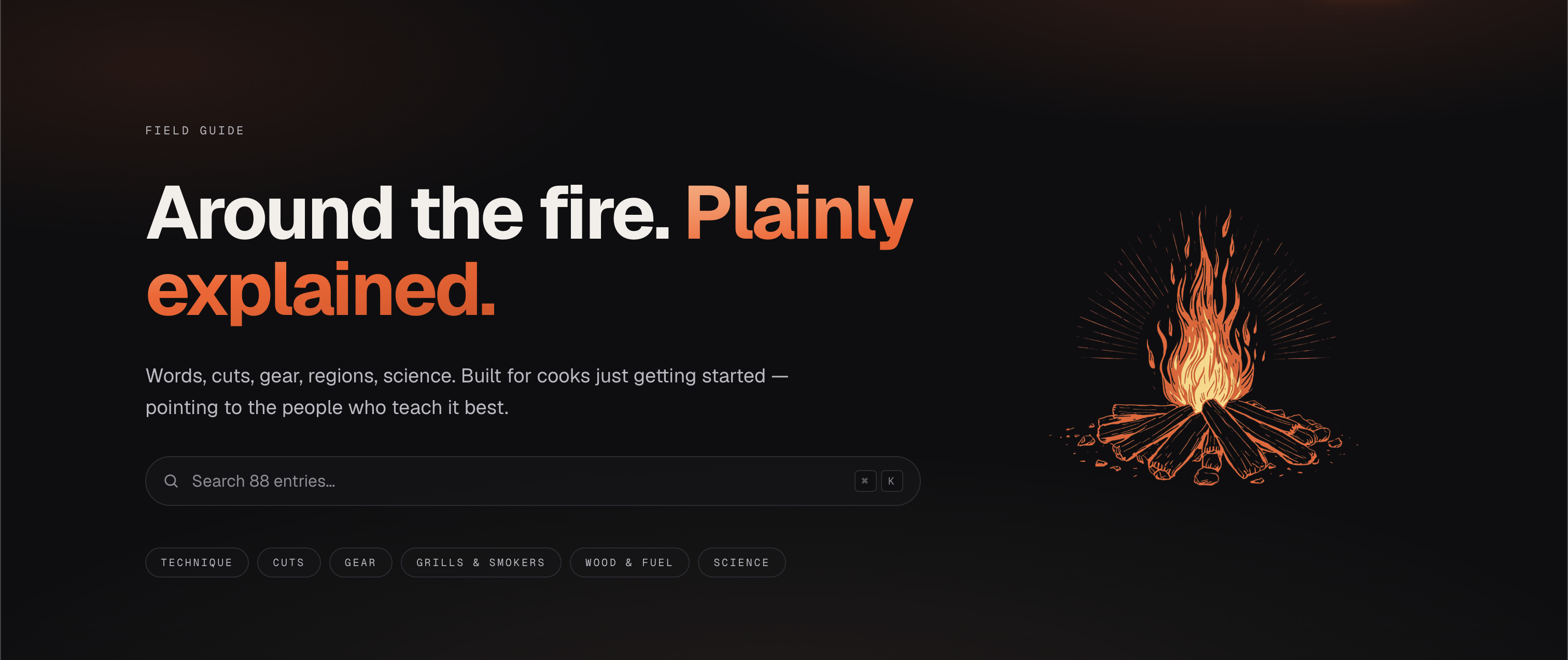
Over 80 entries on technique, science, cuts, gear, and the writers who teach this best. For cooks learning the craft.
When I started taking BBQ seriously, I had a question I couldn’t easily answer: what’s the difference between a kettle and a kamado?
Not the marketing pitch. The actual difference — when to reach for one versus the other, what trade-offs each makes, who cooks on what and why.
I searched. I got a wall of affiliate-padded listicles, a Reddit thread that went four ways, and one blog post that called both "great choices." Nothing reference-grade.
A few weeks later I had the same question about post oak versus hickory. Same problem. That kept happening.
The natural thought was: someone should write this down. The immediate counter: who am I to answer all these questions? I’m not the pitmaster. I’m not the food scientist. I’m not the BBQ journalist with eighteen hundred joints behind him. I’m a guy with a thermometer and a kettle, asking the questions every new cook asks.
But then a different framing landed. There are already experts I can learn from — pitmasters, writers, YouTubers, food scientists — and they’ve all answered these questions in their own corners of the internet. The problem isn’t a missing answer. It’s that nobody has pulled their POVs together. Nobody has built a canonical map of who-to-go-to-for-what, where the consensus is, and where the disagreements actually live.
That felt like a challenge I could actually help solve. Not by becoming the expert. By pointing to the experts — synthesizing where they agree, naming where they don’t, and getting out of the way.
So here it is.
What this is
The Grilln Field Guide is the BBQ reference I wished existed. It went live this week.
Over 80 entries across six categories: technique (reverse sear, two-zone fire, the Texas crutch), science (the stall, bark, smoke ring chemistry), cuts (eight protein hubs from beef to bread-and-pizza), gear (thirty-one tools, what earns a spot and what doesn’t), grills & smokers (kettle through offset, by use case), and wood & fuel (every common wood plus charcoal, gas, pellets, electric).
Plus nine expert bios — the people I actually read when I want to learn something.
Daniel Vaughn at Texas Monthly on wood selection and Texas BBQ history. Meathead Goldwyn at AmazingRibs on the science of the stall. Aaron Franklin on brisket. Steven Raichlen on the global lens. J. Kenji López-Alt on technique-with-the-receipts. Susie Bulloch on family-table cooking. Mad Scientist BBQ on isolating variables. Chud’s BBQ on daily-cook approachable. Malcom Reed on competition.
Every Field Guide article cites these writers where their work is canonical. When an entry tells you the stall is evaporative cooling, it links to the Meathead piece that established it. When an entry says post oak is the Texas wood, it cites Vaughn’s survey.
How to use it
If you’re new: start at /field-guide and use the search box. Type "reverse sear" or "thermometer" or "pellet grill" and the first result will be relevant. Every category has a featured starting article.
If you’re experienced: the Experts page lists who we lean on and links to their actual work. The bios include their books, channels, and where to start with each one.
If you want the philosophy: read the Bark entry. It’s the cleanest example of the voice we’re going for.
What’s next
This is the foundation. We’ll keep adding entries as the corpus earns them — more cuts, more techniques, more regional traditions. We’ll keep updating the existing ones as the experts publish new work.
If something is wrong or missing, tell us. The reference improves when readers push back.
For cooks learning the craft. Pointing to the people who teach it best.