
Charcoal
Charcoal is the fuel that built American backyard BBQ. Made by burning hardwood in a low-oxygen environment until only carbon remains, it’s available as lump (irregular carbonized chunks of pure hardwood) or as briquettes(compressed sawdust mixed with binders, pressed to uniform shape). Charcoal burns hot enough to sear steak at 700-1000°F and slow enough to smoke brisket at 225°F on the same kettle grill. Among the five mainstream fuel types, charcoal is the most-versatile single fuel — the one most BBQ-focused cooks reach for first.
- Source
- Carbonized hardwood — wood burned at low oxygen until only carbon remains
- Forms
- Lump (carbonized chunks) · Briquettes (compressed sawdust + binders)
- Price
- $1-2/lb briquettes · $2-5/lb premium lump
- Temp range
- 225-1000°F (vent-controlled)
- Best at
- Versatility — searing + smoking on one device
- First popularized
- Briquettes — Kingsford, 1920s (using Ford auto-factory wood scraps)
What it is
Charcoal is hardwood that’s been heated in a low-oxygen environment until everything except carbon has burned off. The result is a porous, lightweight chunk (or compressed brick) of nearly-pure carbon that ignites easily, burns hot, and produces relatively little smoke compared to whole wood.
Lump charcoal is hardwood chunks carbonized in their natural shape — irregular, varied in size, no binders or fillers. Premium brands (Jealous Devil, Fogo, Royal Oak Premium) carbonize specific hardwood species (oak, hickory, mesquite) for cleaner burn and lower ash. Lump burns hotter and faster than briquettes, with less ash but more variability.
Briquettes are compressed sawdust held together with binders (often starch or natural gums) and pressed into uniform pillows. Kingsford invented them in the 1920s using wood scraps from Ford’s Model T factories. Briquettes burn at a more predictable temperature for longer, produce more ash, and have standardized size — easier to stack, snake, and minion-method. The standard for low-and-slow cooks where consistency matters.
Iconic brands: Kingsford (briquettes — Original blue bag), Royal Oak, Cowboy Charcoal, B&B, Jealous Devil, Fogo, Weber, Stubb’s.
How the heat moves
Lit charcoal coals produce radiant heat directly from the carbon combustion reaction. Heat output is controlled almost entirely by airflow: more oxygen = hotter; less oxygen = cooler. Every charcoal cooker (kettle, kamado, vertical smoker) is essentially a chamber with intake and exhaust vents to manage that airflow.
At full open vents, a kettle full of lump can hit 700-900°F for searing. Choked down to a thin crack at the intake, the same kettle holds 225°F for hours. The coal mass acts as a thermal reservoir — once you’ve dialed in the temperature, the cooker holds it for as long as the coals last (typically 4-12 hours depending on volume and rig insulation).
For flavor, charcoal accepts wood chunks — fist-sized pieces of hickory, oak, fruit wood, etc. — tossed onto the coal bed. The wood smolders rather than burns cleanly (because the charcoal is providing the heat), producing flavored smoke. This is how most backyard cooks get smoke flavor: charcoal for heat + chunks for character.
Setting it up
Three layouts cover most charcoal cooking:
Single-zone (full bed)
Coals spread across the entire charcoal grate. Maximum heat, direct cooking. For burgers, steaks, hot dogs, sear-only cooks.
Two-zone
Coals piled to one half of the grate, leaving the other half bare. The hot side sears; the cool side roasts indirect. The most-versatile single configuration. See two-zone fire.
Snake / Minion (long-burn)
Unlit briquettes arranged in a line (snake) or surrounding a small lit pile (minion), so the fire travels slowly across the coal bed for 8-12+ hours. Required for long brisket and pork shoulder cooks on a kettle. See snake method.
A chimney starter is the canonical lighting method — fill with charcoal, stuff newspaper or fire-starter cubes underneath, light, wait 15-20 minutes for coals to ash over. Never use lighter fluid; it taints flavor and ruins the meat. Electric starters and fire-starter cubes are clean alternatives.
Where it earns its keep
Charcoal is the canonical “single device, most cooks” fuel. A 22-inch kettle plus charcoal handles:
High-heat searing
Lump charcoal at full airflow hits 900°F+ — matches restaurant steakhouse infrared sears. Better sear capacity than most gas grills can reach.
Low-and-slow smoking
Snake method on a kettle holds 225-275°F for 8-12 hours, enough for brisket, pork shoulder, ribs. Add wood chunks (post oak, hickory, fruit woods) for smoke character.
Indirect roasting
Two-zone configuration lets you slow-roast whole chickens, prime ribs, pork loins at 350-400°F with the meat over the cool side.
Pizza, baking, and wood-fired cooking
Pile coals high on one side, drop in a pizza stone, and a kettle hits 700-800°F dome temperature — the temp range for Neapolitan-style pizza.
Where it falls short
Charcoal’s versatility comes with real cost. The limits:
Setup time
15-20 minutes from cold-start to cooking temperature. Bad fit for weeknight 6pm-dinner cooks unless you plan ahead. Gas fires up in 5 minutes.
Ash cleanup
Every cook produces ash that has to be cleaned out before the next session — significant on briquettes (more binders = more ash), modest on lump.
Temperature management skill
Charcoal demands airflow management. Pellet and gas hold temp digitally; charcoal needs you to dial vents and trust the cooker’s thermal mass.
Weather sensitivity
Cold weather slows ignition, wind disrupts airflow, rain can put out a fire. Less plug-and-play than gas or electric in non-ideal conditions.
Long-burn limits
Even snake method tops out around 12 hours on a kettle. Overnight brisket cooks on charcoal often need a refuel. Wood splits in an offset go longer per fuel-add.
What goes wrong.
Lighting with lighter fluid
Petroleum-based lighter fluid taints the smoke with chemical aftertaste that absorbs into the meat. Use a chimney starter with newspaper or fire-starter cubes, or an electric loop starter. Never lighter fluid.
Piling cold coals on hot
Dumping unlit briquettes onto a hot bed mid-cook drops temperature and produces white acrid smoke as the new coals offgas. Light fresh coals in a chimney first, then add them already-glowing — or just use the snake method so fresh coal lights gradually from the front.
Choking airflow to drop temperature fast
Slamming the intake vent shut to drop temp suffocates the fire instead of cooling it — the coals smolder, produce dirty smoke, then go out. Adjust vents in small increments and let the cooker respond over 5-10 minutes.
Buying cheap unknown lump
Some budget lump uses construction scraps or unidentified mixed wood — produces sparks, throws bits of unburned material, and can flavor food poorly. Stick to reputable brands (Royal Oak, Cowboy, Jealous Devil, Fogo, B&B) where the source wood is identified.
Using briquettes in a kamado
Briquettes produce significantly more ash than lump, and ceramic kamados clog up. Most kamado manufacturers (Big Green Egg, Kamado Joe, Primo) explicitly recommend lump only.
What each of them says.
3 of the people we trust have covered this. Read or watch each in their own words.
- 01
 Meathead GoldwynAmazingRibs.com
Meathead's position on charcoal — laid out across his fuel guides — is that briquettes give you more control because they're uniform, burn predictably, and produce minimal smoke (which means YOU control the smoke by adding wood chunks). Lump burns hotter and is essential for kamados, but variable. For backyard cooks who want consistency on a kettle or vertical smoker, briquettes win; for serious searing or kamado use, lump wins. Practical decision framing without ideology.
- 02
 Steven RaichlenBarbecue Bible
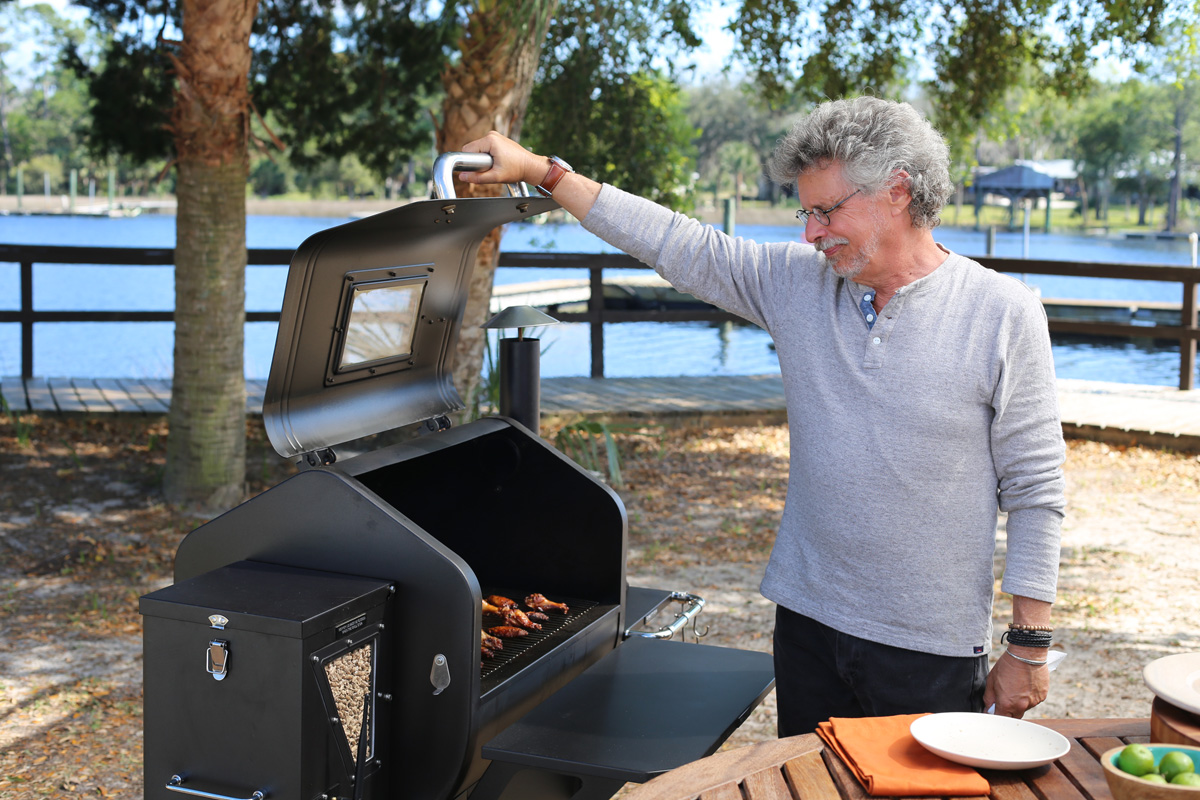
Raichlen's recommended-grills page treats the 22-inch charcoal kettle as the single best one-grill purchase for most home cooks — charcoal gives "the primal thrill of playing around with fire," works for all five live-fire methods (direct grilling, indirect grilling, smoking, rotisserie, salt-block), and pairs naturally with wood chunks for flavor. The canonical recommendation across his 40+ year career.
- 03
 Mad Scientist BBQJeremy Yoder / YouTube
Jeremy Yoder runs a side-by-side test of lump vs briquette across multiple brands and measures burn temperature, duration, ash production, and flavor outcomes. Methodical empirical framing of the most-debated charcoal question. Useful for cooks deciding between the two formats.
Cook it. Save the record.
Every cook gets a permanent entry — cut, fuel, temp, time, photo, what worked. Next time you want to nail that exact crust, you'll have the receipt.