
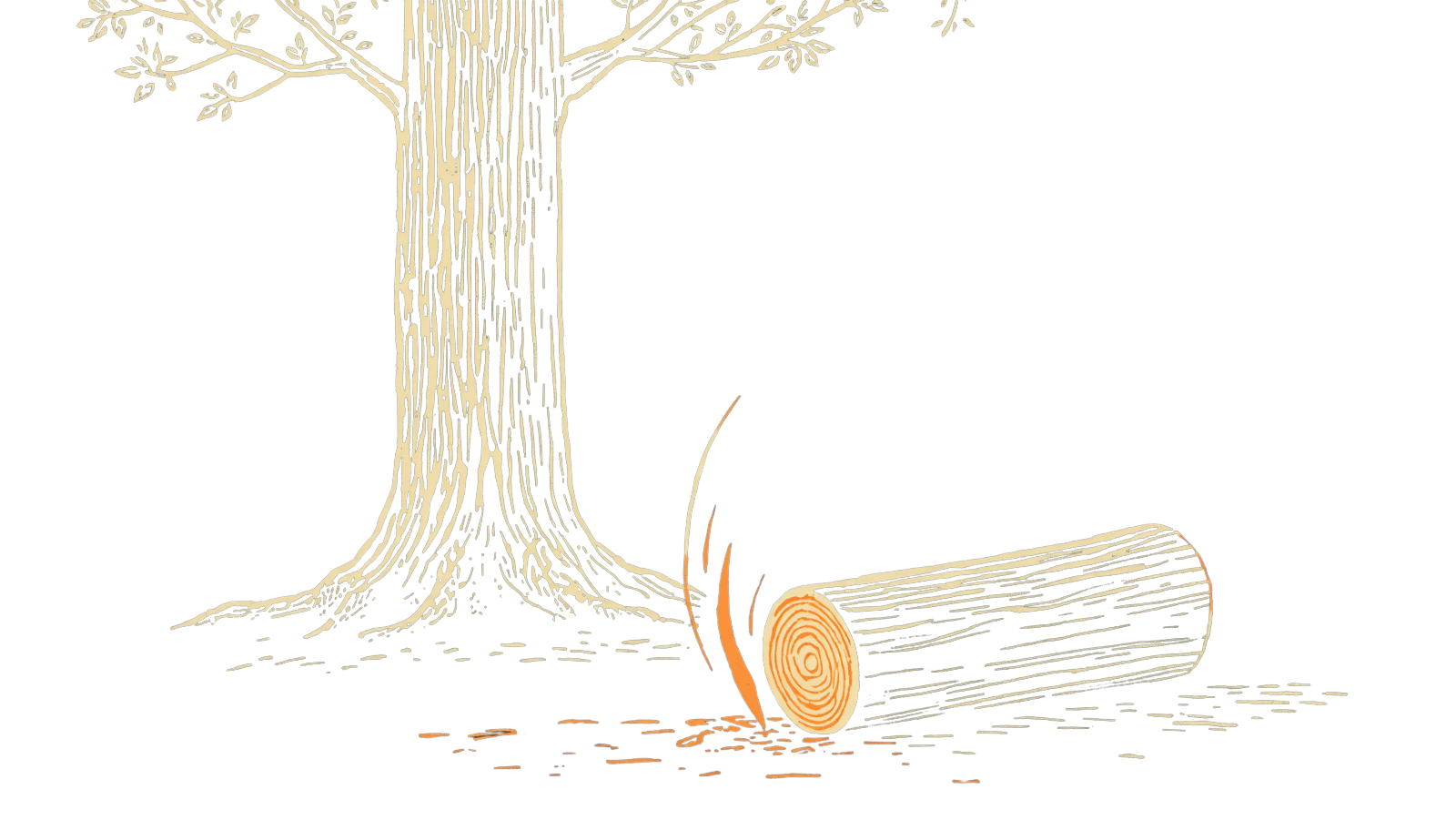
Hickory
Hickory (Carya genus) is the wood American BBQ was built on. Native to the Eastern US, it produces a strong, distinctive smoke with a bacon-like character — the result of phenol compounds that interact with pork fat in ways no other wood matches. It’s the canonical Mid-South / Memphis / Appalachian smoking wood, and the literal source of most commercial bacon’s smoke flavor. Among the five mainstream fuel types, wood is its own category — and among wood species, hickory is the workhorse: stronger and more characterful than post oak, gentler than mesquite, the default American smoking wood before Texas brisket reshaped the conversation around oak.
- Genus
- Carya (shagbark, shellbark, pignut)
- Origin
- Eastern US — Appalachians, Ozarks, Mid-Atlantic
- Smoke intensity
- Strong — distinctive, recognizable
- Flavor notes
- Bacon-like, savory, smoky-sweet
- Pairs with
- Pork (canonical), bacon, ribs, beef ribs
- Burn rate
- Medium burn, hot, moderate ash
What it is
Hickory is a hardwood genus (Carya) native to the Eastern United States. The two species most commonly used for BBQ are Carya ovata (shagbark hickory — the one with the distinctive peeling strips of bark) and Carya laciniosa (shellbark hickory). Both burn similarly and are interchangeable for smoking; most commercial hickory wood is shagbark.
The tree dominates the deciduous forests of Appalachia, the Ozarks, and the Mid-Atlantic — exactly the regions where American BBQ tradition developed (Memphis, the Carolinas, Tennessee, Kentucky). That geographic overlap is why hickory IS American BBQ in a way no other wood is: when settlers and enslaved cooks built the cuisine, the wood was just there. Hickory has been the default American smoking wood for two hundred years.
Hickory is also the dominant smoke source for commercial bacon production — when a package says “hickory smoked,” it generally means hickory smoke concentrate or actual hickory chips. The bacon-flavor association is so strong that, for many American eaters, hickory smoke just IS what smoke tastes like.
Flavor profile
Hickory’s signature is its strong, savory, bacon-like smoke. The chemistry: hickory wood is rich in syringol and guaiacol — phenol compounds that, when burned, produce the characteristic “smoked meat” flavor. These compounds bind aggressively to fat, which is why hickory’s flavor character clings so completely to pork (high fat content) and reads more subtly on lean meats.
Compared to post oak, hickory is stronger and more distinctive — you taste hickory in the bite; post oak is more of a clean backdrop. Compared to mesquite, hickory is gentler and more forgiving — mesquite turns harsh quickly; hickory tolerates longer cooks as long as the fire is well managed.
The defining failure mode of hickory: it can drift acrid if used in excess or on too-long low-and-slow cooks without proper fire management. The same phenol compounds that produce the bacon character become bitter if they accumulate too heavily. A 12-hour hickory brisket is workable but requires more skill than a post oak brisket; an 8-hour pork shoulder is the wheelhouse.
Pairing
Hickory is the canonical pork wood. It works on most everything else, but pork is where it shines — the fat-phenol chemistry produces a flavor combination no other species replicates.
| Meat | Fit | Why |
|---|---|---|
| Pork shoulder / butt | Canonical | The defining pair. Pulled pork on hickory is the American standard. |
| Pork ribs | Canonical | Memphis dry rub + hickory smoke = textbook. |
| Bacon (cured pork belly) | Canonical | Literally what “hickory smoked bacon” means. |
| Beef ribs | Strong fit | Beef fat carries hickory beautifully. 6-8 hour cook window. |
| Beef brisket | Workable | Needs careful fire mgmt on 14-hr cooks; post oak more forgiving. |
| Turkey | Workable | Turkey handles strong smoke; pair with apple to soften. |
| Whole chicken | Caution | Can overpower chicken; use sparingly or blend with fruit wood. |
| Salmon / white fish | Mismatch | Obliterates delicate fish; pair with alder or apple. |
How to use
Hickory shows up in three formats. Quantity discipline matters more with hickory than with any other common wood — it’s strong, and more is rarely better.
Chunks
For charcoal cookers — the most common home use. 2-3 fist-sized chunks per cook is the sweet spot. 4+ chunks pushes toward over-smoked, bitter bark. Add chunks at the start of the cook so the heaviest smoke hits the cold meat (when it absorbs flavor best); past ~165°F internal, the meat takes on less smoke regardless of fuel.
Splits
For offset smokers. Most Carolina and Memphis pit traditions burn hickory splits — roughly 16 inches long, 3-4 inches across, seasoned 6-12 months. Add one split every 30-40 minutes, slightly faster than post oak because hickory burns quicker.
Pellets
100% hickory pellets are common across brands (Lumber Jack, Pit Boss, Bear Mountain). Many competition blends are hickory-dominant with cherry or apple for color and softening.
Many pitmasters use hickory blended with a milder wood — hickory + cherry, hickory + apple, hickory + pecan — to soften the intensity while keeping the savory base. Susie Bulloch and Malcom Reed both teach this pattern; it’s the backyard answer to “hickory tastes too strong alone.”
Compared to other species
Hickory’s intensity puts it in the upper third of the wood-strength spectrum. Useful contrasts:
| vs Species | How it compares |
|---|---|
| Post oak | Cleaner, milder, more forgiving on long cooks. Hickory is more characterful — you taste “hickory” in the meat; post oak fades into a clean backdrop. Use hickory when you want smoke to be a flavor; post oak when you want it as support. |
| Mesquite | More intense, faster-burning, peppery, regional (Texas / Mexican grilling). Hickory is steadier and more universally applicable. Mesquite is for short high-heat cooks; hickory works across the full smoking range. |
| Pecan | Hickory’s genus cousin (also Carya) with a gentler character — milder, slightly sweeter, less aggressive. Pecan works where you want hickory’s family but with less weight. Many pitmasters blend the two. |
| Fruit woods (apple, cherry) | Much milder and sweeter. Hickory + apple is one of the most common backyard blends — apple softens the hickory edge while keeping the smoked-meat depth. |
Where it falls short
Hickory’s strength is also its limitation. Specific failures:
Delicate fish
Salmon, trout, white fish — hickory overwhelms them completely. The phenol compounds that flatter pork bury fish. Use alder (Pacific Northwest standard) or apple.
Long brisket cooks without skill
At 12-14 hours on a brisket, hickory accumulates faster than post oak and can drift bitter if airflow isn’t well managed. Texas pitmasters mostly default to post oak for brisket specifically; hickory brisket exists (Kansas City tradition) but rewards experience.
Over-use on chicken
Whole chicken has less fat than pork shoulder and less mass than brisket. Hickory can dominate before the chicken finishes cooking. Use sparingly or blend with apple/cherry.
Confusing hickory with pecan
Pecan bark looks similar to hickory at a glance; the woods come from related trees (both Carya). They burn and smell differently — pecan is much gentler. Buying “hickory” from a non-specialist supplier may not get you actual hickory. Verify the species, especially for cooks where character matters.
What goes wrong.
Using too many chunks
The most common hickory failure. 2-3 fist-sized chunks per charcoal cook is plenty; stacking 5-6 produces bitter, over-smoked bark. If you want more smoke, switch to a stick-burner with splits — not more chunks.
Using hickory alone on a 12+ hour brisket
Hickory drifts toward acrid on extended cooks if the fire isn’t perfectly managed. For long brisket cooks, either switch to post oak, or pair hickory with a milder wood (oak, cherry), or wrap the brisket earlier (around 160°F internal — see texas crutch) to limit smoke exposure in the back half.
Smoking salmon with hickory
Hickory overpowers salmon, trout, and most white fish. The chemistry that flatters pork buries fish flavors entirely. Switch to alder (Pacific Northwest standard) or a fruit wood for any fish work.
Confusing hickory with pecan
Pecan is hickory’s genus cousin — bark looks similar, tree shape similar, but the wood burns and tastes differently. Pecan is much gentler. Generic “BBQ wood” suppliers sometimes mix or mislabel. Verify species before buying, especially for cooks where character matters.
Using green or wet hickory
Same failure mode as any wood: under-seasoned hickory produces white, acrid smoke that ruins bark and tastes bitter. Hickory needs 6-12 months seasoning to drop below 20% moisture, or kiln-drying. Wet wood is worse than no wood.
What each of them says.
5 of the people we trust have covered this. Read or watch each in their own words.
- 01
 Meathead GoldwynAmazingRibs.com
Meathead's Science of Wood and Smoke piece is the chemistry-deep reference for understanding WHY hickory smoke tastes like bacon. He breaks down the syringol and guaiacol phenol compounds that hickory produces, why they bind preferentially to pork fat, and how to manage fire for clean combustion versus the acrid smoke of mismanaged burns. Foundational science for the wood-selection decision.
- 02
 Daniel VaughnTexas Monthly
Vaughn's 22-book BBQ-literature survey found hickory tied with oak as the most-recommended American smoking wood — and the only wood that rivals oak in championship preference. While his Texas-anchored beat focuses on post oak, his wood guide treats hickory as the universal default outside the Hill Country, dominant in Mid-South and Appalachian tradition.
- 03
 Susie BullochHey Grill, Hey
Susie's Guide to BBQ Smoking treats hickory as the strong, bacon-aromatic foundation of backyard pork — perfect for pulled pork, shoulders, ribs, and bacon-wrapped applications. Her practical framing (when to use it, when to blend, when to back off) is the family-table angle on a wood that home cooks often over-apply.
- 04
 Malcom ReedHowToBBQRight
Malcom — who calls hickory his absolute favorite wood — demonstrates the canonical Memphis pulled-pork cook with hickory chunks and a vertical drum smoker. The video shows quantity discipline (chunk count, when to add), bark development with hickory's phenol compounds, and the Memphis flavor signature that hickory underwrites.
- 05
 Mad Scientist BBQJeremy Yoder / YouTube
Jeremy Yoder runs a side-by-side test of four common BBQ woods (oak, hickory, mesquite, fruit) on identical cooks, with blind tasting to isolate the flavor signature each species contributes. Useful empirical framing for the hickory-vs-everything-else question.
Cook it. Save the record.
Every cook gets a permanent entry — cut, fuel, temp, time, photo, what worked. Next time you want to nail that exact crust, you'll have the receipt.