
Bark
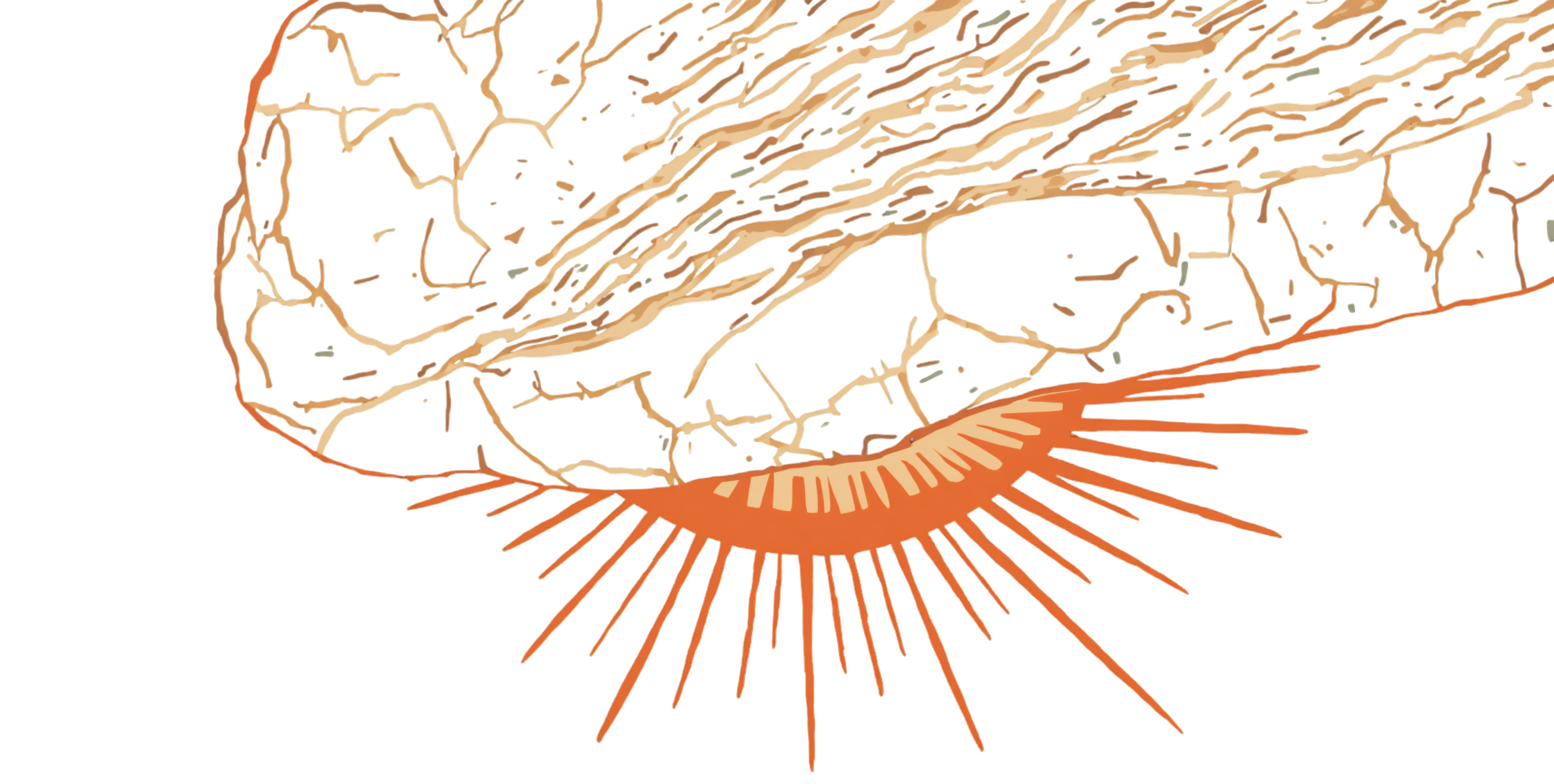
Bark is the dark, savory crust that forms on the outside of smoked meat during long low-and-slow cooks. It's not burned, and it's not caramelization — it's a layered structure of dehydrated meat proteins, rendered fat, dissolved spice rub, and smoke particulates, fused together by Maillard browning and surface evaporation over many hours. Meathead has the definitive write-up of the chemistry. The conditions it needs: low pit temp (225–275°F), a heavily-seasoned dry rub, an exposed meat surface, and time. Wrap too early with foil or paper and the bark softens; cook too hot and you sear without building the layers; skip the rub and you get color but not the deep flavor.
- What it is
- A dark, savory, layered crust on smoked meat
- Made of
- Rub compounds + dehydrated protein + rendered fat + smoke particulates
- Forms over
- ~3–8 hours at 225–275°F
- Key processes
- Maillard reaction + surface dehydration + polymerization
- Sign you have it
- Mahogany color, hard surface, can't dent with finger pressure
- What it isn't
- Caramelization, burnt meat, or smoke alone
The phenomenon
You smoke a brisket for 6, 8, 12 hours at 225°F. Around the 4-hour mark, the surface starts to darken. By hour 6, it's the color of strong coffee. By the time the cook is done, the outside of the meat is a deep mahogany, hard to the touch, and won't dent under finger pressure. That's bark.
It looks like burnt meat — it isn't. The surface is a layered crust, structurally distinct from the meat underneath. Cut into it and you'll see a cross-section: dark crust on top, the smoke ring (pink) just beneath, then the cooked muscle. Bark is the top layer of that stack — the part everyone fights over.
The science behind it
Bark builds up over hours through several chemical processes happening simultaneously on the meat surface:
Evaporation. Surface moisture is constantly evaporating off the meat (the same mechanism that drives the stall). As moisture leaves, what remains is concentrated protein, fat, and the dissolved rub.
Maillard browning. Surface amino acids react with reducing sugars from the rub and meat above ~285°F (briefly, where surface temperatures spike). This is the chemistry of every brown crust on every cooked meat — same reaction that makes a sear, but here it builds gradually over hours instead of seconds.
Polymerization. Spice rub compounds, melted fat, and protein fragments cross-link with each other into a stable, layered structure. This is what makes bark hold its shape and survive carving.
Smoke deposition. Volatile compounds from wood smoke (phenols, syringol, guaiacol) condense onto the wet, sticky surface and get locked in as the surface dries. This is where bark gets much of its color and most of its smoke flavor.
What bark is NOT: caramelization. Table sugar doesn't caramelize until around 300°F, and surface temperatures during low-and-slow cooks don't hit that. The deep brown color is Maillard, not caramel.
In the cook
Bark develops over time, in response to four levers you control during the cook:
| Lever | Effect on bark | Trade-off |
|---|---|---|
| Heavy rub | Foundation of bark; salt draws moisture, spices melt + bind | Too heavy = over-salty / muddled flavor |
| No wrap | Deepest bark; surface stays exposed the whole cook | +2–4 hours; more moisture loss |
| Wrap in foil | Bark softens; trapped steam makes it pliable | Faster cook; less crust |
| Wrap in paper | Bark mostly preserved; paper breathes, lets some moisture escape | Some softening, less than foil |
| Spritzing | Slight delay to bark formation; adds smoke uptake | Minimal real cost; helps when surface dries too fast |
The strongest bark comes from a heavy rub, an unwrapped cook, and time — the canonical Central Texas brisket approach. The pragmatic alternative is butcher paper at the stall; some bark softens during the wrap but most of it survives. Foil-wrapped bark gets noticeably softer but doesn't fully disappear — if you're wrapping in foil, unwrap for the last 30 minutes to firm the crust back up.
When it's done
Bark doesn't reach a single moment of completion the way the stall breaks — it builds gradually and is "done" when the meat is also done. But there are clear sensory signs you have good bark before pulling the cook:
| Color | Deep mahogany or coffee — not black or charred |
| Texture | Hard, doesn't dent under finger pressure |
| Sound | Light crackle when a probe enters |
| Internal temp | Bark is mature by the time meat reaches probe-tender (~195–203°F for brisket) |
If you're wrapping at the stall, the bark you have at the wrap point is essentially what you'll have at the end — minus any softening from steam in the wrap. So check it then: if it's mahogany and hard, wrap with confidence. If it's still pale or sticky, give it another 30–60 minutes unwrapped.
What people get wrong.
Bark is caramelized sugar in the rub
Caramelization requires sugar to hit ~300°F or higher, which doesn't happen during a low-and-slow cook at 225°F. The deep brown color is the Maillard reaction (protein + reducing sugar browning), not caramel. Sugar in the rub still contributes via Maillard and as a flavor compound — but caramelization isn't the mechanism doing the work.
Bark is just burnt or charred meat
It's not. Burning is pyrolysis (uncontrolled high-heat decomposition); bark is a controlled, layered structure of dehydrated protein, rendered fat, dissolved rub compounds, smoke particulates, and Maillard-browned amino acids. Cut into bark and you can see the cross-section — it's a distinct top layer, not scorched meat.
Bark comes from the smoke
Smoke contributes color (those volatile phenols like syringol and guaiacol condense onto the surface) and a good chunk of the flavor. But the structural bark — the hard, layered crust itself — is built from Maillard browning plus surface dehydration plus polymerization of the rub. You can develop bark in an electric smoker with minimal smoke; it'll be paler and less flavorful, but the structure is there.
More rub means more bark
Up to a point, yes — but you can over-do it. Past a moderately heavy application, additional rub just makes the meat over-salted or muddles the flavor balance. The bark doesn't get thicker beyond what the cook time + surface area can chemically build. Heavy rub is the foundation; multiple heavy layers are over-engineering.
You can speed up bark with high heat
High heat sears the surface — that's a quick Maillard reaction at the very outside, not bark. Bark needs hours of low temperature so the dehydration + dissolution + smoke-deposition + polymerization steps all stack up across the surface. A 6-hour hot-and-fast cook gets you color, not the layered, hard, deeply-flavored crust of bark.
What each of them says.
5 of the people we trust have covered this. Read or watch each in their own words.
- 01
 Meathead GoldwynAmazingRibs.com
Bark is a byproduct of complex chemical reactions: the Maillard reaction and polymerization, chief among them. When a rub is applied, moisture pulled to the surface dissolves the sugar and other compounds into a slurry; as the surface dries, the slurry melds with meat juices, fats, and protein to form bark. Contrary to popular belief, sugar caramelization isn't the cause — sugar doesn't caramelize until 300°F, which doesn't happen at 225°F.
- 02
 Steven RaichlenBarbecue Bible
Bark is a salty, smoky crust that forms on the exterior of brisket — a layered composition of spices, dehydrated meat, rendered fats, and smoke particulates fused into a flavorful skin. The dark color comes from smoke and oxygen meeting the seasoned surface over hours. Butcher paper preserves bark better than foil because it breathes; foil traps steam and softens the crust. Season with a heavy hand to get the bark depth you want.
- 03
 Susie BullochHey Grill, Hey
The rub is the foundation of great bark. Build it in layers — start with a base of kosher salt and coarse black pepper for the structural element, then add flavor-driven rubs over the top. Heavy application is the point: bark needs material to form from, and the rub is most of what gives bark its character. The dark, savory exterior is what readers chase and what carries the smoke flavor through every bite.
- 04
 Mad Scientist BBQYouTube — Jeremy Yoder
Jeremy tests how different spritz/spray approaches affect bark development on side-by-side briskets. Chemistry-teacher methodology applied to one of the most-debated bark variables — the kind of empirical testing the BBQ internet usually settles via opinion.
- 05
 Malcom ReedHowToBBQRight / YouTube
Malcom walks a full brisket cook with explicit attention to bark development — his 3-layer rub approach (kosher salt + black pepper base, then Killer Hogs Hot Rub, then Montreal Steak Seasoning) is built specifically to maximize bark texture and depth.
Cook it. Save the record.
Every cook gets a permanent entry — cut, fuel, temp, time, photo, what worked. Next time you want to nail that exact crust, you'll have the receipt.