
Kettle Grill
The kettle grill is the round, domed-lid charcoal cooker George Stephen designed for Weber in 1952 — and the rig most American cooks learn fire on. The shape is the trick: a deep bowl holds the coals, and the vented lid turns the whole thing into a convection oven you steer with airflow. Bank the coals to one side and you have a two-zone fire — a hot direct zone for searing and a cool indirect side for roasting, which is most of backyard cooking on one grate. Add a snake of unlit briquettes or a Vortex cone and the same $150 kettle holds 250°F for hours, smoking low and slow like a far more expensive pit. What it asks in return is a feel for the vents and a tolerance for its limits: a 22-inch bowl only holds so much, and steadying the temperature in wind or cold takes practice the dial thermometer on the lid won't teach you.
- Fuel
- Charcoal — lump or briquette
- Sizes
- 18″, 22″ (the standard), and 26″ bowls
- Price
- ~$120–250 for a Weber Original or Master-Touch
- Temp range
- 225°F low-and-slow up to 600°F+ for searing
- Best at
- Range — sear, two-zone roast, and smoke on one rig
- Invented
- 1952, by George Stephen at Weber-Stephen
What it is
The kettle grill is the round, domed-lid charcoal cooker George Stephen welded together at Weber-Stephen in 1952 — a metal sphere split into a deep bowl and a high, vented lid. Before it, backyard cooking meant open brick pits and flat braziers that spilled heat and couldn't hold smoke. The lid was the whole idea: cover the fire and the grill becomes an oven, trapping heat and circulating it around the food instead of letting it blow away.
Seventy years on, it's the rig most American cooks learn fire on. The line has grown — the bare-bones Original Kettle, the Master-Touch with its hinged grate and ash catcher, the cart-mounted Performer — but the design barely changed, because it didn't need to. The 22-inch bowl is the standard; 18-inch and 26-inch versions bracket it for smaller patios and bigger crowds. They're cheap, nearly indestructible, and the reason “a Weber” is shorthand for a charcoal grill at all.
How the heat moves
A kettle is steered entirely by air. There are two vents: an intake damper underneath the bowl and an exhaust damper in the top of the lid. Air is pulled in the bottom, feeds oxygen to the coals, heats and rises, then exits the top — a constant convection current with the food sitting in the middle of it.
The lever that actually controls temperature is the bottom intake vent: more air means a hotter fire, less air cools it down. The top vent mostly steers where the heat and smoke travel on their way out, so it usually stays cracked open to keep the current moving across the food. Lid on, the kettle holds a steady convection temperature you can dial from about 225°F to 600°F. Lid off, the coals get a rush of open air and the surface runs blistering hot — exactly what you want for a hard sear, and exactly wrong for anything slow.
Setting it up
Almost every kettle cook starts the same way: a chimney starter. Pack it with charcoal, light a couple of paper wads or a cube underneath, and in 10–15 minutes the coals ash over evenly — no lighter fluid, no chemical taste. What you do with those coals once they're lit is what turns one grill into many:
Bank them to one side and you have a two-zone fire — a hot direct side for searing, a cool indirect side for roasting — which covers most of what backyard cooking asks for. Lay a long arc of unlit briquettes around the perimeter and light one end — the snake method — and the kettle burns slow and steady for 8–12 hours, holding smoker temperatures on a single load. Pack a cone in the center with a Vortex and it runs screaming hot for crisp-skinned wings. A pan of water on the indirect side steadies the temperature and adds humidity for the long cooks.
Where it earns its keep
The kettle's case is range. The same grill that sears a steak over direct coals on a weeknight will, with a snake of briquettes and a few wood chunks, smoke a pork butt or a rack of ribs low and slow all weekend. Bank it two-zone and you can reverse sear a thick ribeye or roast a whole chicken with crackling skin.
That range is the whole value proposition. A $150 kettle does — with a little technique — most of what a shelf of single-purpose cookers costing many times more will do. Reviewers who test grills for a living keep reaching the same verdict: a Weber kettle is built to last decades, which makes its modest premium easy to justify, and it will cook just about anything you put on it.
Where it falls short
The kettle's limits are the flip side of its simplicity. Capacity is the first wall: a 22-inch bowl holds two racks of ribs or a single brisket folded to fit, not a cook for a crowd. If you're feeding twenty, you want a barrel or an offset.
Temperature stability is the second. The bowl is thin steel with no insulation, so wind and cold pull heat straight out of it — a long winter smoke means babysitting the vents in a way a thick-walled kamado or an insulated cabinet smoker doesn't. Long cooks burn through a single load of coals too, so an overnight brisket usually needs a mid-cook refuel, and ash left in the bottom slowly buries the intake vent and chokes the fire if you don't sweep it out.
Finally, the dial thermometer in the lid reads the air temperature high in the dome, not down at the grate where the food is — it can be off by 50°F. Clip a digital probe at grate level and ignore the dial. None of this makes the kettle a bad cooker; it makes it a manual one. The trade for the low price and the versatility is that you, not the machine, hold the temperature.
What goes wrong.
Steering heat with the top vent
Temperature is controlled by the bottom intake vent — that's the oxygen supply to the fire. Leave the top vent cracked to keep heat and smoke flowing across the food, and make your adjustments at the bottom. Choking the top to cool things down just traps stale, dirty smoke.
Dumping the coals flat
Spreading the lit coals evenly across the grate gives you one big hot zone and nowhere to retreat when something flares. Bank them to one side for a two-zone fire so you always have a cool side to move food to.
Reaching for lighter fluid
It leaves a petroleum taste and you don't need it. A chimney starter lights a full load of charcoal cleanly in about 15 minutes — paper or a cube underneath, no accelerant anywhere near the food.
Letting ash pile up
Ash builds in the bottom of the bowl and slowly smothers the intake vent; mid-cook the fire fades and the temperature drops for no obvious reason. Sweep the bowl and empty the ash catcher before any long cook.
Lifting the lid to peek
Every time the lid comes off, the convection heat and smoke escape and the temperature craters — then takes time to climb back. Set the vents, trust them, and leave it closed. If you're looking, you aren't cooking.
What each of them says.
3 of the people we trust have covered this. Read or watch each in their own words.
- 01
 Meathead GoldwynAmazingRibs.com
Get the most out of a charcoal grill by setting up two heat zones — coals banked on one side for direct, high-heat searing, the other side left empty for indirect cooking. That single setup gives you the temperature control almost everything else depends on. And control the heat with the bottom intake vents, which feed oxygen to the coals — not the top exhaust vent.
- 02
 Susie BullochHey Grill, Hey
Temperature on a charcoal grill comes down to airflow: more air means a hotter fire, less air cools it down, so you dial in your target by opening and closing the vents. Don't trust the dome thermometer — it's often inaccurate; use a reliable probe at grate level. A water pan acts as a heat sink to smooth out spikes on longer cooks.
- 03
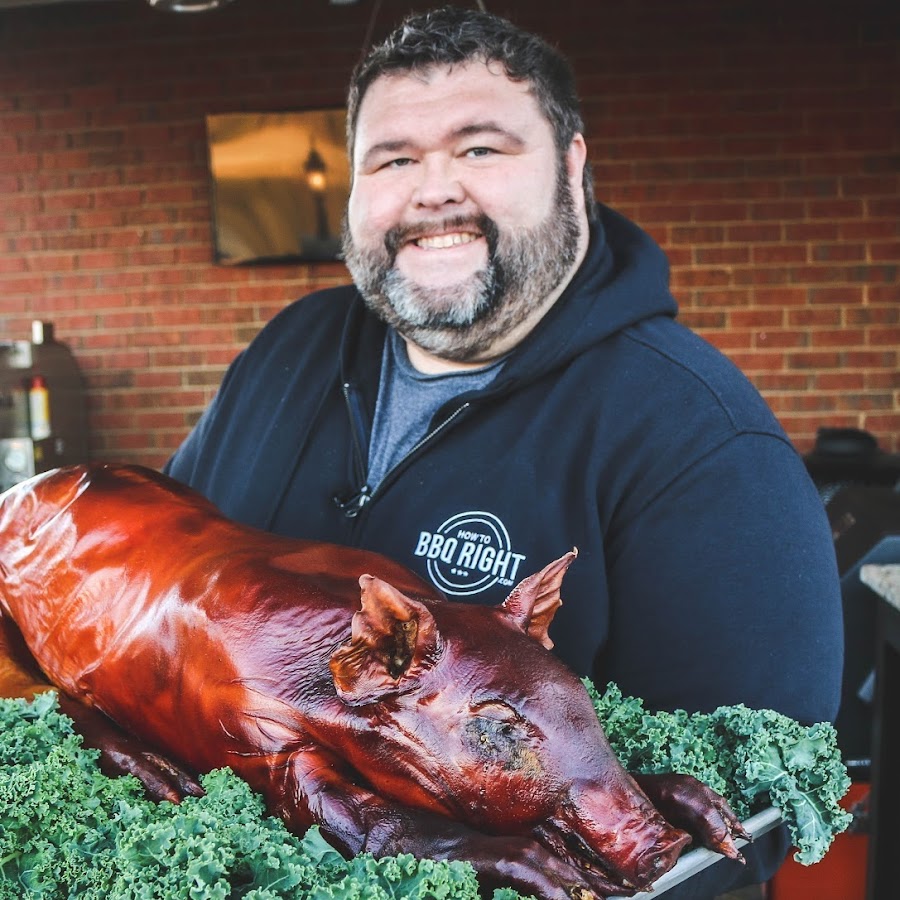 Malcom ReedHowToBBQRight / YouTube
The clearest proof that a kettle is a real smoker, not just a grill: Malcom sets up a snake of briquettes on a 22-inch Weber, runs it low and slow, and turns out a full pulled-pork butt — the cook most people assume needs a dedicated smoker.
Cook it. Save the record.
Every cook gets a permanent entry — cut, fuel, temp, time, photo, what worked. Next time you want to nail that exact crust, you'll have the receipt.