
Gas
Gas is the convenience fuel of American backyard grilling — instant ignition, dial-precise burner control, and the same fuel today as last weekend. Available as propane (portable tank, the default) or natural gas (plumbed to the house line, effectively infinite supply). Modern multi-burner rigs hit competitive sear temperatures and run multi-zone setups by design, which is gas’s structural advantage over single-bed charcoal. Among the five mainstream fuel types, gas is the one most cooks reach for on a Tuesday — neutral flavor by design, with a wood chip box bridging to barbecue character when wanted.
- Source
- Propane (LPG, portable tank) or natural gas (plumbed methane)
- Forms
- 20 lb propane tank · in-line natural gas hookup
- Price
- $20-25 per 20 lb tank · natural gas ~$0.10-0.20/hr at retail rates
- Temp range
- 225-700°F (burner-controlled; high-BTU rigs reach 900°F+)
- Best at
- Convenience, multi-zone control, reproducibility
- First popularized
- 1950s suburban backyards — first mass-market propane grills shipped late 1950s
What it is
Gas grills burn either propane or natural gas through a set of stainless or cast-iron burner tubes underneath the cooking grate. The fuel arrives under pressure, mixes with air at the burner, and combusts as a clean blue flame. The grate sits above the burners; a layer of flavorizer bars, ceramic briquettes, or heat tents shields the burners from drippings and helps distribute heat.
Propane is the default — sold as liquefied petroleum gas in the familiar 20 lb refillable tank. Portable, available at every hardware store and gas station, and burns hotter per cubic foot than natural gas. A full tank runs roughly 18-20 hours of grilling at medium heat.
Natural gas is plumbed directly to the grill from the house gas line. Infinite supply, lower per-hour cost at residential rates, and no tanks to schlep — at the cost of permanent installation and a fixed grill location. Most premium gas grills (Weber Genesis, Summit, Napoleon) ship a propane SKU and a natural gas SKU; the burners and orifices are sized differently for each fuel.
Iconic models: Weber Genesis (the canonical American gas grill, in production since 1985), Weber Spirit (entry-level), Weber Summit (premium), Napoleon, Broil King, Lynx (built-in luxury tier).
How the heat moves
Heat output is controlled at the knob: open the valve, more gas flows, more heat. Each burner is independently dialed, which is the structural feature that separates gas from charcoal — you’re not building a heat geometry by piling coals, you’re configuring it by which burners are lit and how high.
Burners are rated in BTU per hour — the energy output at full open. Total BTU figures (30,000 / 45,000 / 60,000+ across a three-to-four-burner rig) get heavy marketing play, but Meathead Goldwyn calls this misleading: heat flux (BTU per square inch of cooking surface) matters more than raw total. A small grill with 30,000 BTU over 300 square inches outperforms a giant grill with 60,000 BTU spread across 800 square inches.
For flavor, gas is neutral by design — clean combustion produces almost no smoke. To bridge to barbecue character, cooks use a wood chip box or foil pouch: chunks of hickory, oak, or fruit wood placed over a lit burner smolder and release flavored smoke. This is how gas grills do low-and-slow cooks — single burner on low, chip pouch above it, food on the unlit side.
Setting it up
Multi-burner control gives gas its zone geometry. Three configurations cover most cooking:
All burners high (direct)
Every burner on full. Maximum heat across the entire grate for searing burgers, steaks, hot dogs, and quick high-heat cooks. The default Tuesday-night weeknight setup.
Two-zone (sear + safety zone)
On a three- or four-burner rig, run one burner high, one medium, leave the last off. Instant two-zone fire — sear on the hot side, move to the off-burner side when flare-ups start or when the meat needs indirect finish. Required setup for reverse sear on thick steaks.
Indirect (low-and-slow smoking)
Light only the outermost burner on low; food sits in the middle or far side over unlit burners. Foil- wrapped wood chip pouch goes directly above the lit burner. Holds 225-275°F for ribs, pork shoulder, and pulled pork — Malcom Reed’s gas-grill smoking method.
Open the lid before lighting — never light with the lid closed (gas pools and the ignition can be violent). Open the tank valve fully, then click the burner igniter. If no flame catches in 5 seconds, close everything and wait 5 minutes before retrying. Keep a backup full propane tank on hand — running out mid-cook is the most common gas-grill failure. A simple tank scale or magnetic gauge tells you what’s left.
Where it earns its keep
Gas is the canonical “weeknight, dependable, reproducible” fuel. Where it dominates:
Weeknight speed
Five minutes from cold to cooking temperature. Walk-out-from-work, light, throw on chicken thighs, eat in 25 minutes. Charcoal’s 15-20 minute chimney start kills this use case.
High-volume entertaining
Four to six burners on a Genesis or Summit cover a giant grate — feed 12 burgers, eight steaks, and a rack of vegetables simultaneously with independent temperature zones. The cookout grill.
Steakhouse-style searing
Modern high-BTU rigs (and infrared sear-station add-ons on premium grills) hit 700-900°F. Roughly 90% of premium American steakhouses grill aged beef on gas, not charcoal — convenience plus consistency on expensive cuts.
Where it falls short
Gas’s convenience comes with honest limits. The tradeoffs:
Flavor is neutral by design
Clean combustion means almost no smoke flavor. Without a chip box, food off a gas grill tastes like food off a very hot pan. Deep barbecue character requires active intervention.
Long low-and-slow is awkward
Holding 225°F on a single low burner works, but most gas grills are insulated for searing, not for thermal-mass smoking. Brisket on a gas grill is possible; brisket on a kamado or offset is significantly better.
Tank-runout risk
Running out of propane at minute 40 of a 90-minute cook is the canonical gas-grill failure. Natural gas fixes this but requires a plumbed line; propane needs a backup tank discipline.
Burner and grate lifespan
Stainless burners and flavorizer bars rust and corrode over 5-10 years even on premium grills. Entry-level rigs ($300-500) often need full burner replacement at year 3-4. Charcoal kettles outlast most gas grills by a decade.
No fire ritual
For cooks who grill because they like managing fire, the click-and-go nature of gas is the whole point of failure. If the appeal is the craft, charcoal and pellet rigs deliver more of it.
What goes wrong.
Closing the lid before lighting
Gas pools under a closed lid; clicking the igniter on a pooled chamber can produce a violent ignition that singes eyebrows and damages the grill. Always lift the lid fully, open the tank valve, then light. If a burner doesn’t catch in 5 seconds, shut everything off and wait 5 minutes before retrying.
Buying BTU instead of heat flux
A 60,000 BTU four-burner grill with 800 square inches of grate produces less actual heat per inch than a 30,000 BTU three-burner with 400 square inches. Meathead’s rule: divide total BTU by cooking-surface area. Anything under 80 BTU per square inch sears poorly.
Skipping the chip box on long cooks
Treating a gas grill as a sear-only device wastes its low-and-slow potential. A foil pouch of wood chips over the lit burner — replaced every 45-60 minutes — gives ribs and pork shoulder real smoke flavor. Without it, the meat tastes like very hot pan-roasted meat.
Letting flare-ups cook the food
Fat drippings hit the burners, ignite, and flame leaps through the grate. Move the food immediately to a turned- off burner zone — that’s the whole point of running a safety zone. Then trim excess fat, close the lid briefly to choke oxygen, or reduce the burner output. Flare-ups coat food in soot and acrid carbon, not flavor.
Ignoring tank-level discipline
Running out of propane at minute 40 of a 90-minute cook is the canonical gas-grill failure. Keep a backup full tank on hand and weigh the active tank (or use a magnetic gauge) before any cook longer than 30 minutes. A 20 lb propane tank holds roughly 18-20 hours of medium-heat grilling when full.
What each of them says.
4 of the people we trust have covered this. Read or watch each in their own words.
- 01
 Meathead GoldwynAmazingRibs
Gas wins on convenience, control, and reproducibility — instant ignition, dial-precise burner zones, and the same fuel today as last weekend. Goldwyn dismisses BTU ratings as marketing noise (he prefers heat flux: BTU per square inch of cooking surface) and notes that roughly 90 percent of premium steakhouses grill expensive aged beef on gas, not charcoal. The tradeoff is flavor: gas is neutral by design, so deep barbecue character requires a wood chip box or pouch.
- 02
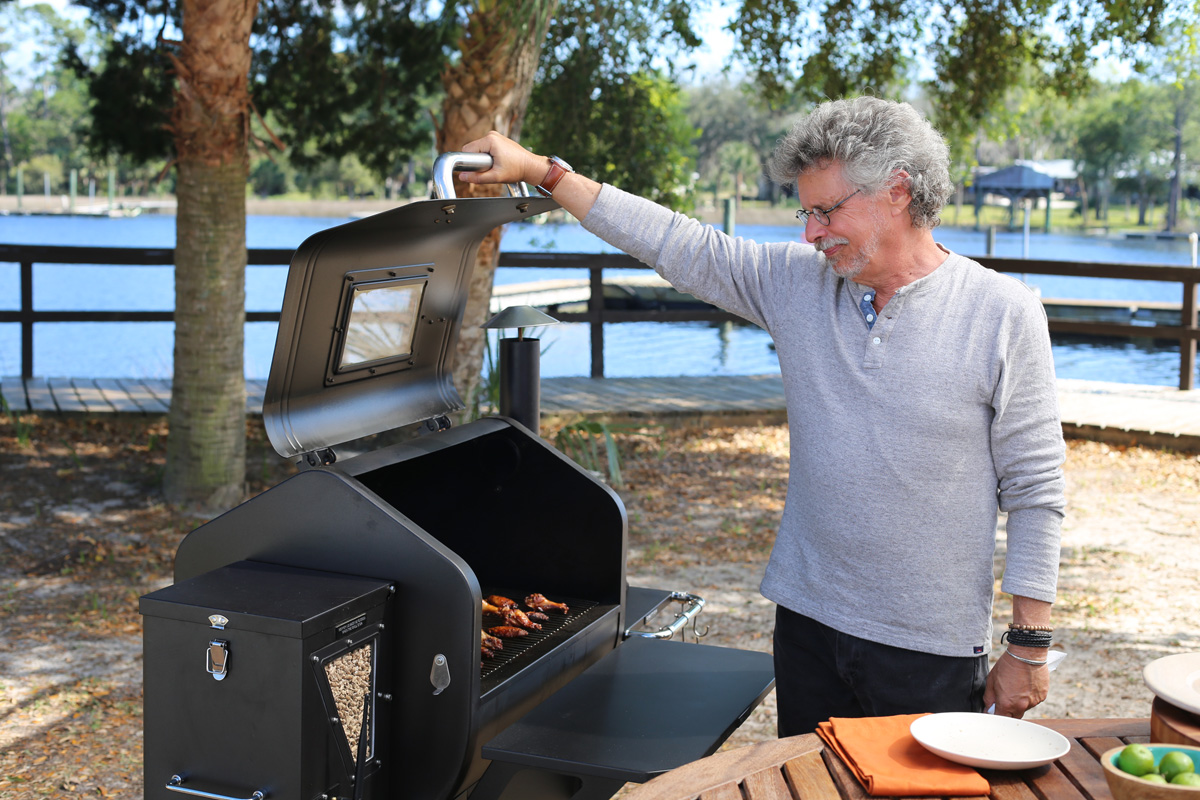 Steven RaichlenBarbecue Bible
Raichlen treats gas as a multi-zone instrument. For direct grilling on a three- or four-burner rig, run one burner high, one or two medium, leave the last off — instant safety zone. For indirect, light the outside burners and cook in the middle. The burner count dictates the zone geometry, which is gas's structural advantage over single-bed charcoal.
- 03
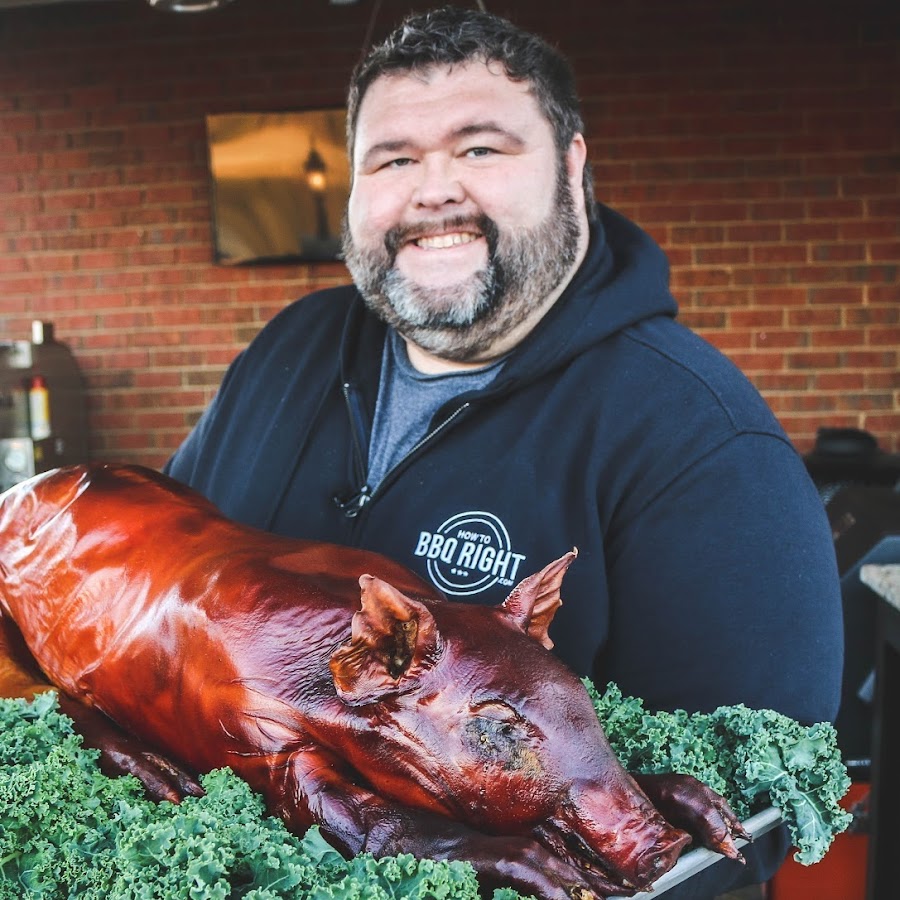 Malcom ReedHowToBBQRight / YouTube
Reed walks through configuring a multi-burner gas grill for indirect low-and-slow — single burner on low at one end, wood chip pouch over the lit burner, food on the cold side. The practical demonstration of how to coax barbecue flavor out of a grill engineered for speed.
- 04Malcom ReedHowToBBQRight / YouTube
Full-cook proof of concept: baby backs on a propane grill at 250-275 degrees with a foil-wrapped wood chip pouch over a single burner. Demonstrates that gas can produce competitive smoke results when treated as a smoker, not a sear box.
Cook it. Save the record.
Every cook gets a permanent entry — cut, fuel, temp, time, photo, what worked. Next time you want to nail that exact crust, you'll have the receipt.