
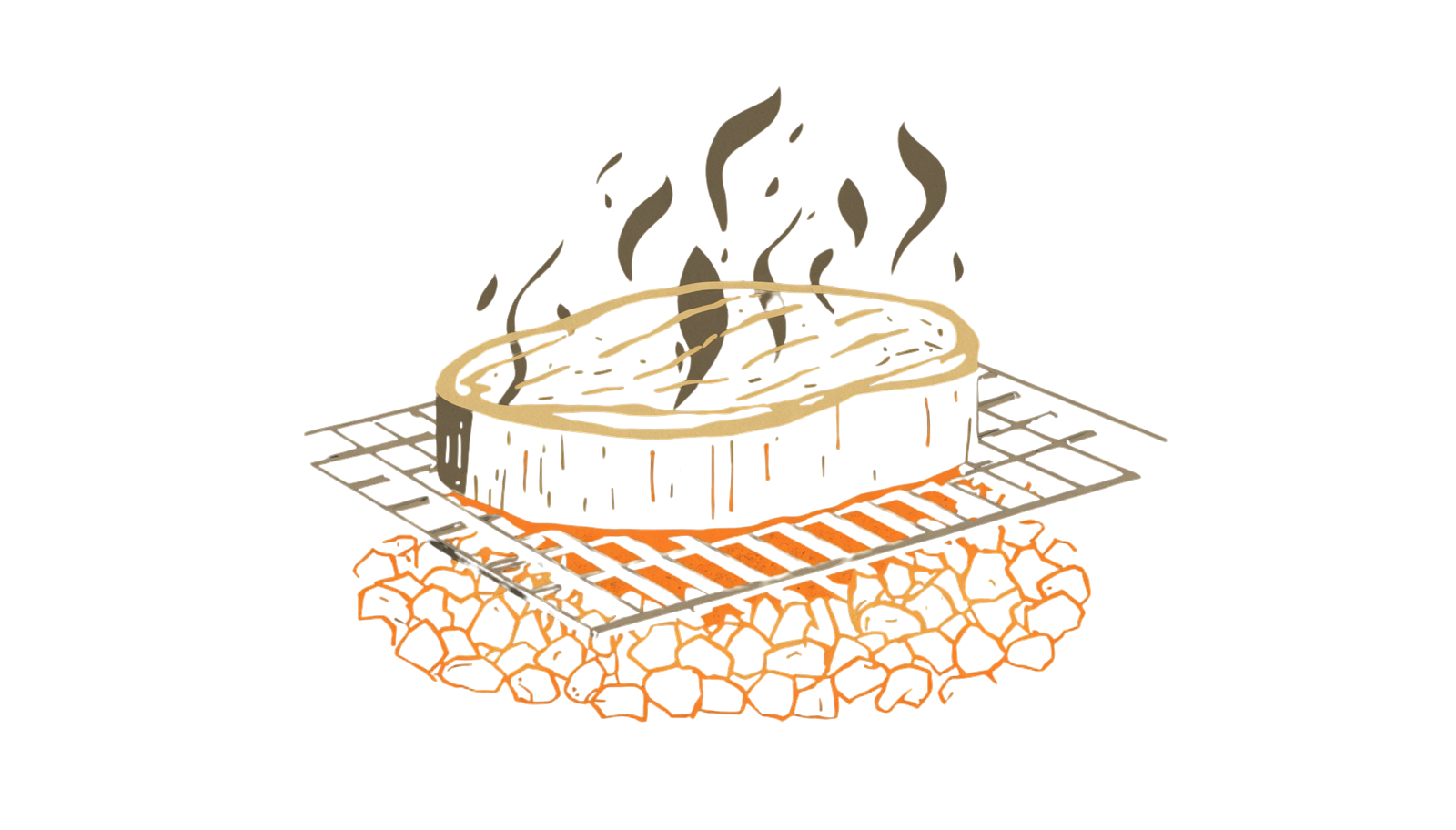
Reverse Sear
Reverse sear inverts the traditional steakhouse cook. The normal method goes hot first, then slow finish; reverse sear goes slow first, then hot finish. The result is an evenly cooked interior with a crisp crust — and no grey band of overdone meat ringing the medium-rare center. Works best on thick cuts (1.5"+) where the slow phase has enough mass to matter; thinner cuts don't benefit and just dry out. Kenji popularized the modern version on Serious Eats in the mid-2000s, and it's now the default approach for cooking a great steak at home.
- Set up
- 225°F low oven or cool side of grill
- Slow cook
- Until 115°F internal — about 45 min for a 1.5" steak
- Sear
- 60–90 sec/side over high heat (cast iron or hot grill)
- Final internal
- 125–130°F (medium-rare)
- Rest
- 5 min before slicing
- Best for
- Thick cuts, 1.5"+ (ribeye, strip, tomahawk)
Before you cook.
- Equipment
- Cast iron pan or hot grill. Instant-read thermometer (essential). Optional: sheet pan + cooling rack for the slow cook.
- Day before
- Dry brine: salt liberally on all sides, leave uncovered on a rack in the fridge 24–48 hours. Better seasoning, drier surface for the sear.
- Day of
- Bring steak to room temp on the counter — about 30 minutes before the cook starts.
What to cook with it.
Pull-at and finish temperatures.
Other ways to do it.
Cold sear
Refrigerate the steak briefly after the slow cook (10–15 min) before searing. The colder surface lets the pan transfer maximum heat into the crust without overshooting the interior. Kenji's 2020 refinement — produces the best crust of any reverse-sear method.
Sous-vide + sear
Replace the slow cook with a water bath at the target finish temp minus 5°F. The most precise version — no overshoot is possible. Best for thick or expensive cuts when you want maximum control.
Smoke + sear
Do the slow phase on a smoker with wood (oak or pecan) instead of an oven. Adds BBQ smoke flavor to the interior. Pit at 225°F, target the same 115°F internal, then transfer to a hot grate or cast iron for the sear.
Broiler finish
When you don't have a grill or want to skip the cast iron mess: do the slow cook in the oven, then crank the broiler and finish under it for 2–4 minutes. Less crust than a pan or grill sear but cleaner cleanup.
What goes wrong.
Grey, soft crust
Wet surface kills the sear. Pat the steak dry with paper towels after the slow cook, or rest it on a rack for 5–10 minutes so surface moisture evaporates before it hits the pan.
Overshot the target temp
Sear added more interior cook than expected. Pull from the slow phase 5–10°F BELOW your finish target — the sear and carryover do the rest. 60–90 seconds/side is the cap.
No Maillard browning
Pan not hot enough. Wait until the cast iron is visibly smoking before the steak goes in. If you can hold your hand 6" above the pan for more than a second, it's not ready.
Wrong cut
Reverse sear needs mass. Cuts thinner than 1.5" — skirt, flank, hanger, ¾" steaks — don't have enough interior to benefit from the slow phase and just dry out. Use a traditional sear for those.
Skipped the dry brine
A proper dry brine — salt 24+ hours ahead, uncovered on a rack in the fridge — means better surface seasoning, a drier surface for a cleaner sear, and a steak that holds moisture better through the whole cook.
What each of them says.
7 of the people we trust have covered this. Read or watch each in their own words.
- 01
 J. Kenji López-AltSerious Eats
Reverse sear is the best way to cook a big steak: medium-rare from edge to edge with a crisp crust, and almost no overcooked meat anywhere. Slow-roast the steak in a low oven (or the cool side of a grill), then sear hard at the very end.
- 02
 Meathead GoldwynAmazingRibs.com
Smoke-roast the steak at low temp until ~115°F internal, then sear hard with the lid open to crust the exterior. The reverse order keeps the proteins from bunching up under high heat, so the interior eats more tender than the traditional sear-first method.
- 03
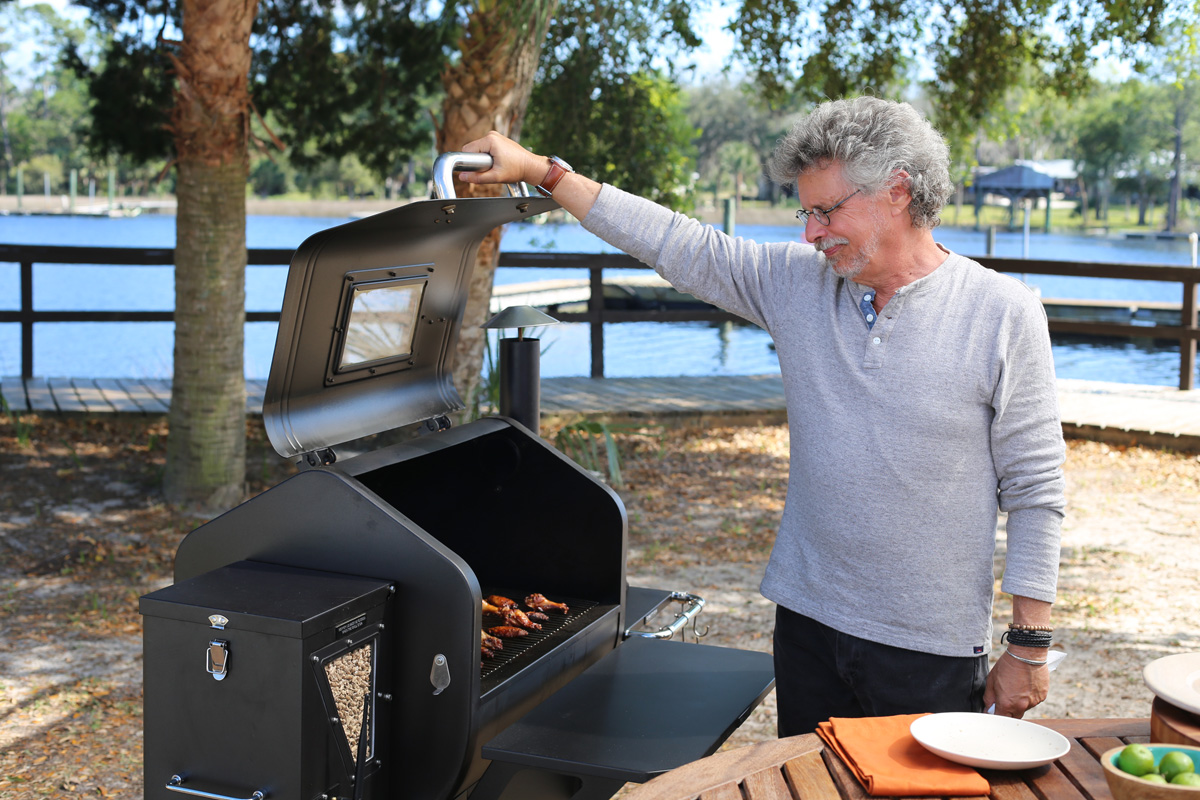 Steven RaichlenBarbecue Bible
Reverse sear gives you uniform color edge-to-edge — no more grey band around a purplish center. Smoke or roast at 225–250°F until 100–110°F internal, then sear hard over direct heat to build the crust. Works best on cuts at least 1–1½" thick; the slow cook needs mass to matter.
- 04
 Susie BullochHey Grill, Hey
Set up a two-zone fire at 225°F. Cook on the indirect side until 5°F shy of target. Sear over the hot side with the lid open, 2–3 min/side. Rest with a tablespoon of butter on top — it finishes melting onto the steak as carryover heat completes the cook.
- 05
 Mad Scientist BBQYouTube — Jeremy Yoder
Jeremy reverse-sears two tomahawks side-by-side, walking through temp targets and resting before the final crust.
- 06
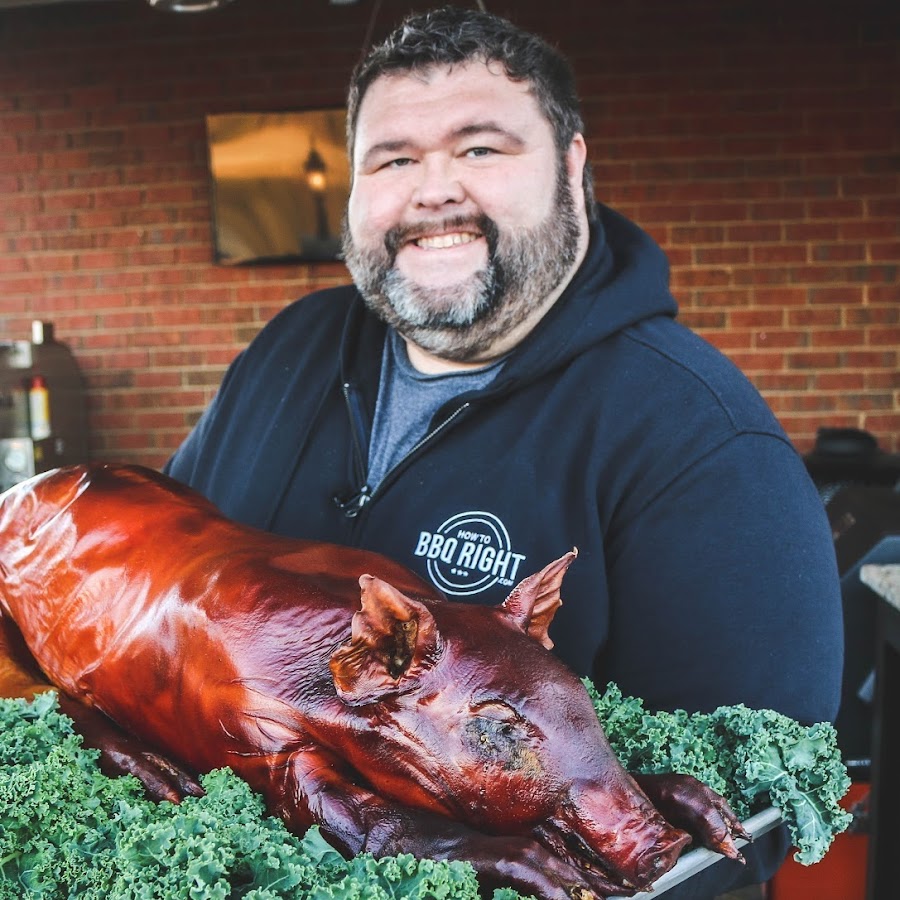 Malcom ReedHowToBBQRight / YouTube
Malcom walks a prime tomahawk reverse sear on a charcoal kettle: dry brine, indirect cook to 110°F, then a hard direct-heat sear for the crust.
- 07
 Chud's BBQYouTube — Bradley Robinson
Bradley applies the technique to picanha — different cut, same principle. Backyard pace, no special equipment.
Cook it. Save the record.
Every cook gets a permanent entry — cut, fuel, temp, time, photo, what worked. Next time you want to nail that exact crust, you'll have the receipt.