
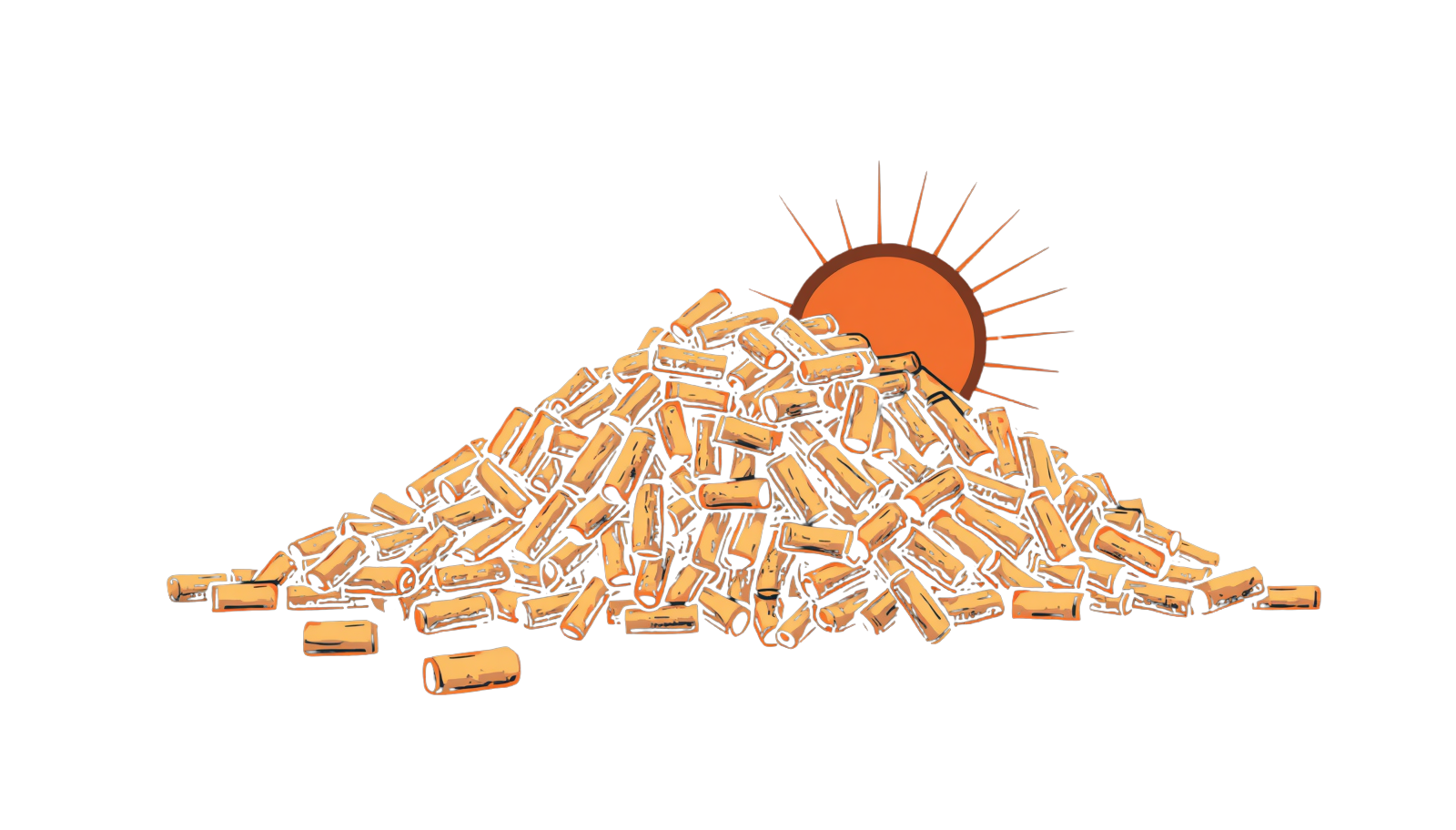
Pellets
Pellets are compressed hardwood sawdust extruded under high pressure into uniform half-inch cylinders, fed by an electric auger from a hopper into a fire pot where a digital thermostat controls the feed rate. They are the fuel that made the pellet grill possible — set a temperature, the controller adds pellets to hit it. Among the five mainstream fuel types, pellets sit closest to charcoal on flavor but closest to gas on convenience — the trade-off is a hard ceiling on sear temperature and a non-negotiable rule about food-grade fuel only.
- Source
- Compressed hardwood sawdust extruded into uniform cylinders, no binders
- Forms
- 100% single-species (oak, hickory, mesquite, cherry, apple) · Oak-blend competition pellets
- Price
- $1-2/lb mainstream · $2-3/lb premium single-species
- Temp range
- 180-500°F (thermostat-controlled)
- Best at
- Set-and-forget low-and-slow — temperature stability across long cooks
- First popularized
- Traeger, 1985 (Mt. Angel, Oregon)
What it is
A pellet is compressed hardwood sawdust extruded under high pressure through a die that shapes it into a uniform cylinder — roughly a quarter-inch in diameter and three quarters of an inch long. The pressure of extrusion activates the wood’s natural lignin, which binds the sawdust together without any added glue, starch, or chemical filler. The result is a dense, dry, low-moisture fuel that burns nearly completely.
The single most important distinction in pellets is food-grade vs heater pellets. Food-grade cooking pellets are pure compressed hardwood with no fillers. Heater pellets — sold for pellet stoves — often contain softwoods, treated lumber scraps, and chemical contaminants. Heater pellets must never be burned in a cooker; the bag will say “BBQ” or “cooking” or it should not go in the hopper.
The second distinction is 100% single-species vs oak-blend competition pellets. Premium brands (Lumber Jack, Knottywood, Bear Mountain, Jealous Devil) sell bags of pure hickory, pure cherry, pure mesquite. Many mainstream brands (Pit Boss, Traeger’s base line) use an oak base with a small percentage of the named species for flavoring — cheaper to produce, milder smoke character. Iconic brands: Lumber Jack, Bear Mountain, Knottywood, Jealous Devil, Pit Boss, Traeger, CookinPellets.
How the heat moves
A pellet cooker holds pellets in a hopper that gravity-feeds into an electric auger. The auger turns at a rate set by a digital thermostat, delivering pellets into a small fire pot at the bottom of the cooking chamber. A hot rod ignites the first batch; from there, an internal combustion fan keeps the fire pot burning while a convection fan distributes heat across the chamber.
Heat output is controlled by auger speed. Higher set temperature = faster auger = more pellets per minute = bigger fire. The thermostat reads chamber temp and adjusts the feed rate continuously. Once dialed in, the cooker holds within roughly 10°F of target for as long as the hopper has pellets — typically 8-20 hours of unattended runtime depending on hopper size and set temp.
The trade-off: because pellets burn cleanly and quickly, smoke output is heaviest at low temperatures (180-225°F) and tapers off as temp climbs. Many cookers add a dedicated “Super Smoke” mode that pulses the auger to extend smolder time. Above 400°F, smoke contribution is minimal — pellet cookers are convection ovens at that point, not smokers.
Setting it up
Pellet cookers run a single zone — the entire grate sits over the convection-heated chamber. Three setup decisions cover most cooks:
Low smoke (180-225°F)
The pellet cooker’s wheelhouse. Long cooks where smoke flavor is the goal — brisket, pork shoulder, ribs. See low and slow.
Medium roast (275-375°F)
Indirect roasting territory. Whole chickens, pork loins, prime ribs, turkeys. Smoke output drops but enough to add character; convection cook circulates heat evenly.
High heat (400-500°F)
The ceiling. Burgers, chicken thighs, salmon. Not a true sear — pellet cookers top out well below charcoal or gas grates. Many pitmasters finish on a separate sear device.
Buy food-grade cooking pellets only — the bag must say BBQ or cooking. Premium 100% single-species brands (Lumber Jack, Bear Mountain, Knottywood, Jealous Devil) deliver stronger and cleaner smoke than oak-blend competition pellets. Store in an airtight container; any moisture turns pellets to sawdust and jams the auger. Empty the hopper between cooks if the cooker lives outdoors uncovered.
Where it earns its keep
Pellets exist to solve one problem: long unattended cooks with consistent temperature and smoke. That’s where they shine:
Overnight brisket and pork shoulder
Set 225°F at 10pm, sleep, wake to a cooker still holding 225°F at 8am. A hopper of pellets goes 12-20 hours unattended — long enough for a full packer brisket without a single mid-cook refuel.
Set-and-forget weekday smokes
Hit start, walk away, come back. No vent dialing, no fire-tending, no temperature-management skill required. The closest live-fire fuel gets to gas-grill convenience.
Single-species flavor experimentation
Pure cherry, pure hickory, pure post oak — swap bags to swap flavor without splitting chunks. Blendable in the hopper for custom profiles.
Cold-weather and beginner cooks
The thermostat compensates for wind and cold the way charcoal can’t. New cooks can hit a respectable brisket on the first attempt without learning vent management first.
Where it falls short
The convenience that defines pellets is the same thing that limits them. The honest constraints:
Sear ceiling
Most pellet cookers top out around 500°F at the grate. That’s well short of the 700-900°F charcoal hits for steakhouse sears. Many pellet pitmasters finish steaks on a separate device.
Lighter smoke profile
Pellets burn more completely than whole wood logs, so smoke output is cleaner but thinner. Stick-burners delivering whole-log fires put down more aggressive smoke than any pellet cooker can match.
Electricity dependence
The auger, igniter, and fans all run on power. No outlet, no cook. A tripped breaker mid-brisket can end the session. Battery backups exist but add cost.
Moisture-fragile fuel
A single rainy night on an open hopper can swell pellets into sawdust and jam the auger. Storage discipline is non-negotiable in a way charcoal and wood don’t demand.
Mechanical failure surface
Augers jam, igniters burn out, control boards fail. A charcoal kettle has nothing that can break. Pellet cookers ask the user to maintain a small appliance alongside the fire.
What goes wrong.
Burning heater pellets in a cooker
Heater pellets sold for pellet stoves often contain softwoods, treated lumber, and chemical contaminants — they must never go in a cooker. The bag has to say BBQ or cooking. If the label is vague, set it down and buy a food-grade brand.
Storing pellets in the bag outdoors
Pellets absorb humidity on contact and swell into sawdust that jams the auger. Transfer the bag’s contents to a sealed airtight container the day they come home. Empty the hopper between cooks if the cooker lives uncovered.
Buying oak-blend competition pellets expecting hickory smoke
Many mainstream “hickory” pellets are oak base with a small percentage of hickory for flavoring — the smoke profile is mostly oak. For real species character, buy 100% single-species from Lumber Jack, Bear Mountain, Knottywood, or Jealous Devil. The bag should state 100% on the front.
Trying to sear steaks on a pellet cooker
Pellet cookers top out around 500°F at the grate — well below the 700-900°F a charcoal kettle or kamado hits for true steakhouse sears. Use the pellet cooker for the smoke phase of a reverse sear, then finish over charcoal or a cast iron pan.
Skipping the periodic ash and grease cleanout
Pellets burn nearly completely — ten pounds yields about half a cup of ash — but that ash still accumulates in the fire pot and chokes the burn. Vacuum the fire pot and scrape the grease tray every few cooks; let it build up and the next cook either won’t light or runs uneven.
What each of them says.
4 of the people we trust have covered this. Read or watch each in their own words.
- 01
 Meathead GoldwynAmazingRibs
Goldwyn draws a hard line between food-grade pellets and heater pellets: heater pellets often contain softwoods, treated lumber, and chemical contaminants and must never be burned in a cooker. Cooking pellets are pure compressed hardwood sawdust with no fillers, so combustion is nearly complete — ten pounds yields about half a cup of ash. He stores pellets in an airtight container because moisture ruins them on contact, and favors brands with the least sawdust in the bag so the auger does not jam.
- 02
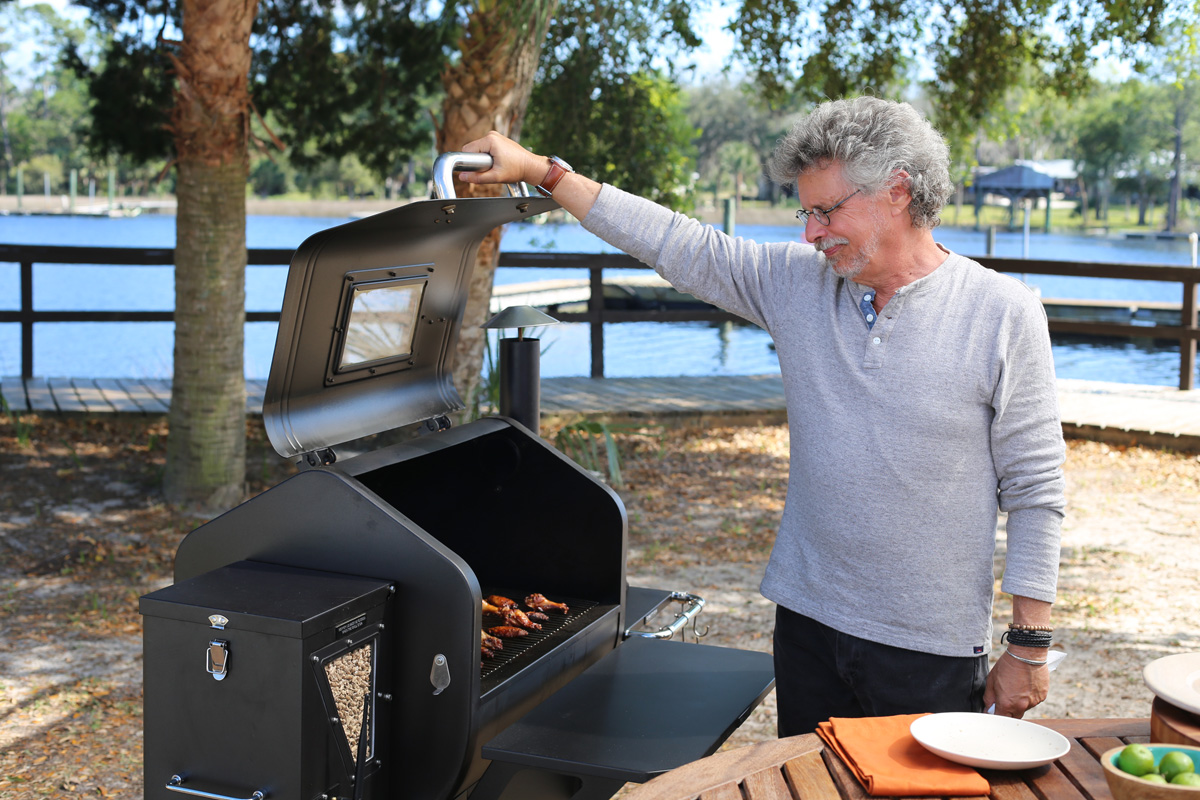 Steven RaichlenBarbecue Bible
Raichlen frames pellets as compressed sawdust extruded under high pressure into uniform cylinders — flavored from hickory to mesquite, blendable in the hopper, and dependent on a single absolute rule: buy food-grade fuel only, because furnace pellets can carry contaminants. He stresses that any moisture renders pellets useless, so dry storage in a sealed container is non-negotiable.
- 03
 Mad Scientist BBQJeremy Yoder / YouTube
Yoder runs six different pellet brands head-to-head on wagyu briskets, isolating the brand-quality variable that separates 100% single-species hardwood pellets from oak-blend competition products. The most direct test of why pellet brand selection matters.
- 04
 Chud's BBQBradley Robinson / YouTube
Robinson — a Texas stick-burner pitmaster from Leroy and Lewis — interrogates pellet cookers honestly from the offset perspective, walking through what the auger-fed pellet does and does not deliver on smoke flavor compared to whole logs.
Cook it. Save the record.
Every cook gets a permanent entry — cut, fuel, temp, time, photo, what worked. Next time you want to nail that exact crust, you'll have the receipt.