
Fuel Types
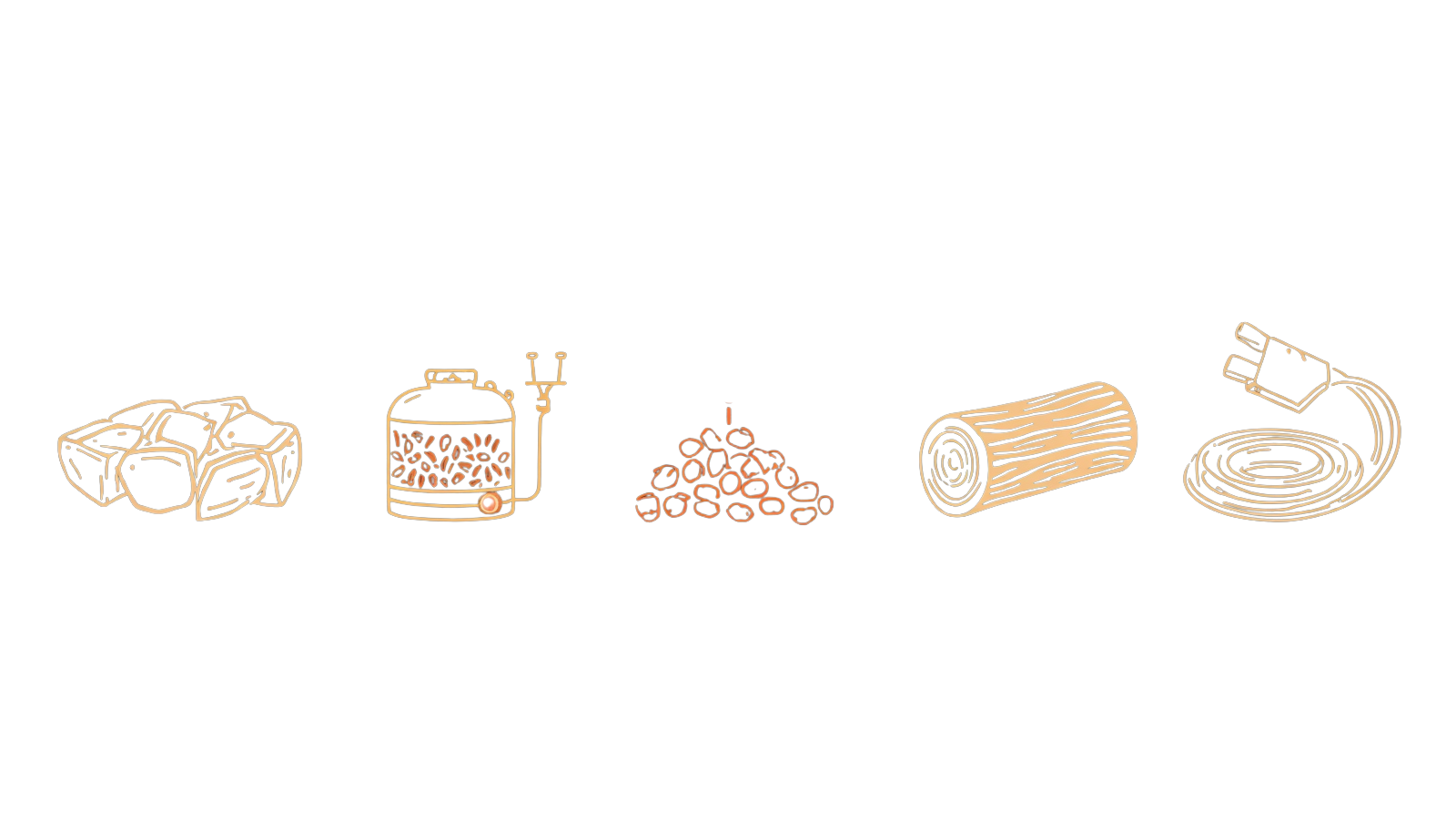
Most American backyard cooks pick between three: charcoal (flavor, effort), gas (convenience, mild), or pellet (set-and-forget with medium smoke). Wood — whole splits in an offset smoker — is the committed pitmaster’s domain: uncompromising, heavy work, irreplaceable for Texas brisket. Electric is the apartment-friendly outlier — true low-and-slow without combustion, and the weakest smoke flavor. Meathead argues most serious cooks end up with two devices, not one. The “best” fuel is the one whose tradeoffs you’ll accept for years.
| Charcoal | Gas | Pellet | Wood | Electric | |
|---|---|---|---|---|---|
| Flavor | Strong smoke | Mild | Medium smoke | Strongest, cleanest | Weakest |
| Temp control | Manual vents | Knob (instant) | Digital | Manual feeding | Digital |
| Setup time | 15-25 min | Under 5 min | 10-15 min | 30-45 min + tending | Under 5 min |
| Fuel cost | $$ | $$$ | $$$ | $$ | $ |
| Cleanup | High (ash) | Low | Low | High (ash + logs) | Low |
The differences that matter
Three dimensions drive the choice; the rest is implementation detail.
Flavor. Wood and charcoal produce the deepest smoke; pellet sits in the middle; gas and electric are the mildest — gas burns clean enough that the meat’s own flavor dominates, electric so clean that smoke happens only when you add wood chips. If smoke flavor is the whole point of cooking outside, that’s a real fork in the road.
Effort. Gas, pellet, and electric ignite in under five minutes and hold temperature on a knob or digital setpoint. Charcoal demands a chimney starter and vent management. Wood demands tending a live fire across an entire cook — a split every 30-45 minutes for hours. The asymmetry is enormous: a pellet brisket is a 12-hour set-and-forget; a wood brisket is 12 hours of active fire management.
Cost over time. Entry-level options in any fuel category land between $200-500 — initial purchase varies less than people expect. The real divergence is fuel cost over years of cooking. Lump charcoal and split wood run cheap; pellets and propane cost more per cook; electric is the cheapest ongoing fuel but the device ceiling is lower. A serious wood-smoker burns $40-60 of splits per overnight brisket; the same cook on a pellet smoker is closer to $15-25.
Charcoal
The default backyard fuel for most of American grilling history. Charcoal — either lump (carbonized hardwood chunks) or briquettes (compressed sawdust + binders) — burns hot enough to sear at 700-900°F and slow enough to smoke at 225°F. The flavor profile is recognizable as “BBQ” to most American palates.
Lit coals throw radiant heat; airflow controlled by intake + exhaust vents on a kettle, kamado, or vertical smoker. More airflow = hotter; choked vents = lower and longer.
- +Canonical “grilled” flavor
- +Versatile — high-heat sear AND low-and-slow smoke on one device
- +Low fuel cost
- +Accepts wood chunks for extra smoke
- −15-25 minute startup with chimney
- −Ash cleanup after every cook
- −Skill to hold steady temperature
- −Requires learning two-zone fire or the snake method to control heat zones
Gas
Propane (most common) or natural gas (plumbed in) — the convenience-first fuel. A gas grill ignites with a button push and reaches cooking temperature in under five minutes. Knob-controlled burners give precise, predictable heat.
Burners under cast-iron or stainless cooking grates push direct heat up. Higher-end models have multiple zones for independent temperature control across the grate.
- +Instant ignition, ready in under 5 minutes
- +Precise, knob-controlled temperature
- +Low cleanup, runs year-round in cold weather
- +High-BTU models sear competitively with charcoal
- −Mild flavor — meat dominates, smoke recedes
- −Smoking is possible with a chip box but pellet or charcoal does it better
- −Most BBQ-focused cooks own gas as a second device, not their first
Pellet
Compressed sawdust pellets fed by an electric auger into a burn pot — the newest mainstream fuel and the fastest-growing category in BBQ. A pellet grill controller runs the auger speed based on a digital setpoint, holding within 5-10°F of target for hours without tending.
Small wood pellets (food-grade, no fillers in the better brands) feed continuously into a burn pot; a hot rod ignites the first batch; a fan controls airflow; a thermostat holds temperature. The result is set-and-forget low-and-slow that comes the closest to wood smoke flavor of any convenience-first fuel.
- +Genuine smoke flavor (less than wood/charcoal, more than gas)
- +Digital temperature precision — set 225°F, walk away
- +No babysitting overnight
- +Multiple wood species (hickory, oak, apple, mesquite, pecan)
- −Pellets cost more per cook than charcoal or wood
- −Smoke flavor meaningfully lighter than a stick-burner’s
- −Requires AC power — not portable
- −Competition pitmasters still pick offset / wood for deepest flavor
Wood
Split logs — primarily post oak, hickory, mesquite, and pecan — burned directly in the firebox of an offset smoker. The traditional fuel for Texas brisket, Carolina pulled pork, and most championship competition BBQ.
Logs burn in a small offset firebox; the smoke and heat travel through the cooking chamber to the chimney. Temperature is controlled by airflow (intake damper) and how often you add fresh wood. A serious pit holds 250°F for hours given consistent fire management — but “consistent” means adding a split every 30-45 minutes for the entire cook.
- +Strongest, cleanest smoke flavor available
- +Full pitmaster control of fire and smoke
- +The only fuel that produces the “thin blue smoke” pitmasters chase
- +Lowest fuel cost per pound of meat at scale
- −Active fire management throughout the cook — 12-hour brisket = 12 hours of attention
- −Steepest learning curve of any fuel
- −Offset smokers are large, heavy, not apartment- or condo-compatible
- −Needs proper covered wood storage
As Daniel Vaughn documents in his Texas Monthly survey of 22 BBQ books, oak and hickory dominate championship preference; mesquite, pecan, and apple trail.
Electric
Resistance heating — an electric element warms a chamber; wood chips smolder for smoke flavor; a digital thermostat holds temperature. The least common mainstream fuel but the most apartment-friendly.
An electric element heats the chamber; a wood chip tray smolders chips on or near the element to produce smoke; a thermostat controls power to the element. No combustion of fuel for heat — just electricity, which decouples smoking from open flame entirely.
- +Simplest possible operation — plug in, set, add chips
- +Cheapest ongoing fuel cost
- +No open flame — works for fire-restricted living situations
- +Smallest footprint, predictable in any weather
- −Weakest smoke flavor of any real smoker
- −Not portable
- −Ceiling temperature usually 275-300°F — no searing
- −Plastic/insulated cabinet reads less serious next to steel rigs
Note: “electric” here means fully-electric smokers. Pellet grills also use electricity (auger + controls), but their heat source is burning wood pellets, not resistance heating — they’re a separate category.
Which to pick
There’s no universally “best” fuel — only the fuel whose tradeoffs match your cooking life.
Cook once a week, want simplicity
PickGasLowest activation energy, predictable results. Add wood chips for occasional smoke.
Want one device that does the most things well
PickCharcoalA 22-inch kettle handles searing, smoking, indirect, even pizza. The single most-versatile fuel.
Want serious smoke flavor without babysitting
PickPelletThe biggest unlock for backyard cooks moving past gas — real smoke with set-and-forget temperature.
Smoke flavor is the whole point and you have the time
PickWoodNothing else produces what an offset stick-burner does. Plan to commit a full day to brisket.
Cook indoors-adjacent (apartment, balcony, condo)
PickElectricOften the only option, and meaningfully better than no smoker at all.
Most serious BBQ cooks end up with two devices over time — a fast everyday cooker (gas or charcoal kettle) and a dedicated low-and-slow rig (pellet, wood offset, or kamado). The wrong fuel for your context isn’t “wrong” in absolute terms — it’s wrong for what you actually do.
What people get wrong.
Charcoal always tastes better than gas
Charcoal produces more smoke flavor than gas — true. But at home-cook sear temperatures (350-500°F), the difference is smaller than partisans claim, and adding wood chips to gas closes the gap further. The bigger real difference is high-heat searing: charcoal pulls ahead above 700°F where many gas grills can’t reach.
Pellet smokers are cheating
A pellet smoker burns actual wood, produces real smoke, and holds temperature better than most human pitmasters can. The smoke flavor is lighter than a stick-burner’s, not absent. Championship competitions allow pellet rigs in most categories. The “cheating” framing is a status game, not a flavor analysis.
Electric isn't real BBQ
Real smoke comes from wood combustion, not from the heat source. Electric smokers smolder wood chips to make smoke just like any other smoker — the resulting bark, smoke ring, and texture are legitimate. Smoke flavor is weaker because chip smolder produces less than burning logs, but the result is real BBQ. Apartment cooks have made winning competition BBQ on electric.
Wood is the only “real” fuel
Wood produces the cleanest, deepest smoke flavor available — true. But the assertion that ONLY wood is real ignores that most American home BBQ — including most of Meathead’s published recipes and most of Steven Raichlen’s PBS work — runs on charcoal, gas, or pellet. The skill is matching fuel to cook, not in fuel-purist ideology.
Brand matters more than fuel
It doesn’t. A cheap kettle with good fuel management beats a premium gas grill at smoking; a serious offset beats every pellet smoker at wood-fire flavor; a $300 Masterbuilt electric makes better smoked brisket than a $3000 gas grill ever will. Fuel choice constrains what’s possible; brand choice mostly affects build quality and finish.
What each of them says.
5 of the people we trust have covered this. Read or watch each in their own words.
- 01
 Meathead GoldwynAmazingRibs.com
The definitive 5-fuel comparison. Meathead breaks down hardwood logs, hardwood pellets, lump and briquet charcoal, gas, and electric in parallel — naming what each is good for, where each falls short, and his honest recommendation to most home cooks: own a charcoal grill AND a gas grill, not one or the other. The reference text on this question.
- 02
 Steven RaichlenBarbecue Bible
Raichlen’s grill-buying guide structured by fuel type. His decision rule: if convenience matters, get gas or pellet; if you enjoy the process, get charcoal or wood. Brand recommendations included across each category — Weber Kettle for charcoal, Weber Genesis for gas, Memphis and Yoder for pellet.
- 03
 Daniel VaughnTexas Monthly
Vaughn’s Texas Monthly guide to wood selection, drawn from a survey of 22 BBQ cookbooks. Oak and hickory dominate championship preference; mesquite, pecan, and apple trail. Vaughn — the only dedicated BBQ Editor at a major American magazine — has reviewed 1,800+ joints and tracks which woods Texas’s top pitmasters actually burn.
- 04
 Malcom ReedHowToBBQRight
Malcom walks his fleet — multiple smokers across charcoal, pellet, and wood — explaining what each is built for, when he reaches for it, and what he’d recommend to a backyard cook choosing between fuels. Practical, real-rig-by-real-rig framing.
- 05
 Mad Scientist BBQJeremy Yoder / YouTube
Jeremy Yoder’s balanced take on pellet smokers — what they nail (convenience, consistency), what they don’t (smoke depth versus stick-burners), and where they fit in the fuel landscape. Methodical, non-cheerleader framing of the most-debated fuel category.
Cook it. Save the record.
Every cook gets a permanent entry — cut, fuel, temp, time, photo, what worked. Next time you want to nail that exact crust, you'll have the receipt.