
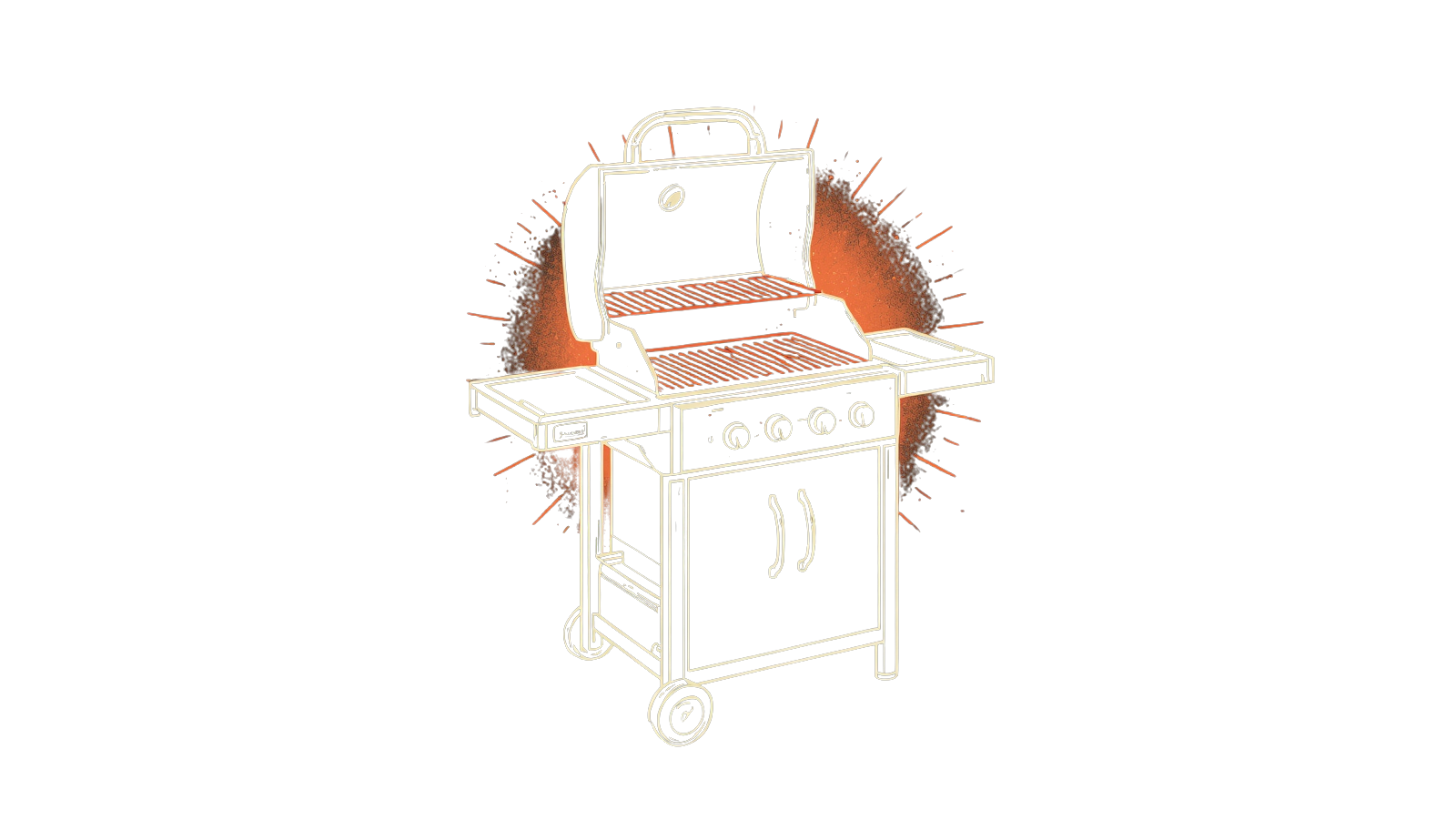
Gas Grill
A gas grill burns propane or natural gas through a row of burners under the cooking grate — light it with a button, set the heat with a knob, and you're cooking in ten minutes with no coals to light and no ash to clean up. It is, by a wide margin, the most common grill in America, and the reason is convenience: instant, repeatable, weeknight-easy heat. Turn on only some of the burners and you have an easy two-zone fire for searing and roasting. The tradeoff is flavor: a gas flame makes less smoke than burning charcoal or wood, so the gap is real on long cooks and thick cuts — though much smaller than purists claim on fast cooks, and the old idea that the gas itself tastes like sulfur is a myth. It's the grill for getting dinner done; it is not the grill for chasing deep smoke.
- Fuel
- Propane tank or natural-gas line
- Sizes
- Portable 1-burner to 6-burner carts
- Price
- ~$200 to $2,000+ depending on build
- Temp range
- ~250–550°F; dedicated sear burners go hotter
- Best at
- Convenience, weeknight speed, easy two-zone
- Skill level
- The easiest cooker to learn
What it is
A gas grill is a burner-fired grill running on propane (from a refillable tank) or natural gas (plumbed from the house line). A row of metal burners sits beneath the cooking grate; above them, angled metal “flavorizer” bars or a bed of ceramic briquettes spread the heat and catch dripping fat. Push-button ignition lights it, and a knob per burner sets the flame.
It is the default American backyard grill — gas grills outsell charcoal — precisely because it trades some flavor for a lot of convenience. Weber, Char-Broil, and a long list of others build them from cheap two-burner carts to six-burner outdoor-kitchen rigs with side burners, sear stations, and rotisseries.
How the heat moves
Gas flows through a valve and a venturi tube that mixes it with air, then out through small ports in each burner, where it ignites. Above the burners, the flavorizer bars take the direct flame, spread it into more even heat, and — the part people miss — vaporize the fat that drips onto them, which is where most of a gas grill's flavor actually comes from. The hot gas rises, the closed lid traps it, and the grill cooks by convection as much as by the grate.
Because each burner has its own knob, temperature control is immediate and repeatable — no waiting on coals to ash over, no choking vents to cool things down. Light all the burners for an even hot grate; light only one side and you've built a two-zone fire — a direct side to sear and an indirect side to roast — in about fifteen seconds.
Setting it up
Always open the lid before you light it — gas pools in a closed box, and igniting a closed grill can go off with a lid-lifting whoomph. Open lid, turn on the burners, hit the igniter, then close the lid and preheat for 10–15 minutes before scraping the grate clean. For most cooking, light only part of the grill: thick cuts and bone-in chicken go on the unlit indirect side with the lid down, then finish over the lit side — the gas version of a reverse sear.
You can coax some smoke out of a gas grill with a smoker box — a small steel box of wood chips set over a lit burner until it smolders — or a foil pouch of chips. It adds a real hint of smoke for a grilled cook, but it is a supplement, not a substitute for a charcoal fire or a dedicated smoker on a long cook.
Where it earns its keep
The gas grill's case is weeknight reality. It lights in seconds, holds a dialed-in temperature without attention, cooks burgers, dogs, vegetables, and skin-on chicken beautifully, and is wiped down and off in minutes. For fast, direct cooks — the bulk of what most households actually grill — the flavor gap with charcoal is small, and the convenience gap is enormous.
It's also more versatile than its burgers-and-dogs reputation. With direct and indirect zones, a smoker box, or a plank, a gas grill will roast a whole chicken, bake a pizza, and turn out far more than the cliché suggests. If you grill several nights a week and value showing up to a hot grate in ten minutes over chasing the last ten percent of smoke flavor, this is the right tool.
Where it falls short
The honest limit is flavor on the cooks where smoke matters. A gas flame simply makes less of the smoke and combustion character that defines barbecue, so on a long low-and-slow cook or a thick steak, a charcoal kettle or a wood-fired pit pulls ahead. A smoker box helps but doesn't close the gap, and a gas grill is not a real smoker.
Most gas grills also don't sear as hot as a bed of charcoal unless they have a dedicated sear burner, and they carry more to break: igniters, regulators, and burners that rust and clog over the years. The good ones get expensive fast. None of this is fatal — it just means a gas grill is built for ease and speed, and you go elsewhere when deep smoke or maximum sear is the point.
What goes wrong.
Lighting it with the lid closed
Gas pools in a closed grill, and lighting it then can ignite with a real whoomph that singes hair and can bend a lid. Always open the lid first, then turn on the gas and hit the igniter.
Skipping the preheat
A cold grate sticks and won't sear. Run all burners on high with the lid down for 10–15 minutes, then scrape the grate clean before the food goes on.
Expecting charcoal flavor
Gas runs cleaner and milder. On fast cooks the difference is small, but don't expect deep smoke — and if you want some, add a smoker box of wood chips over a lit burner rather than hoping the grill provides it.
Grease-fire flare-ups
Fat dripping onto the flavorizer bars and into the tray will flare, and can ignite if it builds up. Keep an unlit zone to move food to, and clean the bars and grease tray regularly.
Running out of propane mid-cook
The tank always dies in the middle of the cook. Keep a full backup tank on hand, or fit a gauge — there's no charcoal-style 'just add more' once the gas is gone.
What each of them says.
2 of the people we trust have covered this. Read or watch each in their own words.
- 01
 Meathead GoldwynAmazingRibs.com
Gas wins on convenience — up to temperature in 10 to 15 minutes, precise control by knob, and no ash to deal with. Charcoal and wood give deeper smoke flavor on long cooks and thick cuts, but on fast cooks like burgers the difference is negligible, and the old claim that gas tastes like sulfur (from the mercaptans added for safety) is a myth — it burns off in the flame. They're different tools for different jobs: own both if you can, gas for speed and charcoal for flavor.
- 02
 Steven RaichlenBarbecue Bible
A gas grill deserves more respect than its burgers-and-dogs reputation. With direct and indirect zones, a smoker box, a rotisserie, or a plank, you can roast, smoke, plank, and bake on it — and its precise temperature control is a genuine advantage, not just a convenience. One non-negotiable habit for gas grillers: always keep a backup propane tank, because the one on the grill will run out mid-cook.
Cook it. Save the record.
Every cook gets a permanent entry — cut, fuel, temp, time, photo, what worked. Next time you want to nail that exact crust, you'll have the receipt.