
Slow 'N Sear
The Slow ‘N Sear is a laser-cut stainless half-moon basket that drops onto the charcoal grate of a 22-inch Weber kettle and corrals the coals into a single dense bank along the rim, with a built-in water reservoir hugging its straight edge. That geometry does two jobs a stock kettle has to fight for: it builds the hottest, most concentrated direct-sear zone the bowl can run, and on the other side of the basket it holds a steady 225°F for eight hours or more on one chimney of charcoal — a true two-zone fire with a reservoir of water acting as both thermal flywheel and humidity source. SnS Grills launched it in 2015 and Meathead Goldwyn gave it AmazingRibs’ Platinum Medal, calling it the single best accessory ever made for the Weber kettle. The pitch is simple: it makes a $150 kettle behave like a long-burn smoker on one side and a screaming searing grate on the other, low and slow and reverse sear with no fire-rebuilding in between.
- Fits
- 22" Weber kettle (Original, Master-Touch, Performer); 18" and 26" variants made
- Material
- Laser-cut 304 stainless steel basket + stainless water reservoir
- Price
- ~$100 for the Slow 'N Sear Original; ~$130 for the Deluxe with cast-iron grate
- Best at
- Two-zone — hot direct sear on one side, 225°F long-burn smoking on the other
- Compatible cookers
- Weber kettles primarily; SnS also sells a dedicated kettle (the SnSK) built around it
- Released
- 2015, by SnS Grills (then Adrenaline Barbecue Company)
What it is
The Slow ‘N Sear is a half-moon-shaped charcoal basket made of laser-cut 304 stainless steel that sits on the charcoal grate of a Weber kettle and hugs the curved wall of the bowl. Its straight edge faces the center of the grill and carries an integrated stainless water reservoir — the patent-pending detail that defines the design. SnS Grills (originally branded Adrenaline Barbecue Company) launched it in 2015 and built the company around it; the basket has since spawned a Deluxe version with a cast-iron searing grate insert, smaller and larger fits for 18-inch and 26-inch kettles, and a dedicated cooker (the Slow ‘N Sear Kettle) that ships with the basket pre-fitted.
The shape is the whole idea. By corralling the coals into one dense, contained bank along the rim instead of letting them slump across the charcoal grate, the basket builds a taller, hotter coal bed for searing and leaves the rest of the kettle as a clean, sealed indirect zone. The water reservoir tucked against its inner edge acts as a thermal barrier between the fire and the cool side. It is, in effect, a Vortex and a snake and a water pan rolled into one stainless accessory.
How the heat moves
A stock kettle steers heat with the bottom intake vent and a banked pile of coals; the Slow ‘N Sear keeps both, but tightens the geometry. The contained bank burns upward into the food directly above it for a hot direct-sear zone at the basket’s rim, while the water reservoir on the inner edge soaks heat and re-radiates it slowly across the opposite side of the bowl — the indirect zone. Lid on, intake cracked, top vent over the cool side: a clean convection current pulls hot, humid air across the meat and out the chimney, the way an offset drafts.
Two effects fall out of the water. First, evaporation buys you temperature stability the way thermal mass does on a kamado — the reservoir absorbs spikes and dampens swings, so the cool side settles into a flat line around 225°F for hours. Second, the humid air holds back surface drying, which gives meat a longer window in the smoke- receptive zone and helps build bark without a crust forming too fast. The combination is what lets a 22-inch kettle hold a true smoker’s temperature on a single chimney of charcoal for 8–12 hours.
Setting it up
The basket sits on the charcoal grate, straight edge roughly through the middle of the bowl, water reservoir facing the cool side. From there the rig supports two configurations that cover almost everything a kettle is asked to do:
Low-and-slow (water in)
Pack the basket with unlit briquettes (or lump), nest a small pile of lit coals from a chimney on top at one end, fill the reservoir with hot water, and close the lid with the bottom vent at a thin crack and the top vent over the cool side. The fire burns slowly across the bank like a snake while the reservoir holds the kettle at 225°F. The canonical low-and-slow setup for brisket, pork butt, and ribs on a kettle.
Two-zone sear (water out)
Fill the basket with a full chimney of lit coals, leave the reservoir empty (or pull it), and open the vents. The contained bank runs hotter than a banked pile would on its own — perfect for crusting a thick steak over the basket and finishing it on the cool side. The geometry behind a textbook reverse sear on one cooker, no fire rebuild.
Always fill the reservoir with hot water, not cold — cold water can crack out time at the front of a long cook while it climbs to temperature. Top it up partway through a long smoke; an empty reservoir loses its thermal-flywheel effect and the cool side begins to drift.
Where it earns its keep
The Slow ‘N Sear’s case is the same case as the kettle’s — range on one cooker — but tightened up. A kettle with a snake of briquettes will smoke a brisket; a kettle with a Slow ‘N Sear will do the same cook on a fraction of the coal, with a flatter temperature line, and then sear the steaks for dinner over the same basket without rebuilding the fire. That is the part owners get evangelical about: it collapses the two-zone, snake, and water-pan setups a serious kettle cook used to improvise into one stainless basket that fits the same cooker most American backyards already own.
It also turns the kettle into a respectable long-burn smoker. Meathead clocks 8+ hours at 225°F on a single chimney of charcoal in his Platinum-Medal review — long enough to put a pork butt or a small brisket through the stall without refueling, on a $150 grill plus a $100 accessory. For cooks who can't justify a dedicated smoker or a kamado but want real brisket on the weekends, that is the whole pitch.
Where it falls short
The Slow ‘N Sear sharpens a kettle; it does not transcend one. The limits stack up around capacity, fit, and fuss.
Eats grate real estate
The basket and reservoir together claim nearly half the charcoal grate, so the usable cooking surface above shrinks to a single brisket or a couple of racks of ribs. A 22-inch kettle with a Slow ‘N Sear is not a crowd cooker.
Kettle-specific fit
Sized for a Weber kettle (22-inch is the default; 18- and 26-inch versions made separately). It will not drop into a kamado, an offset, a drum, or a pellet grill. If your cooker isn't a kettle, this isn't the accessory.
Reservoir maintenance
The water reservoir does real work, but it needs refilling on long cooks and scaling out after every few sessions. Run it dry and the cool side starts drifting; let mineral crust build and the stainless pits over time.
Adds cost to a cheap rig
At ~$100–130 it's most of the price of the kettle itself. The math is great if you'd otherwise buy a second cooker for smoking — rougher if you already own a dedicated smoker and just want a sear zone on your kettle, where a Vortex or a charcoal basket costs a quarter as much.
Still a kettle underneath
Thin-steel bowl, no insulation. The Slow ‘N Sear steadies the temperature line; it can't shield the cooker from wind, cold, or rain the way a thick-walled kamado or an insulated cabinet does.
What goes wrong.
Filling the reservoir with cold water
Cold water steals heat at the front of a long cook and stalls the kettle for the first hour while it climbs to temperature. Always fill the reservoir with hot tap water (or boiling) before the lid goes on — the rig should start at 225°F, not climb there.
Letting the reservoir run dry
The water is doing the thermal-stability work; an empty reservoir is just dead weight on the cool side. Top it up partway through any cook longer than 4–5 hours, or the cool zone starts drifting up as the day warms.
Loading the basket like a snake
The Slow ‘N Sear runs as a contained bank with a few lit coals nested at one end, not as a long perimeter line. Spreading lit coals across the whole basket runs it hot and fast; pile unlit briquettes deep, sit a small lit pocket on top at one end, and let the fire creep across the bank. The snake method principle, tightened into one corner.
Trusting the dome thermometer
The water reservoir holds the cool side at a flat line, but the dome thermometer still reads air high in the lid, not grate-level on the indirect side where the meat is. Clip a probe at grate level over the food and steer off that number — same rule that applies to a stock kettle.
Skipping the reservoir for sear cooks
On a hot-and-fast steak cook you want the basket roaring, not the cool side stabilized — leave the reservoir empty (or remove it entirely) so the indirect side runs hot enough to finish cleanly off the sear. The reservoir earns its keep on long cooks, not at high heat.
What each of them says.
3 of the people we trust have covered this. Read or watch each in their own words.
- 01
 Meathead GoldwynAmazingRibs.com
Meathead calls the Slow 'N Sear "the single best accessory for the Weber kettle ever" and awards it a Platinum Medal. He credits the laser-cut stainless basket with its built-in water reservoir for turning a standard kettle into a true two-zone cooker that holds 225°F for 8+ hours on one chimney of charcoal while still producing the hottest direct-sear zone his team has tested.
- 02
 Steven RaichlenBarbecuebible.com
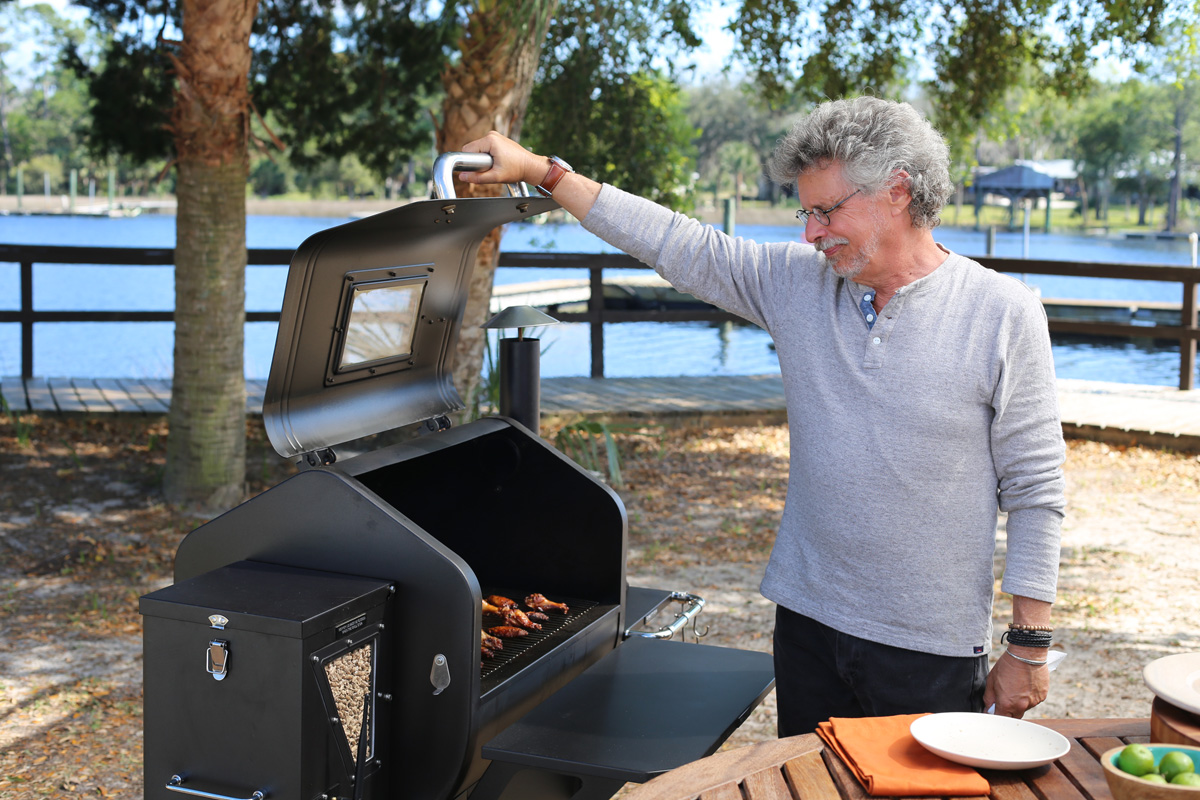
Raichlen featured the Slow 'N Sear in his 2018 roundup of best new barbecue products, writing that it "turns your kettle grill into a smoker and a blistering hot sear machine — all in one." He highlights the patent-pending design's water reservoir as the key to delivering both a thermal barrier for stable low-and-slow temps and a humidity source that improves bark and texture.
- 03
 Chud's BBQChuds BBQ / YouTube
Bradley Robinson's tour of the kettle accessory stack he reaches for when maxing out a Weber for both hot-and-fast and low-and-slow cooking — the Slow 'N Sear is featured among the picks that make a stock kettle do real smoker work.
Cook it. Save the record.
Every cook gets a permanent entry — cut, fuel, temp, time, photo, what worked. Next time you want to nail that exact crust, you'll have the receipt.