
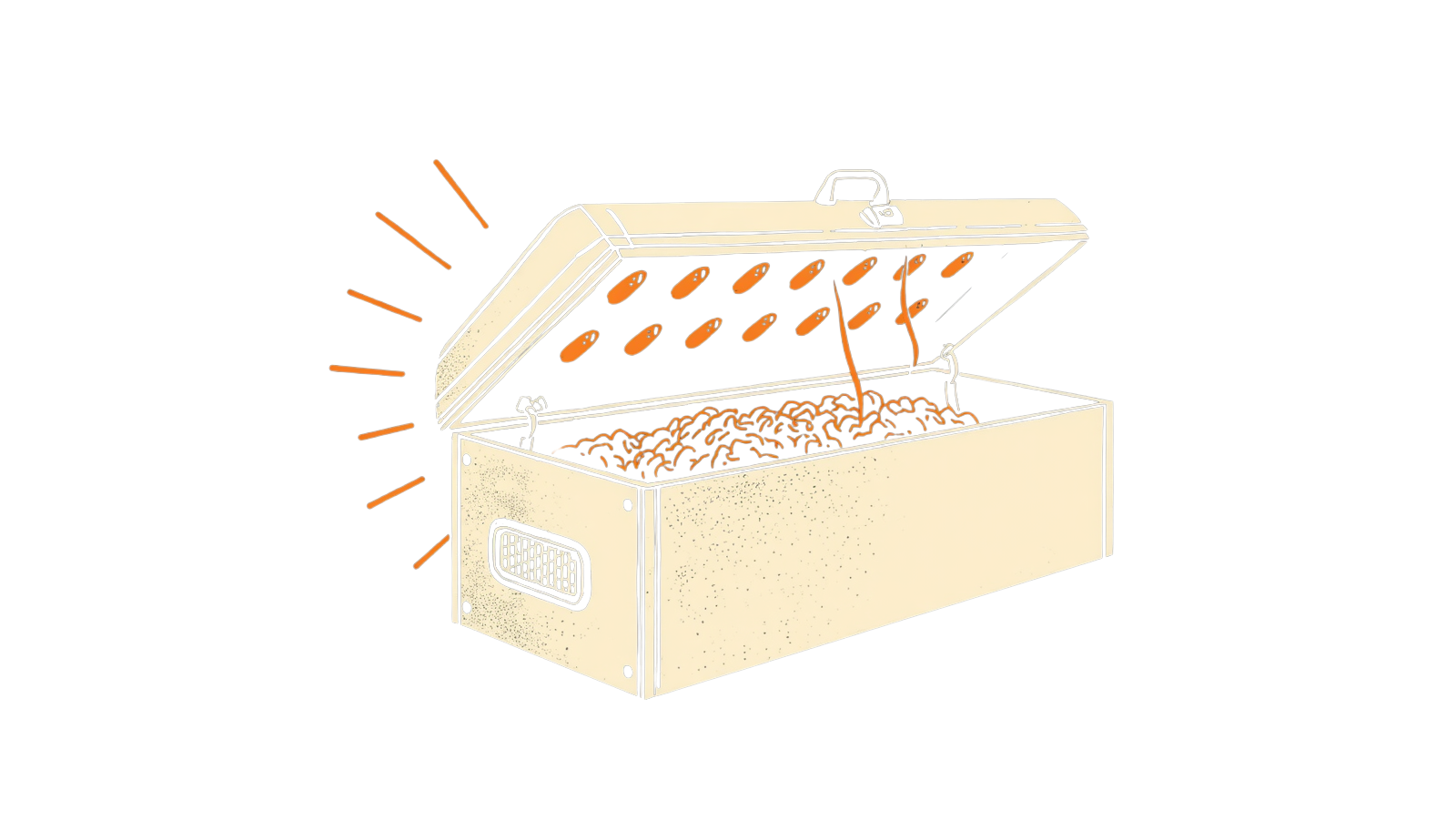
Smoker Box
A smoker box is a small vented metal box — usually cast iron, sometimes stainless — that you fill with wood chips and set directly over a lit burner on a gas grill. The burner heats the box until the chips smolder inside, venting smoke up through the lid and around the food. It is the gas-grill smoke compromise: a real hit of hickory or apple or mesquite on a steak or a rack of chicken, without a bag of charcoal or a separate smoker. Char-Broil and Weber Universal are the ubiquitous backyard versions; a foil pouch with holes poked in the top does the same job for free. What it asks in return is modest expectations: one fill of chips smokes for roughly 15 minutes, which is fine for a fast cook and painful on anything low and slow.
- Material
- Cast iron (heavier, holds heat) or stainless steel
- Sizes
- Pocket-sized rectangles, ~6–10″ long; some V-shaped to sit between flavorizer bars
- Price
- ~$10–25 for Char-Broil or Weber Universal; foil pouch is free
- Best at
- Adding real wood smoke to a fast gas-grill cook
- Care
- Empty ash after each cook; cast iron rusts if left wet — wipe dry and re-oil lightly
What it is
A smoker box is a small metal box with a vented lid built for one job: holding wood chips over the burner of a gas grill so they smolder and throw smoke. Steven Raichlen describes it simply as “a long, slender drawer or box into which you can put wood chips for smoking.” Most are cast iron, which absorbs the burner heat and passes it slowly to the chips; some are stainless steel, lighter but quicker to flash the chips through.
Char-Broil and Weber Universal make the box that lives in most backyards — a rectangular cast-iron tray with a hinged or removable perforated lid, sized to sit on or between the flavorizer bars of a gas grill. It is one of the cheapest accessories in barbecue and, for a propane cook, one of the highest-impact: the only practical way to get genuine hardwood smoke onto food without lighting charcoal.
How it works
The smoker box doesn't make heat — it concentrates a burner's heat onto a small pile of wood chips inside a partially-sealed container. The perforated lid is the trick: it restricts airflow enough that the chips can't catch real flame, so they smolder instead of burning. Meathead Goldwyn frames the underlying problem cleanly — you have to restrict airflow so wood smolders and produces smoke instead of bursting into flame. That smoke vents up through the holes and the closed grill lid carries it across the food.
Wood smolders cleanly at roughly 570–750°F, which a single gas burner cranked high can deliver through the bottom of a cast-iron box. Raichlen's canonical technique is to light the burner directly under the box on high until you actually see smoke, then drop the heat to your target cooking temperature and leave the box alone. Without the box, chips dropped directly on the bars either flare up and burn off in minutes or get smothered by drippings.
Setting it up
Fill the box about two-thirds with dry chips — Susie Bulloch's rule, and it's the one place smoker-box practice breaks from charcoal habit. Do NOT soak the chips: the box sits directly over the flame, so wet chips just spend their first ten minutes boiling off water before any smoke starts. Dry chips start smoking in 5–10 minutes. Some cooks use pellets or small chunks in the box too — both work; chunks last longer per fill.
Place the box directly on the cooking grate above one lit burner (or under the grate, on the flavorizer bars, if there's room) and turn that burner to high. Leave the others off so the food cooks indirect on the cool side — the gas-grill version of a two-zone fire. Close the lid, wait until smoke is actually venting from the box, then drop the lit burner to whatever temperature your cook needs. Raichlen's alternative for grills without a built-in or aftermarket box: a double-layer foil pouch of chips with holes poked in the top, laid under the grate over a burner. Free, single-use, works.
Where it earns its keep
The smoker box is at its best on fast cooks where smoke is a finishing flavor, not the whole show: a thick steak, a couple of pork chops, bone-in chicken thighs, a side of salmon, a tray of vegetables. Fifteen minutes of clean smoke off a fill of apple or pecan chips reads as real wood-smoke flavor, not a hint, and a gas grill suddenly cooks something a clean propane flame alone can't.
It also stretches the gas grill's range for the cook who doesn't want a second cooker. Reach for it when a hot-and-fast cook needs a smoky edge or when a weeknight dinner wants to taste like the weekend. For a couple of dollars in chips and ten dollars in cast iron, it's the highest-ROI upgrade most gas grillers will ever make.
Where it falls short
The honest limit is runtime. Meathead's number is the one to remember: a single box or pouch holds roughly 15 minutes of smoke before the chips burn out. That's fine for steaks and chops; on a pork shoulder or a brisket you're opening the lid and refilling a hot box of half-burned wood every quarter hour for ten hours. The lid drops every time you refill, and a gas grill is not a dedicated smoker to begin with.
The deeper limit is the cooker. Raichlen's real warning is that many gas grills don't get hot enough at the box for the chips to smolder cleanly in the first place — budget grills with weak burners can spend the whole cook trying to get a thin wisp of smoke going. And no amount of smoker-box flavor closes the gap with a charcoal kettle or an offset on a long low-and-slow cook. The smoker box is a supplement, not a substitute — the deepest bark and the heaviest smoke ring still live on the cookers built to burn wood.
What goes wrong.
Soaking the chips first
Carry-over from charcoal-cooker habit, where soaked chips slow-release smoke off coals. In a smoker box on a gas burner it just stalls smoke for the first ten minutes while the water boils off — Susie Bulloch's rule: dry chips, every time. The box itself restricts the airflow that would otherwise flame them.
Adding food before the box is smoking
If the food goes on cold, half the cook is over before there's any smoke to flavor it. Run the burner under the box on high with the lid closed and wait until you actually see smoke venting (5–10 minutes), then drop to cooking temp and add the food.
Putting the box over an unlit burner
It needs the direct flame underneath to get the chips up to smoldering temperature. Set it on the grate (or on the flavorizer bars) over a lit burner; leave other burners off for the indirect cooking zone.
Refilling chips mid-cook
One fill is roughly 15 minutes of smoke. Past that, lifting the lid every quarter hour to refill a 600°F cast-iron box tanks the grill temperature and burns your hand. Take the smoke hit you get up front on a fast cook; if you actually need hours of smoke, the gas grill is the wrong tool — go to a charcoal low-and-slow setup.
Leaving cast iron wet after a cook
A wet cast-iron smoker box rusts fast. Dump the ash once it's cool, wipe the box dry, and rub a thin film of oil over the inside before it goes back in the drawer. Stainless boxes are more forgiving but still ash out cleanest right after the cook.
What each of them says.
4 of the people we trust have covered this. Read or watch each in their own words.
- 01
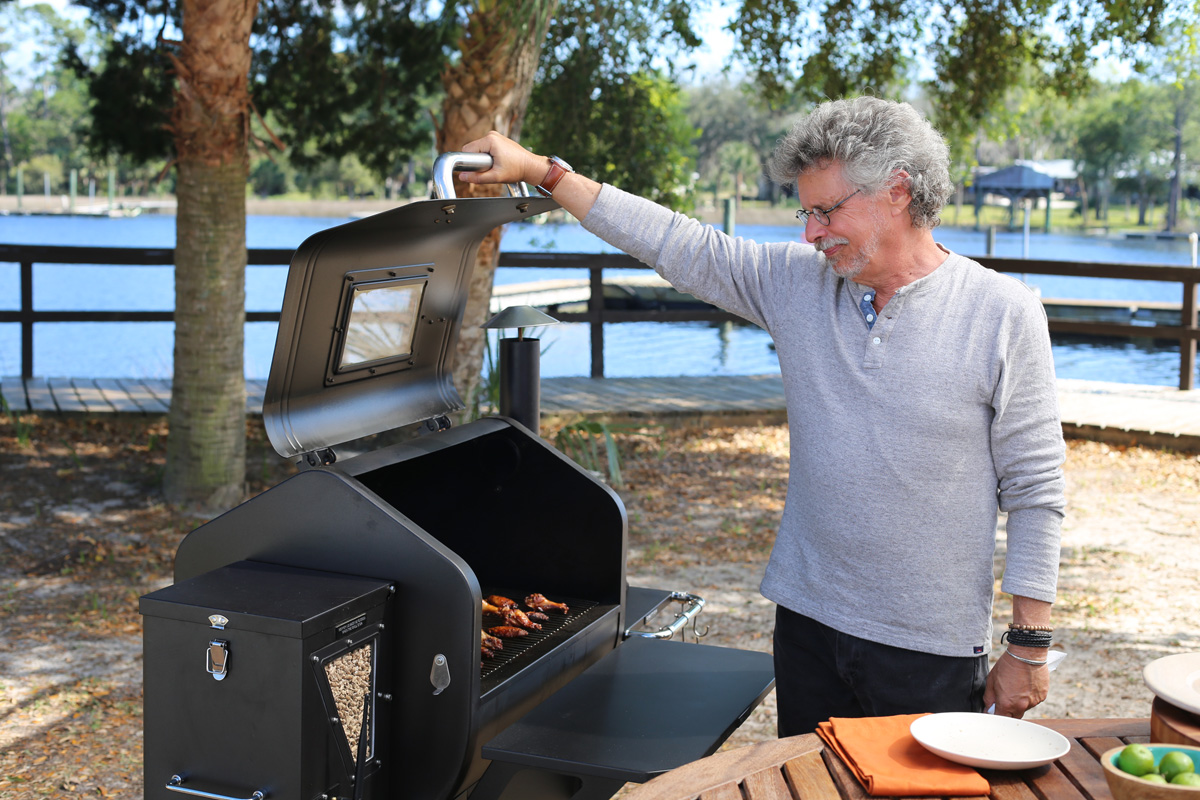 Steven RaichlenBarbecueBible.com
Raichlen defines the smoker box as 'a long, slender drawer or box into which you can put wood chips for smoking' and gives the canonical gas-grill technique: fill it with chips, light the burner directly under it on high until you see smoke, then drop the heat to your target temperature. For grills without a built-in box, he recommends a foil pouch with poked holes placed under the grate over a burner — and warns the real limitation of gas grills is that many don't get hot enough for smoking in the first place.
- 02
 Meathead GoldwynAmazingRibs.com
Meathead's review of the Smokist mesh smoking pouch lays out the underlying problem the smoker box is trying to solve: you need to restrict airflow so wood smolders and produces smoke instead of bursting into flame. His honest limitation: a single box or pouch holds enough wood for roughly 15 minutes — fine for steaks and chops, painful for pork shoulder or brisket, where you're refilling repeatedly through hot steel.
- 03
 Susie BullochHey Grill Hey
Susie treats the smoker box as the gateway accessory for gas grillers who want real smoke flavor — load it with chunks, chips, or pellets, close the lid, wait 5–10 minutes for smoke to start. Her one rule that breaks from charcoal habit: use dry chips, not soaked, because the box sits directly over the burners. Soaking just delays smoke production.
- 04
 Malcom ReedHowToBBQRight / YouTube
Malcom walks through the practical smoker-box-on-gas-grill workflow for a full rack of ribs — placement over a single lit burner, the smoke-bomb foil pan alternative, and how to manage chip refills across a multi-hour cook. The clearest live demo of what the gas-grill smoke compromise actually looks like in execution.
Cook it. Save the record.
Every cook gets a permanent entry — cut, fuel, temp, time, photo, what worked. Next time you want to nail that exact crust, you'll have the receipt.