
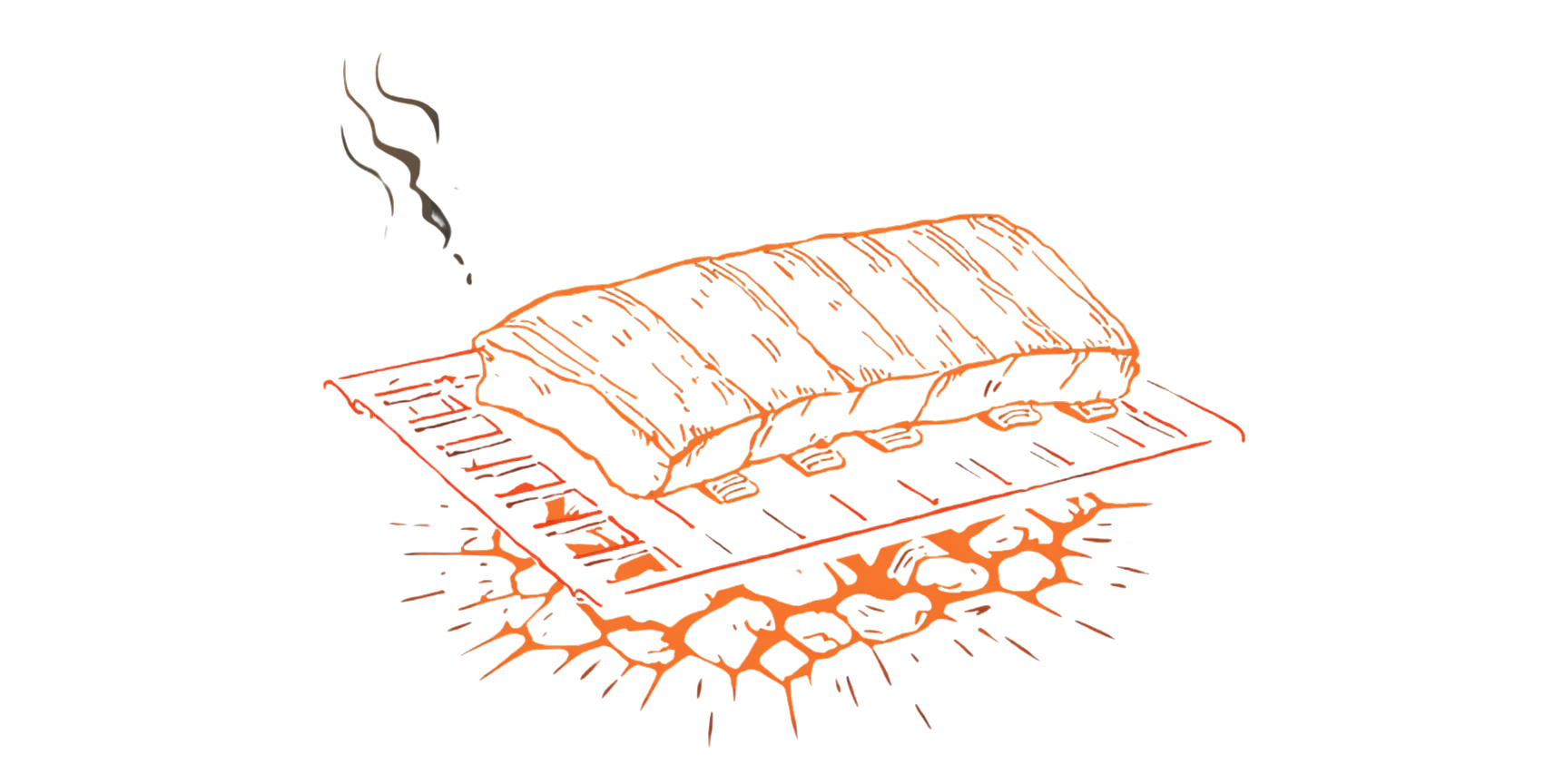
Pork
Pork is where American BBQ started. The Carolinas built whole-hog tradition on it; Memphis built ribs on it; the rest of the country built backyard low-and-slow on it. Pork shoulder is the canonical first smoke in all of BBQ — more forgiving than any cut of beef, as Meathead puts it, because the collagen-heavy working muscle melts to gelatin at ~203°F and rewards almost any honest effort. The canonical pairing: sweet rubs (pork loves sweet, unlike beef) and hickory or apple smoke. The fast cuts — chops and tenderloin — finish at 145°F since the USDA cut the safe-pull temperature in 2011, ending a generation of dry pork.
- Cuts covered
- 18 — shoulder, belly, ribs, chops, the sausage family, cured
- Doneness profiles
- BBQ (probe-tender ~203°F for shoulder & ribs) · Pork-chop (145°F for chops & tenderloin)
- Canonical pairing
- Hickory or apple wood, sweet rubs (brown sugar, paprika)
- Hardest to nail
- Chops — the lean cut still ruined by 1990s 160°F habits
- Easiest to start
- Pork chops to cook; pork shoulder to smoke
- Cost range
- ~$2/lb shoulder to $8+/lb thick-cut bacon and heritage belly
What it is
Pork is the protein American BBQ was built on. Before brisket became the prestige cook of Central Texas, the Carolinas and Memphis were already turning whole hogs into the country’s first regional barbecue traditions — pit-cooked overnight, pulled or chopped, dressed with vinegar in the east and sweet tomato in the west. That heritage still defines the rules: hickory or apple wood, sweet rubs, low heat, long time.
Pork sprawls farther across the cooking spectrum than any other protein. A single pig yields the canonical first BBQ smoke (shoulder), the most forgiving rib in the canon (St. Louis), the entire American sausage family (brat, Italian, chorizo, andouille, Polish), and the cured side of the cuisine (bacon, ham, porchetta). It is the most permissive protein in the BBQ canon and the one most rewarded by patience.
The practical skill is sorting the 18 common cuts into the right cooking world — and that sorting follows the same rule that organizes beef: which muscles worked, and which didn’t.
The animal's anatomy
The rule is the same as beef: muscles that work are tough; muscles that don’t are tender. A pig carries weight on its shoulders and hams, so those cuts are dense with connective tissue and collagen. The shoulder (Boston butt + picnic) and the rib cage demand long, low smoke. The loin running along the spine — chops, tenderloin, baby back ribs — barely worked at all, so those cuts cook fast and dry out fast.
Front-to-back, top-to-bottom: shoulder (Boston butt on top, picnic below — the pulled-pork and carnitas cut), loin (chops, tenderloin, baby back ribs), belly (bacon, fresh belly, spare/St. Louis ribs from the lower rib cage), ham (rear leg — fresh, cured, or smoked), and the trim that becomes sausage. The pig is the most fully-utilized animal in barbecue: nearly every part has a canonical cook.
The hits
Eighteen cuts, four families. The family tells you the method before you know anything else about the cut.
Pork shoulder · Belly · Spare / St. Louis / Baby back ribs
The working muscles. Pork shoulder (Boston butt) is the king of forgiving smokes — 8-12 hours through the stall to probe-tender ~203°F, then shred for pulled pork or braise the same cut in citrus and lard for carnitas. Pork belly is uncured bacon — smoked whole, sliced into burnt ends, or rendered crisp. Spare ribs come off the belly; St. Louis ribs are spares trimmed rectangular (the cleanest smoke); baby back ribs come from the loin, smaller and leaner, the classic 3-2-1 candidate.
Pork chops · Tenderloin
The loin muscles. Pork chops are the pork ribeye — bone-in is more forgiving, thick-cut wants reverse sear, and 145°F is the modern pull (medium, with a faint blush). Tenderloin is the long, slim muscle from inside the loin — the leanest cut on the pig, done in 20-25 minutes over direct heat. Both reward a dry brine the day before since the lean meat dries out fast at temperature.
Bratwurst · Italian · Chorizo · Andouille · Polish
The entire sausage family lives under pork in the BBQ canon — pork shoulder and belly trim, ground, seasoned, cased. Bratwurst is the German tailgate standard; Italian sausage runs sweet (fennel) or hot (chili); chorizo brings Mexican smoked paprika or Spanish cured intensity; andouille is the Louisiana double-smoked workhorse of gumbo and jambalaya; and Polish sausage (kielbasa) is the garlic-and-marjoram counter to the brat. All want two-zone heat to ~160°F internal — direct char burns the casing before the fat renders.
Bacon · Ham · Porchetta
The shelf-stable side of the pig. Bacon is cured, smoked belly — finished on the grill or griddle to render the fat into crisp. Ham is cured rear leg, usually bought fully cooked and warmed to 140°F over indirect smoke with a glaze. Porchetta is the Italian outlier — pork loin or whole belly butterflied, herb-stuffed, rolled, and roasted over high heat for shattering crackling. Curing itself is a different discipline from BBQ; once cured, the finish belongs on the grill.
Cut & method
The quick-reference layer. Doneness targets are pull temperatures — carryover adds a few degrees during the rest.
| Cut | Best method | Doneness | Note |
|---|---|---|---|
| Pork shoulder | Smoke, low-and-slow | Probe-tender ~203°F | The most forgiving smoke in BBQ |
| Pulled pork / Carnitas | Smoke or braise | Probe-tender ~203°F | Same cut, two regional treatments |
| Pork belly | Smoke or roast | Probe-tender ~200°F | Score the skin for crackling |
| Spare / St. Louis ribs | Smoke, low-and-slow | Probe-tender ~203°F | Bigger, fattier, meatier than baby backs |
| Baby back ribs | Smoke, low-and-slow | Probe-tender ~200°F | Loin ribs — leaner, finish faster than spares |
| Pork chops | Reverse sear or grill | 145°F | USDA-revised in 2011 — a faint blush is safe |
| Pork tenderloin | Hot grill, fast | 145°F | Lean — overshoot 10°F and it’s ruined |
| Sausage / Brat / Polish | Two-zone grill | 160°F | Indirect to temp, finish over coals for color |
| Italian sausage / Chorizo / Andouille | Two-zone grill | 160°F | Andouille is pre-smoked — just warm and char |
| Bacon | Griddle or low oven | Crisp to taste | Already cured & smoked — finishing only |
| Ham (pre-cooked) | Indirect smoke, glaze | 140°F | Glaze in the last 30 min so it doesn’t scorch |
| Porchetta | Rotisserie or high-heat indirect | 145°F internal, crackling skin | High heat finish to shatter the skin |
Where to start
Three on-ramps, by what you’re trying to learn.
First pork cook ever
PickPork chopsCheap, fast, and the most direct lesson in modern pork doneness. Bone-in thick-cut, dry brine the day before, pull at 145°F. The faint pink center is correct.
First smoke of any kind
PickPork shoulderTHE canonical first smoke in all of BBQ — more forgiving than any beef cut. 8-10 lb bone-in butt, hickory, 225°F to probe-tender ~203°F. The collagen does the work and the fat covers small mistakes.
First rack of ribs
PickSt. Louis ribsThe cleanest rib shape on the pig — spares trimmed rectangular, even thickness end-to-end, the easiest rack to cook evenly. The 3-2-1 method was written for this cut.
Where it falls short
The pork mistakes that come from old habits or label confusion:
Cooking chops to 160°F out of habit
The USDA cut the safe pull temperature for whole pork from 160°F to 145°F in 2011 — the modern pig isn’t the trichinosis vector of the 1970s. A generation of dry, gray pork chops trace to a guideline that no longer applies. Pull at 145°F, rest, accept the blush.
Confusing tenderloin and loin
Pork loin is a 3-5 lb roast cut from the back; pork tenderloin is the 1-1.5 lb slim muscle inside it. Same name root, different cooks: loin wants 145°F at 20-25 minutes per pound indirect; tenderloin wants hot, fast, 20-25 minutes total. Most “ruined tenderloin” was actually loin cooked tenderloin-fast.
Buying baby backs expecting spares
Baby backs come off the loin — smaller, leaner, faster. Spares (and the St. Louis trim of them) come off the belly — bigger, fattier, meatier, and the choice of every Memphis pit. Neither is better; they cook differently and reward different timing. Read the label before the cart.
Treating curing as BBQ
Bacon, ham, and traditional pancetta are cured products — salt, time, and nitrate chemistry, not smoke chemistry. Curing is a separate discipline with its own food-safety rules. The grill finishes a cured product; it doesn’t cure one. Start with fresh cuts before chasing cured.
Over-trimming the shoulder fat cap
Surface fat doesn’t baste the meat below it — that’s the most stubborn myth in pork BBQ. Trim the fat cap to about a quarter-inch so the rub reaches actual meat and the smoke builds bark; the marbling inside the muscle does the basting work, not the cap.
What each of them says.
5 of the people we trust have covered this. Read or watch each in their own words.
- 01
 Meathead GoldwynAmazingRibs
Meathead's canonical Perfect Pulled Pork recipe treats pork shoulder as the most forgiving cut in barbecue. He dry-brines 12-24 hours, applies Memphis Dust over a water slather, smokes at 225°F to 203°F internal where collagens melt to gelatin, and debunks the fat-cap myth — melted surface fat cannot penetrate the meat, so trimming to a quarter-inch lets seasoning reach what matters.
- 02
 Susie BullochHey Grill Hey
Bulloch's Carolina pulled pork leans on the foundation: bone-in 6-7 lb Boston butt, oak or hickory (the most traditional Carolinas hardwoods), 250°F to a 200°F internal, then dressed in a West-Carolina vinegar sauce with apple cider vinegar, ketchup, and brown sugar. She notes true Carolinians claim all you need is good salt, but adds smoked paprika and coarse black pepper for color and bite.
- 03
 Daniel VaughnTexas Monthly
Texas Monthly's barbecue editor calls Texas-style pulled pork embarrassing — throw on a shoulder, overcook it, shred it up, basically a snowball on a bun. His fix: cut pork steaks from the butt instead, smoke them like brisket. So much more surface area, so much more flavor — bark and juice in every bite.
- 04
 Mad Scientist BBQYouTube
Jeremy Yoder walks the full low-and-slow pork butt cook end-to-end — a simple 50/50 salt-and-pepper plus brown-sugar rub, smoke to tender, pull, serve. The canonical first-smoke playbook from a former chemistry teacher who explains the why at each step.
- 05
 Chud's BBQYouTube
Bradley Robinson makes the case that pork shoulder is the easiest, tastiest, cheapest barbecue on an offset smoker — and shows the Central Texas treatment with extra-crunchy bark and tender pull.
Cook it. Save the record.
Every cook gets a permanent entry — cut, fuel, temp, time, photo, what worked. Next time you want to nail that exact crust, you'll have the receipt.