
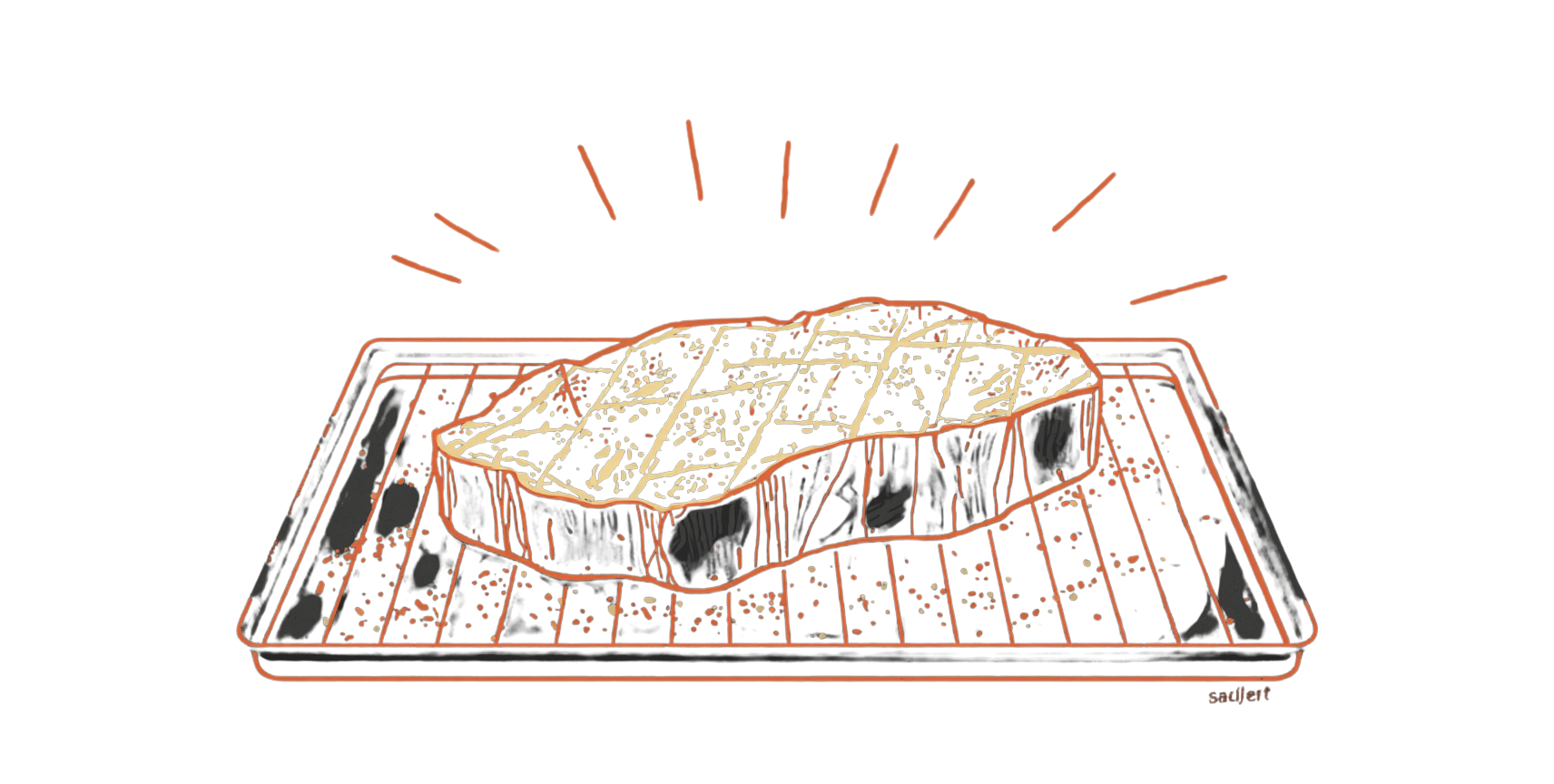
Dry Brine
A dry brine is just salt and time: you season meat generously with coarse salt and let it rest uncovered in the fridge — hours for a steak, overnight for a bird — with no liquid involved (that's a wet brine). The salt first draws moisture to the surface, then dissolves and gets reabsorbed, carrying seasoning deep into the meat and rearranging the proteins so they hold onto water through the cook. Because the surface dries out, it also builds a deeper Maillard crust and crispier skin — which makes dry-brining the quiet first step behind a good reverse sear, crackly spatchcock skin, and a proper bark. As the science crowd at AmazingRibs (with Greg Blonder's research) has shown, salt penetrates by diffusion more than osmosis, and it even passes through poultry skin. It's the single highest-leverage thing you can do to meat before it ever sees heat.
- What
- Coarse salt on the surface, rest uncovered in the fridge — no liquid
- Salt
- Kosher (Diamond Crystal ~1 tsp/lb; Morton is denser, use less)
- Steak & chops
- 1–48 hrs (even 1 hr helps; 24–48 is ideal)
- Poultry
- Overnight to 24 hrs, uncovered — the crisp-skin move
- Large cuts
- Turkey, brisket: 12–48 hrs
- Don't rinse
- The salt's already absorbed — just pat dry and cook
Before you cook.
- Equipment
- Coarse kosher salt, a wire rack over a sheet pan, and fridge space. That's it — no container, no liquid.
- Salt it
- Season all sides evenly (and under poultry skin). Rule of thumb: ~½–1 tsp Diamond Crystal kosher salt per pound.
- Rest uncovered
- Set it on the rack and refrigerate uncovered. Uncovered is the whole point — it dries the surface for browning.
- Before cooking
- No need to rinse. Pat the surface dry and cook straight from the fridge (or temper steaks briefly first).
What to cook with it.
Other ways to do it.
Dry brine + air-dry (poultry)
For the crispest skin, leave the salted bird uncovered an extra day so the skin fully dries out — the dry-brine and air-dry steps stack.
Salt into the rub
Mix the salt into a salt-forward rub and apply it early, so the salt dry-brines while the spices have time to bloom — common on brisket and pork butt.
Quick dry brine (15–45 min)
Short on time? Even 15–45 minutes of salt on a steak firms and seasons the surface — not as deep as overnight, but far better than salting at the grill.
Under-the-skin salting
Work salt directly onto the meat under poultry skin so the seasoning reaches the breast, not just the skin.
What goes wrong.
Covered it, or used a container
Covering traps moisture and defeats the purpose. Dry brine UNCOVERED on a rack — the dry surface is half the benefit.
Salted too late to matter
A sprinkle 10 minutes before cooking just sits on top and pulls out moisture you then sear off. Salt 40+ minutes ahead (so it reabsorbs) or right as it hits the heat — the in-between window is the worst of both.
Over-salted enhanced meat
'Enhanced,' kosher, or pre-brined meat is already salted. Dry-brining on top oversalts it — read the label before you reach for the salt.
Measured table salt like kosher
Table salt is far denser than kosher — a kosher-salt measurement of table salt comes out way too salty. Use coarse kosher, or cut the amount sharply.
Rinsed it off
No need — the salt has absorbed. Rinsing washes away seasoning and re-wets the surface you worked to dry. Just pat dry and cook.
What each of them says.
4 of the people we trust have covered this. Read or watch each in their own words.
- 01
 Meathead GoldwynAmazingRibs.com
Dry brining is easier and less wasteful than wet brining — sprinkle coarse salt on the surface (about ½ tsp kosher per pound) and refrigerate; no need to rinse, it all gets absorbed. The salt's sodium and chloride ions denature the proteins so they hold more water, keeping the meat moist through cooking. Per AmazingRibs science advisor Greg Blonder, salt moves into meat mostly by diffusion rather than osmosis — and it penetrates poultry skin, so salting the skin directly helps it crisp.
- 02
 Steven RaichlenBarbecue Bible
Generously season beef, chicken, pork, fish, or shrimp with coarse kosher salt and rest it uncovered on a rack in the fridge — 1–2 hours for steaks and chops, 12–24 for turkey or brisket. The salt draws moisture out, forms a concentrated brine, and gets reabsorbed, carrying flavor deep while detangling proteins for tenderness. Always refrigerate uncovered so the surface dries for better browning.
- 03
 Susie BullochHey Grill, Hey
Coat the bird evenly with kosher salt and refrigerate on a sheet pan at least 1 hour per pound — 24–48 hours if you have time. Wipe off any visible salt, oil the skin, and cook hot (~350°F) for crisp skin and juicy, deeply seasoned meat, with none of the bucket-of-saltwater hassle of wet brining.
- 04
 Mad Scientist BBQYouTube — Jeremy Yoder
Jeremy tests salting at different times before the cook to pin down when dry brining actually pays off — and when salting right before cooking is fine.
Cook it. Save the record.
Every cook gets a permanent entry — cut, fuel, temp, time, photo, what worked. Next time you want to nail that exact crust, you'll have the receipt.