
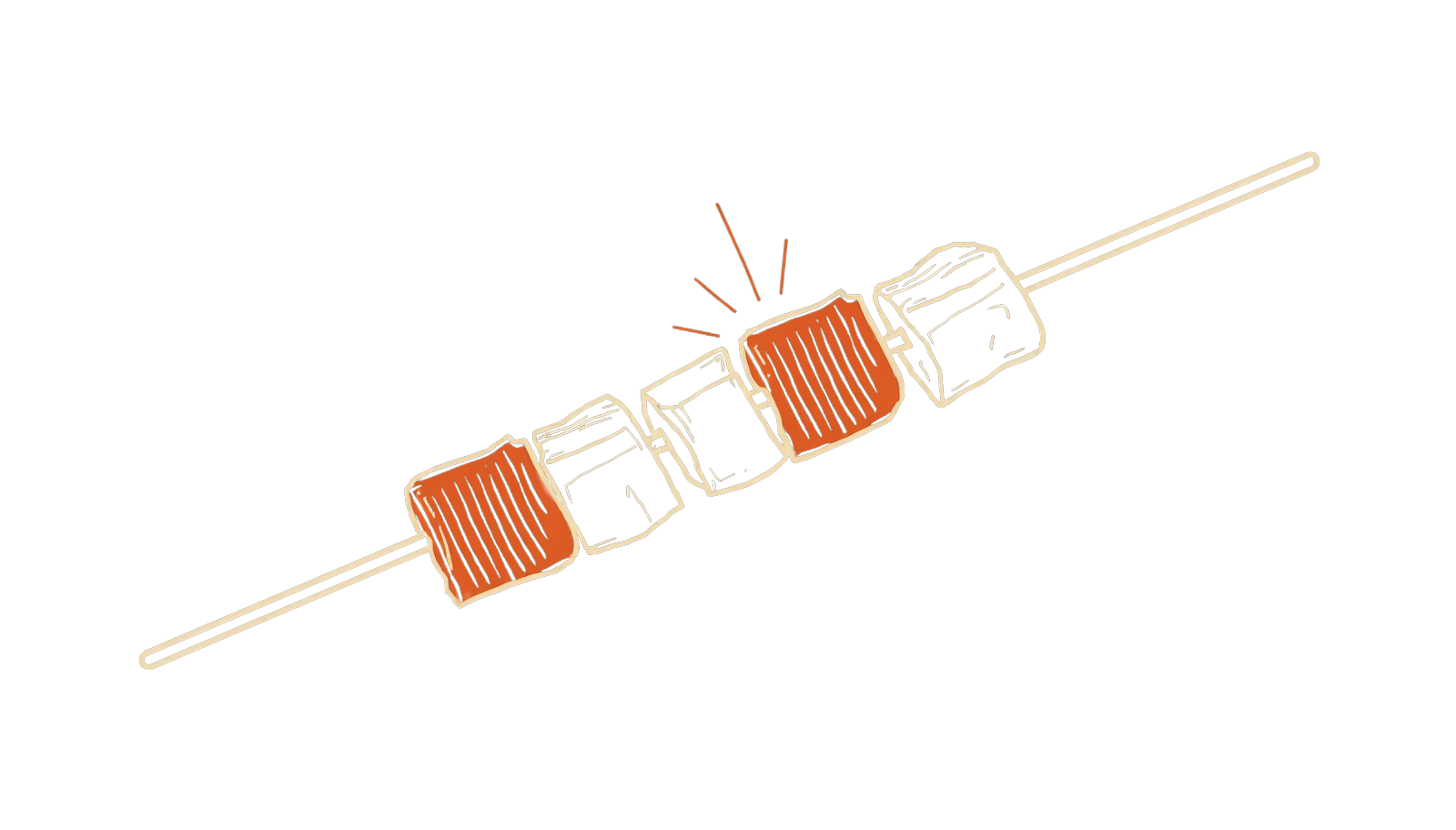
Skewers
Skewers are the thin rods that thread chunks of meat and vegetables over the fire — the foundational tool for kebabs, yakitori, satay, and any cook built around bite-size pieces. Two formats own the category: cheap bamboo, disposable and single-use, traditionally pre-soaked 30 minutes to keep them from burning to ash over the flames; and reusable metal, stainless or carbon steel, which holds heavier loads and conducts heat into the center of the food. Within metal, the working spec is flat, not round — a flat shaft locks the food in place so chunks don’t spin loose when you flip them, the single failure mode every kebab cook learns the hard way. Steven Raichlen’s standing pick is flat metal; he’s stopped bothering with the bamboo-soak ritual entirely. If flat metal isn’t on hand, thread each kebab on two parallel bamboo skewers to lock things in place. Good for two-zone and direct hot-and-fast cooks alike, on kettle, gas, or open fire.
- Material
- Stainless or carbon steel (reusable) · bamboo (disposable, pre-soak required)
- Shape
- Flat (locks food in place) · round (food spins on the shaft when flipping)
- Lengths
- 10–12″ standard backyard · 14–17″ for whole-meal kebabs or restaurant service
- Price
- Bamboo ~$3–5 per 100-pack · Stainless flat ~$10–25 for a set of 6–12
- Best at
- Kebabs, yakitori, satay, vegetable skewers, fruit — anything cooked in bite-size pieces
- Care
- Metal: hand-wash, dry, lock-tight storage · Bamboo: single-use, compost or trash
What it is
A skewer is a thin rigid rod — metal or bamboo — that threads through chunks of food so they cook suspended over the fire as a single unit. The form is ancient and global: shish kebab across the Levant and Central Asia, yakitori in Japan, satay in Southeast Asia, anticuchos in Peru, souvlaki in Greece. The job is the same everywhere — cook bite-size pieces evenly, turn them as a unit instead of one at a time, and keep small foods from falling through the grate into the fire.
Two formats cover the field. Bamboo skewers are cheap, sold by the hundred, and meant to be thrown away after one cook; they’re thin, light, and perfect for delicate foods like shrimp, scallops, or fruit. Metal skewers are reusable, hold more weight, and run heavier than their bamboo equivalents — usually stainless or carbon steel, sometimes with a wooden or twisted-loop handle on the dull end for grip. Within metal, the divide that matters is flat versus round: a round shaft lets chunks of meat spin loosely around it when you turn the skewer, so half the food never sees the fire; a flat shaft locks each piece in place and rotates as a unit. Flat metal is the working pick for serious kebab cooks; round bamboo is fine for delicate single-use jobs where spinning isn’t the failure mode.
No canonical brand — the category is too commodity to develop one. Any reputable stainless flat skewer is fine. The choice that matters more than brand is length: 10 to 12 inches handles backyard portions; 14 to 17 inches is restaurant or whole-meal scale.
How it works
The skewer does two things at once. It holds the food in a fixed geometry over the grate so it cooks evenly and flips as one unit, and — if it’s metal — it conducts heat into the center of the food from the inside. That internal conduction is the quiet difference between metal and bamboo: a metal skewer in a thick chunk of beef starts cooking the middle while the surface is still browning, which speeds the cook through and helps thick kebabs come up without overdoing the outside.
The shape question lives at the food-meets-shaft interface. On a round skewer, a chunk of chicken or pepper rotates freely whenever you flip the kebab — the meat stays face-down while the skewer turns inside it. On a flat skewer, the food can’t pivot; the rod and the food rotate together. Susie Bulloch’s home-kitchen rule is that the best skewers are the ones you already have, and for a quick weeknight cook she’s right — bamboo works, just soak them in water for 30 minutes first so the exposed wood survives the flames long enough to finish the cook. Steven Raichlen’s stricter pick is flat metal, and he’s stopped soaking bamboo entirely — for the rare cook he uses it, he tucks a folded foil shield under the exposed handles to keep them from burning down to ash. The middle-ground move when flat metal isn’t on hand: thread each kebab on two parallel bamboo skewers about half an inch apart, which creates the same spin-lock geometry as a flat shaft.
On the grate, kebabs cook hot-and-fast over a direct fire — medium-high heat, turning every 3 to 4 minutes through four sides. Malcom Reed’s steak-kebab playbook is the canonical backyard execution: alternate beef chunks with bell pepper and onion on metal skewers, grill direct over medium-high, turn on the clock, pull at internal medium-rare. No soak, no fuss.
Where it falls short
Skewers are a near-universal tool for bite-size cooks, but the format has honest limits.
Round skewers spin
The single most common failure mode of kebabs. You flip the skewer, the meat doesn’t come with it, and the same face cooks twice. Flat metal solves it outright; two parallel bamboo skewers solve it as a workaround.
Bamboo burns down to the food
Exposed bamboo over direct fire reaches char in a couple of minutes. The 30-minute pre-soak buys time; a folded-foil shield under the exposed handles buys more. Or skip bamboo entirely and run flat metal.
Hot metal handles
A metal skewer reaches grate temperature within minutes — the dull end is too hot to grab with bare fingers. Use a folded towel, a glove, or buy skewers with insulated wooden grips on the handle end.
Mixed-ingredient timing
Onions and peppers want longer over the fire than shrimp or chicken does — mix them on one skewer and somebody loses. Pro move: skewer proteins on one rod and vegetables on another so each comes off at the right doneness.
What goes wrong.
Using round metal skewers
Round shafts let every chunk rotate freely when you flip the kebab — the same face of the meat ends up cooking twice while the back stays raw. Flat metal is the fix; two parallel bamboo skewers per kebab is the workaround when flat isn't on hand.
Skipping the bamboo soak
Dry bamboo over direct fire chars in two to three minutes — the exposed ends snap, the food drops, the kebab is done. Soak bamboo skewers in water for 30 minutes before threading. Or, per Raichlen, switch to metal and stop worrying about it.
Crowding the skewer
Pieces packed shoulder-to-shoulder don't sear — they steam where they touch. Leave a thin gap between chunks so heat and smoke get to every face. This is also why mixed protein-and-vegetable skewers under-perform: vegetables shed moisture into the meat.
Mixing fast and slow ingredients on one skewer
Shrimp wants 6 minutes; chicken thigh wants 12; onion wants 15. Threaded together, somebody loses. Separate by cook time: proteins on one skewer, dense vegetables on another, delicate vegetables on a third. Pull each off when it's done, plate together.
Grabbing the metal handle barehanded
A metal skewer reaches grate temperature within minutes. The dull end is hot enough to blister. Keep a folded kitchen towel or a heat-resistant glove on the working hand, or buy skewers with insulated wooden grips on the handle end.
What each of them says.
4 of the people we trust have covered this. Read or watch each in their own words.
- 01
 Steven RaichlenBarbecue Bible
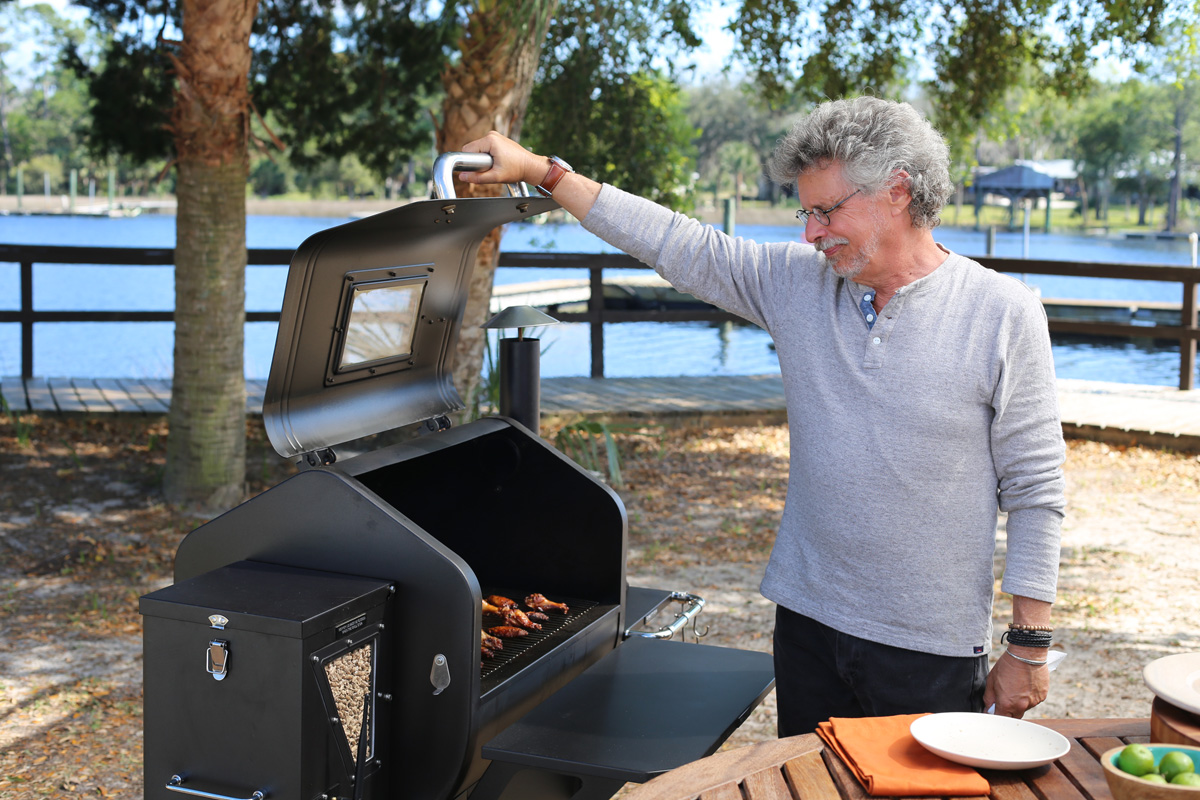
Raichlen's vote is flat metal: the metal conducts heat into the center of the food, and the flat shape stops chunks from spinning when you turn them. He's stopped bothering with the soak-your-bamboo ritual entirely — he tucks a folded foil shield under exposed handles instead. If flat skewers aren't on hand, thread each kebab on two parallel bamboo skewers to lock things in place.
- 02
 Susie BullochHey Grill Hey
Susie's family-kitchen rule: the best skewers are the ones you already have. Bamboo or metal both work — but if you're going bamboo, soak them in water for 30 minutes before threading so they survive the flames. No drama, no specialty gear.
- 03
 Malcom ReedHowToBBQRight / YouTube
Reed walks through a classic steak kabob on metal skewers — alternating beef chunks with vegetables, grilling over medium-high, and turning every 4 minutes. Backyard-grade execution, no soak, no fuss.
- 04Malcom ReedHowToBBQRight / YouTube
Reed threads ribbons of skirt steak onto skewers accordion-style — a good demo of why flat skewers help when the meat wants to fold and spin on a round shaft.
Cook it. Save the record.
Every cook gets a permanent entry — cut, fuel, temp, time, photo, what worked. Next time you want to nail that exact crust, you'll have the receipt.