
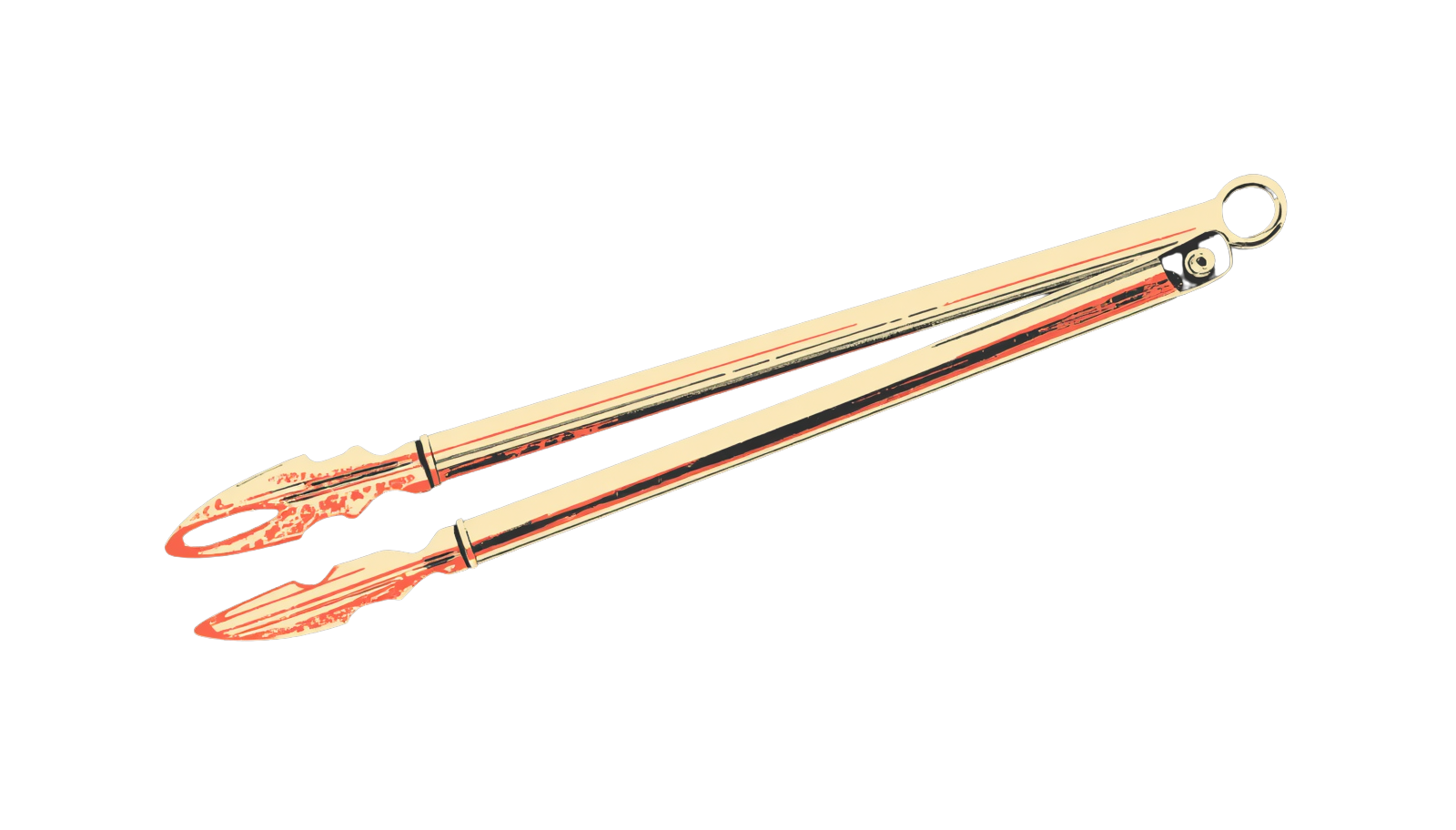
Long Tongs
Long tongs are the workhorse of the grill — the one tool a cook reaches for more than any other. The job is simple: turn and lift food without piercing it, so juices stay in the meat instead of running into the fire. Spring-loaded steel arms, scalloped or toothed tips for grip, a locking ring at the handle for drawer storage. Length is the whole point. Twelve inches is the floor; sixteen is the comfortable working standard for a two-zone fire; eighteen or twenty starts to make sense over a deep pit where you’re reaching across a long bed of coals on a low-and-slow cook. The trade past sixteen is leverage: the longer the arm, the harder it is to grip a chicken thigh cleanly. The OXO Good Grips 16″ pair is the canonical home-cook pick — stainless arms, rubber handles, locking ring — cheap enough that there’s no excuse not to have one.
- Material
- Stainless steel arms · rubber or silicone handles
- Length
- 12″ (minimum) · 16″ (standard) · 18–20″ (deep-pit reach)
- Price
- $15–25 (OXO, Weber) · $30–60 (heavy-duty competition pairs)
- Best at
- Turning, lifting, and flipping anything you don't want to pierce
- Care
- Hand-wash, dry, lock closed for storage — dishwasher dulls springs
- Canonical pick
- OXO Good Grips 16″ — Arthritis Foundation Design Award winner
What it is
Long tongs are a spring-loaded steel pincer with a handle on one end, two arms hinged or sprung at the middle, and gripping tips at the other — scalloped, toothed, or tined to grab without slipping. Pull the arms apart and the spring snaps them back; squeeze and they close around whatever you’re lifting. A locking ring or pin at the handle collapses the arms shut for drawer storage so they don’t spring open every time you reach into a utensil drawer.
Length is the defining spec. Restaurant kitchen tongs are 9 or 12 inches because the cook stands directly over the flat-top. Grill tongs start at twelve and run to twenty, because the cook is standing back from a bed of coals at 500 to 1000°F and needs to keep hands and forearms out of the heat. Sixteen inches is the comfortable working standard for a backyard kettle or gas grill; eighteen and twenty inch pairs (the Tool Wizard, the Chud’s “Donkey Tong” at 27″) earn their length over deep offset pits where you’re moving splits and reaching across long fires.
The canonical home-cook pick is the OXO Good Grips 16″ pair — stainless arms, non-slip rubber handles, scalloped tips, locking ring, and an Arthritis Foundation Design Award for the grip geometry. Weber, Williams Sonoma, and ThermoWorks all sell competent equivalents in roughly the same shape.
How it works
The whole purpose of tongs is to turn meat without puncturing it. A barbecue fork — or any pointed utensil — pierces the surface, opens a channel, and lets the juices that hold the cook together run out into the fire. Tongs grip and lift, leaving the seared crust intact and the moisture inside the meat where it belongs. Steven Raichlen’s mantra puts it bluntly: turn, don’t stab.
The mechanics: spring tension in the arms does the opening, your hand does the closing, and the scalloped or toothed tips do the gripping. The grip surface is what separates a good pair from a bad one — flat, smooth tips skid off a chicken thigh; scallops or teeth bite without crushing. Length sets your working distance from the heat. A 12-inch pair puts your hand roughly a foot from the grate — fine for a gas grill, marginal over a hot charcoal sear. A 16-inch pair adds four critical inches of standoff. Past sixteen, each additional inch of length costs you leverage at the tip: the longer the lever, the more force it takes to hold a load steady, and the harder it is to feel what you’re gripping.
The locking ring matters more than it looks. A drawer full of spring-loaded tongs that won’t collapse is a drawer that won’t close. Every working pair should lock shut for storage.
Where it falls short
Tongs are a near-universal tool, but the limits are real:
Delicate proteins
Fish fillets, soft burgers, and skin-on chicken pieces don’t love being pinched. A wide fish spatula slides under and lifts; tongs grab a corner and tear. Keep a spatula in the other hand for anything you wouldn’t pick up with two fingers.
Whole heavy roasts
A whole brisket, a 9-pound pork shoulder, a packer off the smoker — these are two-hand jobs. Pulling them off the grate with tongs risks dropping the cook. Use heat-resistant gloves and lift from underneath, or transfer onto a sheet pan first.
Long-reach pit work
Past sixteen inches, every inch of length you add costs grip control. Twenty-inch and 27-inch “pit tongs” are for moving splits and managing coals in deep offsets — not for turning chicken. Keep a working pair at 16″ for food and a long pair near the firebox for fuel.
Dishwasher wear
Repeat dishwasher cycles weaken the spring and loosen the locking ring — the two parts that make tongs work. Hand-wash, dry, and lock them closed. A $20 pair lasts a decade that way.
What goes wrong.
Stabbing instead of turning
A barbecue fork or any pointed utensil pierces the seared crust and drains the juices that hold a cook together. Raichlen’s mantra is the rule: turn, don’t stab. Lift and flip with tongs; pierce only with a probe thermometer when you’re checking doneness.
Going too long for the cook
A 20-inch or 27-inch pair has its place over a deep offset firebox, but for backyard work the extra length costs leverage and grip control. Keep a 16-inch pair as your default working tongs and reserve the long ones for moving coals and splits.
Going too short for the heat
Twelve-inch kitchen tongs put your knuckles a foot from a 900°F charcoal sear. That’s where forearm hair disappears. Sixteen inches is the comfortable minimum over a hot-and-fast charcoal cook.
Crushing the grip
Death-gripping a chicken thigh squeezes the juices out and tears the skin. Let the spring do the work — pinch firmly enough to hold, then lift. If a piece keeps slipping, the tip geometry is wrong for the food (use a fish spatula), not the squeeze.
Throwing them in the dishwasher
Repeat dishwasher cycles weaken the spring tension and corrode the locking ring. Hand-wash, dry, lock the arms shut, and store flat. A good pair lasts a decade if you don't cook it in detergent every night.
What each of them says.
3 of the people we trust have covered this. Read or watch each in their own words.
- 01
 Meathead GoldwynAmazingRibs.com
Meathead's faves. Stainless with OXO's non-slip rubber handles, scalloped tips, spring-loaded, and a locking ring for storage — Tylenol/Arthritis Foundation Design Award winner. He notes 18" tongs are useful for deep pits, but warns the longer you go the less leverage and grip you have.
- 02
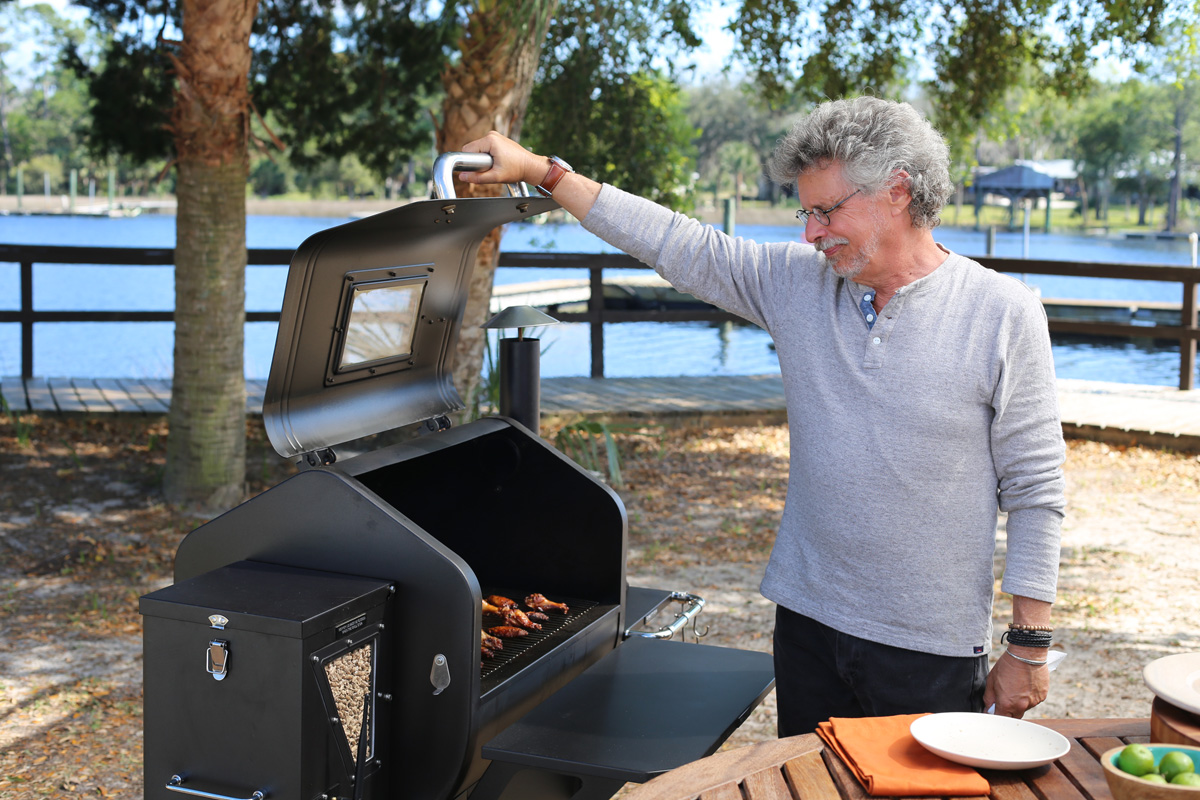 Steven RaichlenBarbecue Bible
Raichlen's grill mantra is turn, don't stab — tongs over barbecue forks, every time. He specs sturdy spring-loaded tongs with rolled or reinforced steel arms (so they don't buckle under a whole chicken or pork shoulder) and at least 16 inches long to keep your hands out of the fire.
- 03
 Susie BullochHey Grill Hey
Bulloch's pick is the Weber stainless tool set — long enough that you're not cooking your hands while you cook your food, teeth on the sides for grip surface, and a bottom lock for drawer storage. Treat tongs as non-negotiable, not optional.
Cook it. Save the record.
Every cook gets a permanent entry — cut, fuel, temp, time, photo, what worked. Next time you want to nail that exact crust, you'll have the receipt.