
Lamb
Lamb is the global default and the American outlier — more fires around Planet Barbecue are lit for lamb than any other animal protein, but the U.S. eats under a pound a person a year. Three families cover the canon: quick-luxury cuts (rack, chops) treated like small steaks pulled at 130–135°F, low-and-slow shoulder that pulls like pork around 195–203°F, and ground or skewered kebabs — the most-cooked lamb format on earth. Wood-wise, lamb stands up to oak or cherry and rosemary-garlic crusts the way no other BBQ protein does. Worth knowing: Western Kentucky’s Owensboro mutton tradition is the one regional American BBQ canon built on lamb instead of pork or beef.
- Cuts covered
- 6 — chops, shoulder, leg, rack, kebabs, ground
- Doneness profiles
- Steak (130-135°F MR for rack/chops) · BBQ (probe-tender ~203°F shoulder)
- Canonical pairing
- Oak or cherry smoke, rosemary-garlic crust
- Hardest to nail
- Rack — overcooking past medium wastes the cut
- Easiest to start
- Lamb chops — cook them like small ribeyes
- Cost range
- ~$6/lb shoulder to $20+/lb rack and frenched lamb chops
What it is
Lamb is the protein American BBQ most underrates. Walk into any backyard from Morocco east through the Levant, the Caucasus, Central Asia, and on to Australia and New Zealand, and lamb is what’s on the fire — whole animal on a spit, kebabs over coals, chops on a grate. Steven Raichlen estimates more fires around Planet Barbecue are lit for lamb than any other animal protein. The U.S. is the exception: under one pound per person per year, against Iceland’s fifty-five.
That outlier status hides a real BBQ tradition. Western Kentucky — specifically Owensboro — built the one regional American barbecue canon centered on lamb (technically mutton, older sheep), slow-smoked over hickory and served with a thin Worcestershire-and-vinegar “Black Dip” that cuts the fat. In the 1800s Kentucky was the largest lamb-producing state in the country. The Moonlite Bar-B-Q Inn in Owensboro is the last shrine.
The practical shape of lamb for the backyard is simpler than beef or pork: six common cuts, three families, clear method-by-cut logic.
The animal's anatomy
A lamb is small — usually under a year old, dressed weights in the 30–60 pound range — which is why a single carcass yields fewer commercial cuts than a steer or hog. The working-muscle vs resting-muscle logic still applies: the shoulder and leg do real work and are dense with collagen, while the rib and loin along the spine barely move and eat tender.
Front-to-back: shoulder (neck, blade, arm — the low-and-slow cut, the pulled-lamb cut), rack (the rib section, frenched for presentation), loin (chops — the T-bone of lamb), and leg (the rear quarter, big enough to roast whole or break down into kebab meat). Ground lamb comes from trim across the animal and is the foundation of kofta, kebabs, and lamb burgers worldwide. The fat cap on most lamb cuts is thinner and renders less completely than beef — part of why lamb cooks faster and why scoring the cap before a roast pays off.
The hits
Six cuts, three families. The family tells you the method.
Rack of lamb · Lamb chops
The spine cuts. Rack of lamb is the rib section frenched clean — the most presentation-forward cut in BBQ, built for the reverse sear with a mustard-and-herb crust. Lamb chops (also sold as “lollipops” when the rack is cut between bones) are small steaks that cook in minutes over direct heat. Both want a 130–135°F medium-rare pull — the most common lamb mistake is treating them like pork and cooking past medium, which wastes the cut.
Lamb shoulder · Leg of lamb
The working muscles. Lamb shoulder is the lamb world’s pulled pork — the Owensboro mutton cut, smoked 8–12 hours and pulled probe-tender around 195–203°F. The smartest first lamb smoke. Leg of lamb splits two ways: roasted medium (135–140°F) for the classic Easter / Sunday presentation, or pulled like the shoulder when boned and cooked past the collagen melt. Oak or cherry handles the long cook; rosemary, garlic, and lemon are the herb canon.
Lamb kebabs · Ground lamb
The global default. Lamb kebabs cover two formats: cubed leg or shoulder threaded on skewers (shish kebab, brochette), and ground lamb shaped around the rod (kofta, adana, lula) — the most- cooked lamb format on earth. Ground lamb also makes lamb burgers and meatballs; the higher fat content vs beef means it stays juicier at the 160°F ground-meat finish. Cumin, coriander, mint, sumac, and rosemary–garlic crusts all pair where beef would want pepper alone.
Cut & method
The quick-reference layer. Doneness targets are pull temperatures — carryover adds a few degrees during the rest.
| Cut | Best method | Doneness | Note |
|---|---|---|---|
| Rack of lamb | Reverse sear | 130-135°F medium-rare | Mustard-and-herb crust; protect the bones from char |
| Lamb chops / lollipops | Direct grill, hot-and-fast | 130-135°F medium-rare | Cook like a small ribeye; 3-4 min a side |
| Lamb shoulder | Smoke, low-and-slow | Probe-tender ~203°F | Pulls like pork; 8-12 hrs at 250°F |
| Leg of lamb (roast) | Indirect roast or rotisserie | 135-140°F medium | Score the fat cap; rosemary-garlic paste |
| Leg of lamb (pulled) | Smoke, low-and-slow | Probe-tender ~203°F | Boned out; less collagen than shoulder |
| Lamb kebabs (cubed) | Direct grill, skewered | 130-140°F | Leg or shoulder cubed; uniform 1″ pieces |
| Kofta / adana | Direct grill, skewered | 160°F (ground) | Ground lamb molded on flat skewers |
| Lamb burger | Direct heat | 160°F (ground) | Higher fat than beef — stays juicier at 160 |
Where to start
Three on-ramps, by what you’re trying to learn.
First lamb cook ever
PickLamb chopsCheap entry, fast turnaround, and the cleanest way to meet the flavor. Cook them like small ribeyes — salt, hot grate, 3–4 minutes a side, pull at 130–135°F.
First lamb smoke
PickShoulderThe Owensboro mutton cut. Same chemistry as pulled pork — 250°F, oak or cherry, ~8–12 hours, probe-tender around 203°F. Forgiving and feeds a crowd.
Feeding a crowd
PickKebabsThe global default for a reason. Cubed leg or shoulder marinated overnight in yogurt, garlic, and cumin, threaded with onion and pepper, grilled hot and fast. Scales by the skewer.
Where it falls short
The lamb mistakes that waste cuts or convert skeptics into permanent skeptics:
Overcooking the rack
Rack of lamb past medium is the single most common way to waste a $25 cut. Pull at 130–135°F and rest — carryover finishes it. Past 145°F the meat tightens and the herb crust ends up wrapped around dry protein.
Confusing “gaminess” with the cut
American squeamishness about lamb flavor usually traces to a single bad experience with strong-flavored grass-fed imports (often Australian or New Zealand). Domestic U.S. lamb is markedly milder. If the flavor has historically pushed you off, start with American lamb chops, not an import leg.
Treating the fat cap like beef
Lamb fat renders less completely than beef fat, and congeals fast as the meat cools. Score the cap before long cooks so the fat rendering has somewhere to go, and serve lamb hot — a roast leg eaten at room temperature reads waxy in a way a brisket never would.
Pulling shoulder too early
Lamb shoulder needs the same probe-tender finish as pork shoulder — the temperature gauge is the feel of the probe, not the number on the screen. A shoulder pulled at 190°F because “it hit” tears stringy instead of pulling clean. Push to 203°F or until a probe slides in like warm butter.
Mismatching wood to cut
Lamb can take stronger wood than chicken or fish, but mesquite on a delicate rack of lamb buries the herb crust under creosote. Oak handles the long shoulder cook; cherry flatters the rack and chops. Save mesquite for kofta over hot coals where the wood burns clean.
What each of them says.
4 of the people we trust have covered this. Read or watch each in their own words.
- 01
 Steven RaichlenBarbecue Bible
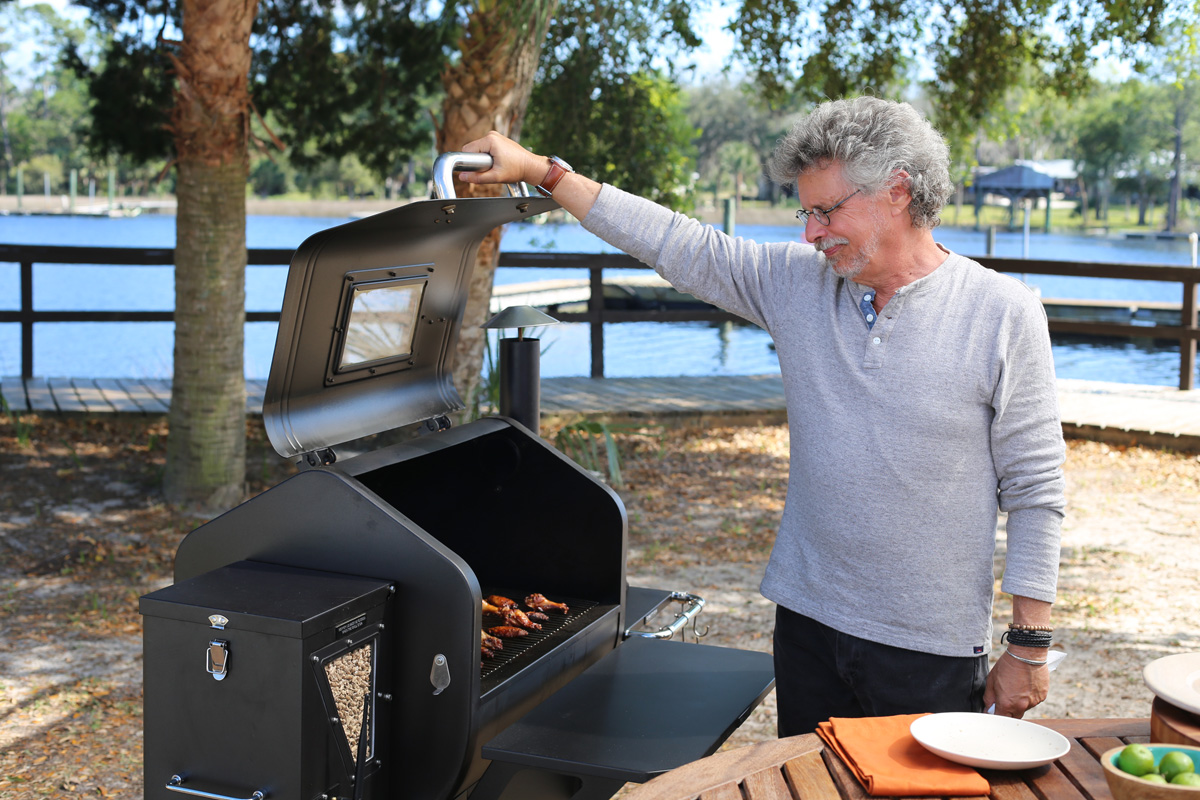
Raichlen argues that more fires around Planet Barbecue are lit for lamb than any other animal protein — a global default running from Morocco and North Africa east through the Middle East, Central Asia, Indonesia, Australia, and New Zealand. America is the outlier: under one pound per person per year, against Iceland's 55. His canonical preparations span chops with mint chimichurri, slow-smoked ribs and shanks over hickory, mustard-crusted rack indirect-grilled, and a whole leg rotisseried for that 'sizzling dark crisp crust, moist rosy center.'
- 02
 Meathead GoldwynAmazingRibs
Meathead documents Western Kentucky's near-lost mutton tradition — Owensboro's slow-smoked mature lamb served with a thin Worcestershire-and-vinegar Black Dip that cuts the rich fat. In the 1800s Kentucky was the largest lamb-producing state in the country; it's now 34th, and the Moonlite Bar-B-Q Inn is the last shrine. His take: this is the one American regional barbecue tradition built around lamb instead of pork or beef, and it deserves more cooks willing to try it.
- 03
 Mad Scientist BBQChannel / YouTube
Jeremy Yoder makes the case for lamb ribs as a smoker cut that punches above pork — fattier per square inch, faster to render, and bigger flavor payoff. A direct shot at American squeamishness about lamb gaminess.
- 04
 Chud's BBQChannel / YouTube
Bradley Robinson smokes a rack of lamb and serves it with mint chimichurri — covering the quick-luxury format end of the lamb spectrum (130-135F medium-rare, herb crust, treat-it-like-a-small-steak posture).
Cook it. Save the record.
Every cook gets a permanent entry — cut, fuel, temp, time, photo, what worked. Next time you want to nail that exact crust, you'll have the receipt.