
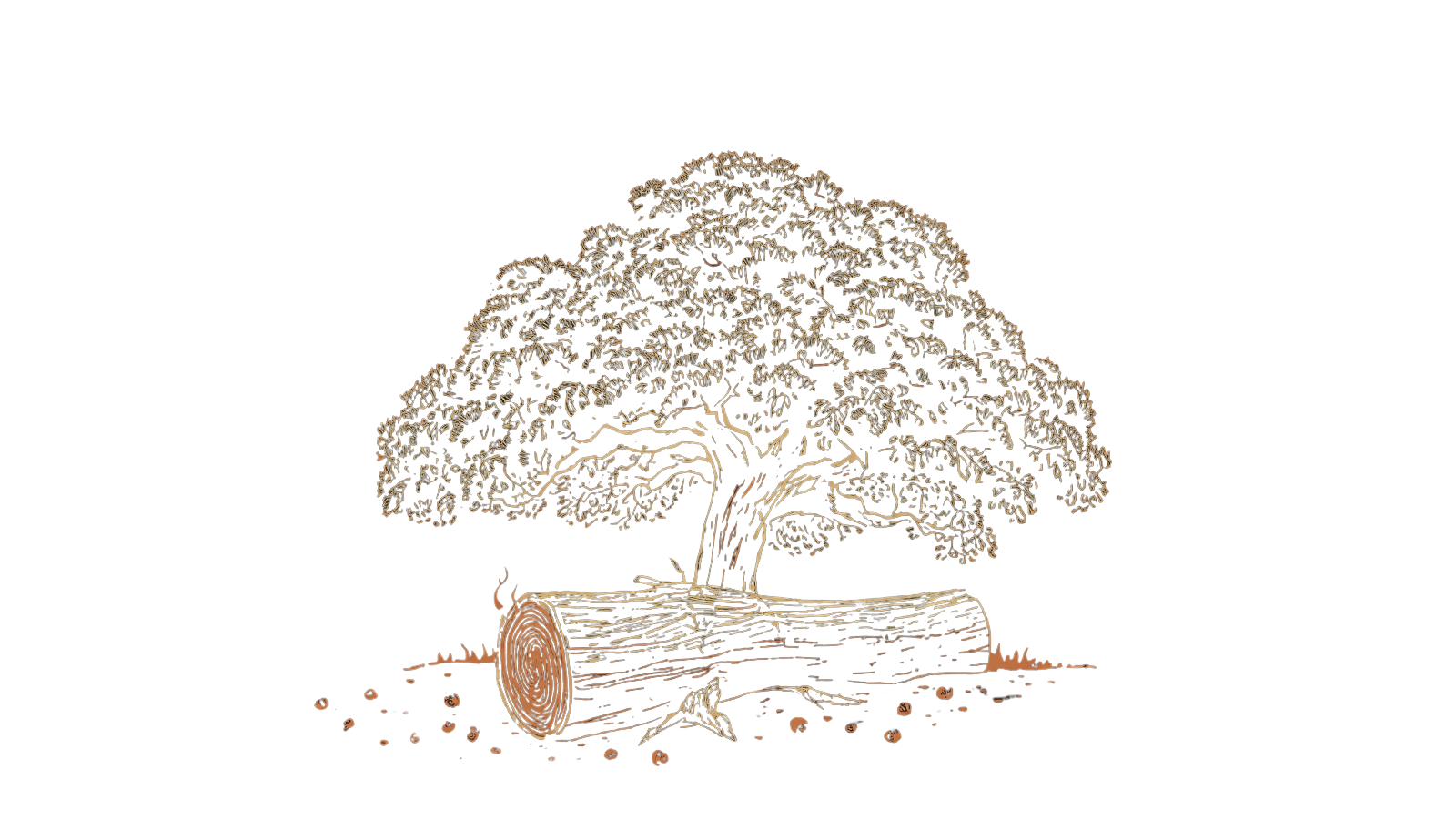
Oak
Oak (Quercus genus) is the baseline reference wood of American barbecue. A continental-range hardwood with medium smoke intensity, clean burn, and broad meat compatibility, it shows up in two distinct heartlands: Central Texas (where post oak built the Hill Country brisket tradition) and California’s Santa Maria Valley (where red oak grills the region’s signature tri-tip). Daniel Vaughn’s Texas Monthly survey of 22 BBQ cookbooks lands on oak and hickory as the two dominant championship preferences. Among the five mainstream fuel types, wood is its own category — and among wood species, oak is the Goldilocks default: cleaner than hickory, stronger than fruit, slow enough to hold a long cook without going acrid.
- Genus
- Quercus (red oak Q. rubra, white oak Q. alba)
- Origin
- Continental US — coast to coast, dense in the Mid-South and California
- Smoke intensity
- Medium — the reference baseline
- Flavor notes
- Clean, lightly sweet; white oak softer, red oak more tannic
- Pairs with
- Brisket, beef ribs, tri-tip, pork shoulder, lamb
- Burn rate
- Slow, steady; low ash, clean coals
What it is
Oak is a hardwood genus (Quercus) with hundreds of species across the continental United States. Two divisions matter for barbecue: the white-oak family (Quercus alba, plus post oak Q. stellata and bur oak), which burns slow and clean with a softer flavor profile; and the red-oak family (Q. rubra, plus pin oak and black oak), which is slightly more tannic and sharper on the palate. Both burn well; the choice usually comes down to what grows locally and what the regional tradition selected for.
Density is the through-line. Oak is one of the denser common hardwoods, which is why it throws clean coals, leaves little ash, and produces a steady stream of medium-strength smoke for hours. That property is what made oak the default fuel for the two American BBQ traditions that built around it: Central Texas brisket (post oak specifically — see the dedicated post oak entry) and Santa Maria tri-tip (red oak, grilled fast over coals from a side firebox).
Outside those two anchors, oak is also the workhorse backbone of countless competition blends and home cooks’ all-purpose pile — the wood you reach for when you want clean medium smoke and aren’t making a regional statement.
Flavor profile
Oak’s smoke is medium-intensity and clean — strong enough to register as smoke flavor, gentle enough not to dominate the meat. The white-oak family carries a faint vanilla note (a product of the lignin breakdown compounds, also the reason whiskey is aged in oak barrels); the red-oak family runs slightly more tannic and sharper on the back of the palate. Most home cooks can’t reliably blind-taste the two; pitmasters cooking on a specific local supply often can.
Compared to hickory, oak is cleaner and less assertive — you taste oak as a backdrop, hickory as a flavor in the bite. Compared to mesquite, oak is dramatically more forgiving: mesquite turns acrid fast, oak holds clean through a 12-hour cook. Compared to fruit woods (apple, cherry), oak has more weight and presence on red meat where lighter woods get lost.
The defining characteristic — and the reason every BBQ writer treats oak as the reference baseline — is how well it tolerates long cooks. Oak doesn’t drift bitter the way hickory can if accumulated too heavily, and it doesn’t spike harsh the way mesquite does on extended smokes. It’s the wood you reach for when you want clean smoke for hours.
Pairing
Oak is the most broadly compatible BBQ wood. It works on almost everything, shines on red meat and long cooks, and gets out of the way enough to play well in blends.
| Meat | Fit | Why |
|---|---|---|
| Beef brisket | Canonical | The Texas standard. Post oak specifically — clean smoke holds across 12-14 hour cooks. |
| Tri-tip | Canonical | Red oak is the Santa Maria signature — grilled fast, light kiss of smoke. |
| Beef ribs | Canonical | Same brisket chemistry — oak matches beef fat beautifully. |
| Pork shoulder | Strong fit | Holds up to long cooks; cleaner backdrop than hickory if you want the rub to lead. |
| Lamb | Strong fit | Medium smoke complements lamb’s gaminess without overwriting it. |
| Pork ribs | Good | Works well; many pitmasters blend with cherry for color and a touch of sweet. |
| Whole chicken / turkey | Workable | Fine but not signature; lighter fruit woods often preferred for poultry. |
| Salmon / white fish | Mismatch | Overpowers delicate fish; pair with alder or apple instead. |
How to use
Oak shows up in four formats. The right one depends on the cooker and the regional style you’re after.
Split logs
For traditional offset smokers. The Hill Country standard — splits roughly 16 inches long, 3-5 inches across, seasoned 6-12 months until moisture drops below 20%. Add one split every 30-45 minutes to maintain temperature. Post oak is the default species here; other white oaks substitute cleanly when post oak isn’t local.
Splits over a coal bed (Santa Maria style)
Red oak burned down to coals in a side firebox, then the rack adjusted up and down over the bed with a hand-crank — the signature California rig for tri-tip. This is grilling with a smoke kiss, not low-and-slow smoking. Steven Raichlen’s tri-tip writeup frames red oak as the traditional wood of the region.
Chunks
For charcoal cookers (kettles, kamados, vertical smokers). Fist-sized pieces tossed on a charcoal bed — 2-4 chunks per cook is typical. The charcoal provides the heat; oak provides the smoke character. More forgiving than hickory chunks on quantity discipline.
Pellets
For pellet grills. 100% oak pellets and oak-dominant competition blends are widely available — the cleanest match to a Texas profile in pellet form. Many cooks default to oak pellets as their all-purpose pile and add a flavor wood (cherry, hickory) for specific cooks.
Susie Bulloch’s home-cook framing: pair oak with cherry on brisket and beef ribs for both flavor depth and the dark mahogany color cherry contributes to the finished bark. Oak is the workhorse base; cherry is the visual and aromatic accent. The pattern works across cooker types and is the most common backyard blend on long beef cooks.
Compared to other species
Oak sits at the center of the wood-intensity spectrum, which is exactly why it functions as the reference baseline that other species get measured against.
| vs Species | How it compares |
|---|---|
| Post oak | The Texas-specific white oak — slowest, cleanest, most forgiving in the genus. If “oak” is the genus, post oak is the species the Hill Country picked. Worth specifying when long brisket cooks are the use case. |
| Hickory | Stronger, more distinctive — you taste hickory as a flavor in the bite; oak reads as a clean backdrop. Hickory is the canonical pork wood; oak is the canonical beef wood. Many competition blends use oak as the base and hickory for character. |
| Mesquite | Much more intense — fast-burning, sharp, almost peppery. Iconic for short fajita-style grilling; rarely used straight on long smokes (turns acrid). Oak is what you reach for when you want clean smoke for hours. |
| Fruit woods (apple, cherry) | Sweeter, milder, lighter — better for poultry and pork. Oak has more presence and clings better to beef. Oak + cherry is one of the most common backyard blends — oak as the base, cherry for color and a sweet top note. |
Where it falls short
Oak is the most universally workable BBQ wood, but workable isn’t universal. A few honest limits:
Delicate fish
Salmon, trout, white fish — oak’s medium smoke still overwhelms them. Use alder (Pacific Northwest standard) or apple instead.
Generic “oak” from non-specialist suppliers
Not all oak is created equal. Post oak, white oak, red oak, and pin oak burn and taste differently. Buying a bag labeled just “oak” from a general retailer may not get you the species the regional tradition assumes. Verify when character matters, especially for long brisket cooks.
Green or wet wood
Same failure mode as any wood: under-seasoned oak produces white, acrid smoke that ruins bark and tastes bitter. Verify moisture content under 20%, or buy kiln-dried. The genus doesn’t matter if the wood isn’t dry.
Short, high-heat cooks
A 15-minute steak sear doesn’t develop oak smoke character — there’s no time for the flavor to layer on. Charcoal alone handles short cooks; save the oak splits for hour-plus smokes. The Santa Maria tri-tip exception works because the rack runs close to a deep coal bed for 25-40 minutes, not a flash sear.
What goes wrong.
Treating “oak” as one wood
Post oak, white oak, red oak, and pin oak burn and taste differently. The Hill Country brisket tradition specifically picked post oak for its slow, clean burn; Santa Maria tri-tip specifically picked red oak. Buying a generic “oak” bag may not get you the species the regional tradition assumes. Verify when character matters.
Using oak on delicate fish
Salmon, trout, and white fish get overwhelmed by oak’s medium-strength smoke. Switch to alder (Pacific Northwest standard) or apple — milder woods that complement fish without dominating.
Defaulting to oak when hickory is the right call
Oak is the canonical beef wood; hickory is the canonical pork wood. Pulled pork shoulder, Memphis ribs, bacon — these traditions want hickory’s phenol chemistry, not oak’s neutrality. Oak works on pork, but the regional signature is hickory.
Skipping oak for short, fast cooks
A 15-minute steak sear doesn’t develop oak smoke character — there’s no time to layer flavor on. For short cooks, charcoal alone (or a single chunk for a hint of smoke) is the right call. The exception: Santa Maria tri-tip cooks 25-40 minutes close to a red oak coal bed, which is long enough for the wood to register.
Using green or wet oak
Under-seasoned oak produces white, acrid smoke that ruins bark and tastes bitter. Oak needs 6-12 months of seasoning to drop below 20% moisture, or kiln-drying. The wet-wood failure mode is species-agnostic — verify moisture content before the cook.
What each of them says.
4 of the people we trust have covered this. Read or watch each in their own words.
- 01
 Daniel VaughnTexas Monthly
Vaughn's Texas Monthly wood guide, drawn from a survey of 22 BBQ cookbooks, lands on oak (alongside hickory) as the dominant championship preference among American pitmasters. As Texas Monthly's BBQ Editor — the only dedicated barbecue editor at a major American magazine — Vaughn tracks which woods the country's top joints actually burn, and oak (post oak specifically in the Hill Country) anchors the list.
- 02
 Steven RaichlenBarbecue Bible
Raichlen is the canonical voice on red oak's other heartland: California's Santa Maria Valley, where tri-tip is grilled over a gentle red oak fire that both smokes and sears the meat. His tri-tip writeup frames red oak as the traditional wood of tri-tip's birthplace — a useful counterweight to the Texas post oak narrative and a reminder that oak's American story is not Texas-only.
- 03
 Susie BullochHey Grill Hey
Bulloch's home-cook framing positions oak as the wood that delivers a classic Texas BBQ flavor on brisket, and recommends pairing it with cherry for both flavor depth and the dark red color that finishes a beef rib well. A practical pairing-first take that lands well for backyard cooks new to oak.
- 04
 Mad Scientist BBQJeremy Yoder / YouTube
Yoder runs a blind-tested comparison of four common BBQ woods, putting the conventional wisdom on which wood matters how much to the test. His methodical experimentation is a useful reality check on the post-oak-only orthodoxy and surfaces how subtle (or not) the species differences actually register on cooked meat.
Cook it. Save the record.
Every cook gets a permanent entry — cut, fuel, temp, time, photo, what worked. Next time you want to nail that exact crust, you'll have the receipt.