
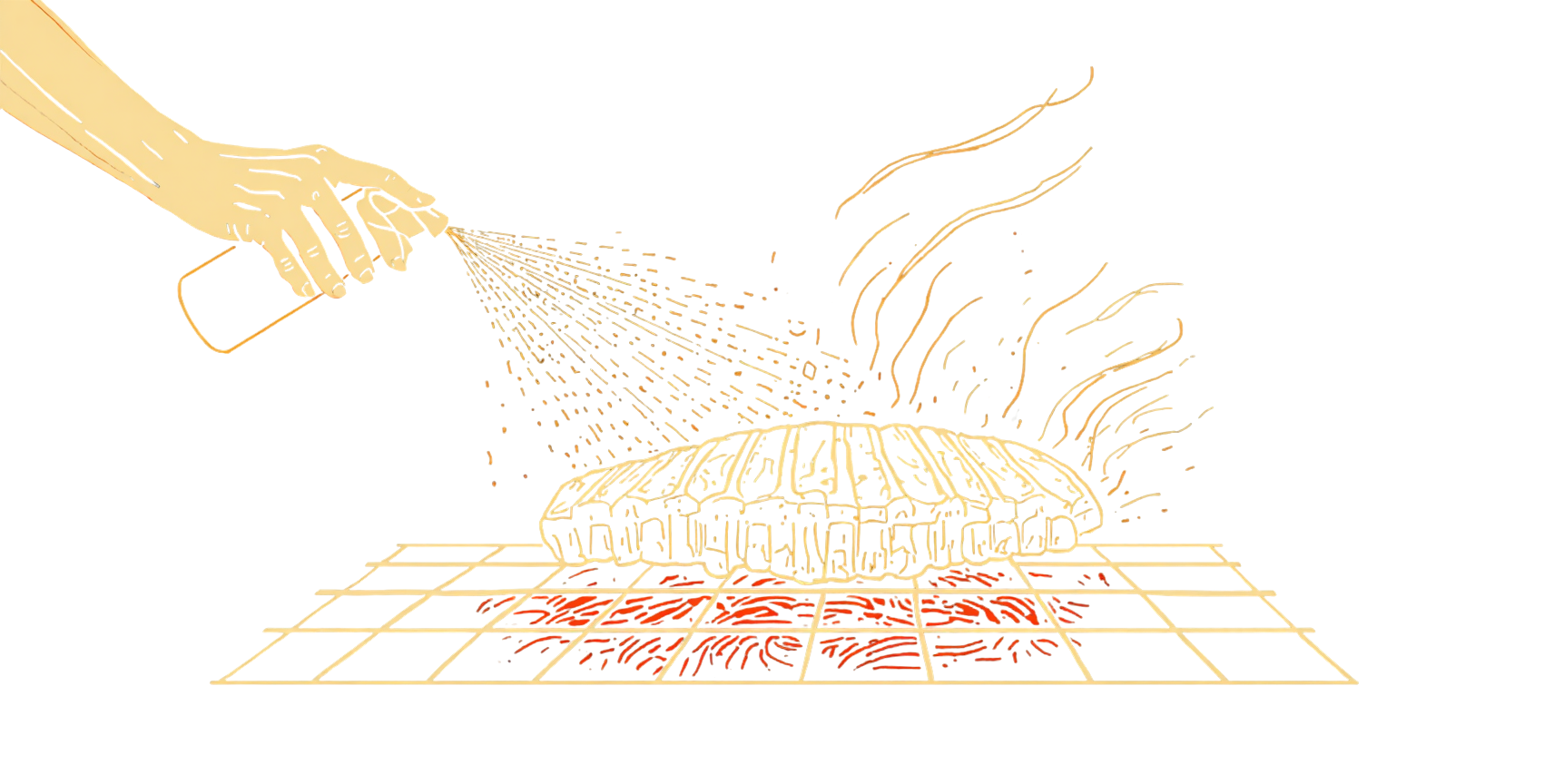
Spritzing
Spritzing means misting the surface of smoking meat with a thin liquid — apple juice, cider vinegar, water, or a mix — every 30 to 60 minutes during a long cook. Its older sibling, mopping, does the same job with a thicker “mop sauce” swabbed on with a brush or cotton mop — a tradition that runs through Carolina pork and Memphis ribs. The case for it: the liquid keeps the exterior from drying, helps bark build in thin layers, and keeps the surface damp enough to favor a smoke ring. The honest counter-case the science crowd makes: thin spritzes are mostly water with few flavor molecules, repeated spraying washes rub off and softens the bark you're building, and the evaporative cooling can deepen the stall and add 10–20% to a low-and-slow cook. The reconciling view: spritz sparingly and only after the bark has set — not early, not constantly. It's one of barbecue's most debated habits: useful in moderation, counterproductive overdone.
- What
- Mist thin liquid on the meat mid-cook (mopping = thicker sauce, brush)
- Common liquids
- Apple juice, cider vinegar, water, beer — often a mix
- When to start
- After the bark sets — ~2–3 hrs in, not at the start
- Frequency
- Every 30–60 min (less is more)
- The catch
- Evaporative cooling can add 10–20% to a low-and-slow cook
- Verdict
- Helpful in moderation; overdone it washes rub and softens bark
Before you cook.
- Equipment
- A food-safe spray bottle for spritzing, or a BBQ mop / basting brush for thicker mops. Keep the liquid handy but the pit closed between passes.
- The liquid
- Thin and simple — apple juice, cider vinegar, water, or a 1:1:1 juice/vinegar/beer mix. Thicker vinegar-based 'mop sauces' add more flavor per pass.
- Timing plan
- Don't spritz until the bark has set (~2–3 hrs). Spraying a wet, un-set surface just delays the crust.
- Mind the lid
- Every peek drops the pit temp and lets heat and smoke out — spritz fast and close up.
What to cook with it.
Other ways to do it.
Mopping (the traditional version)
Swab a thicker, seasoned 'mop sauce' on with a cotton mop or brush instead of misting — the older Carolina/Memphis method. More flavor per pass than a thin spritz, but heavier-handed.
Spritz before the wrap
A light spray right before wrapping in foil or paper adds a little moisture going into the Texas crutch braise.
Sweet-then-bold
Start with water or juice early to maintain moisture, then switch to cola or beer later in the cook to caramelize and deepen color.
No-spritz (the dry path)
Skip it entirely for maximum bark and a faster cook — the route many competition and Texas pitmasters take.
What goes wrong.
Spritzed too early
Spraying before the bark sets keeps the surface wet and delays the crust. Wait until the rub has set into a bark — usually 2–3 hours in.
Washed off the rub
Heavy or frequent spraying rinses seasoning right off. Mist lightly with a fine spray, not a soaking.
Softened the bark
Too much liquid undoes the crust you're building. If bark is your goal, spritz less — or not at all.
Stretched the stall longer
Every spritz cools the surface by evaporation, which can deepen and extend the stall. On a long cook that's 10–20% more time — plan for it or spritz less.
Opened the lid too much
Spritzing means opening the pit, and every peek drops the temp and lets heat and smoke escape. Spray fast and close up.
What each of them says.
3 of the people we trust have covered this. Read or watch each in their own words.
- 01
 Meathead GoldwynAmazingRibs.com
On the science, thin mops like apple juice, beer, or wine have few flavor molecules and mostly just wet the surface; only thicker mops add noticeable flavor. Repeated basting can wash off rub and, on a dried surface, hamper browning and crust. And below 250°F, the extra moisture's evaporative cooling can add 10–20% to the cook. If you do it, baste after the crust forms — right after a flip, while the surface is hot — so it mixes with the juices and evaporates rather than steaming the meat.
- 02
 Steven RaichlenBarbecue Bible
Mop sauces are thin, intensely flavorful basting liquids — most vinegar-based with salt, pepper, and cayenne — brushed onto meat as it slow-smokes. They're woven into American barbecue tradition: North Carolina pork shoulders and Memphis ribs are mopped through the cook. Think of a mop as a thin glaze that moistens the surface and layers flavor as the meat smokes.
- 03
 Mad Scientist BBQYouTube — Jeremy Yoder
Jeremy spritzes a brisket against an unsprayed control to test whether spraying actually improves bark and color — a science-minded look at whether the habit earns its place.
Cook it. Save the record.
Every cook gets a permanent entry — cut, fuel, temp, time, photo, what worked. Next time you want to nail that exact crust, you'll have the receipt.