
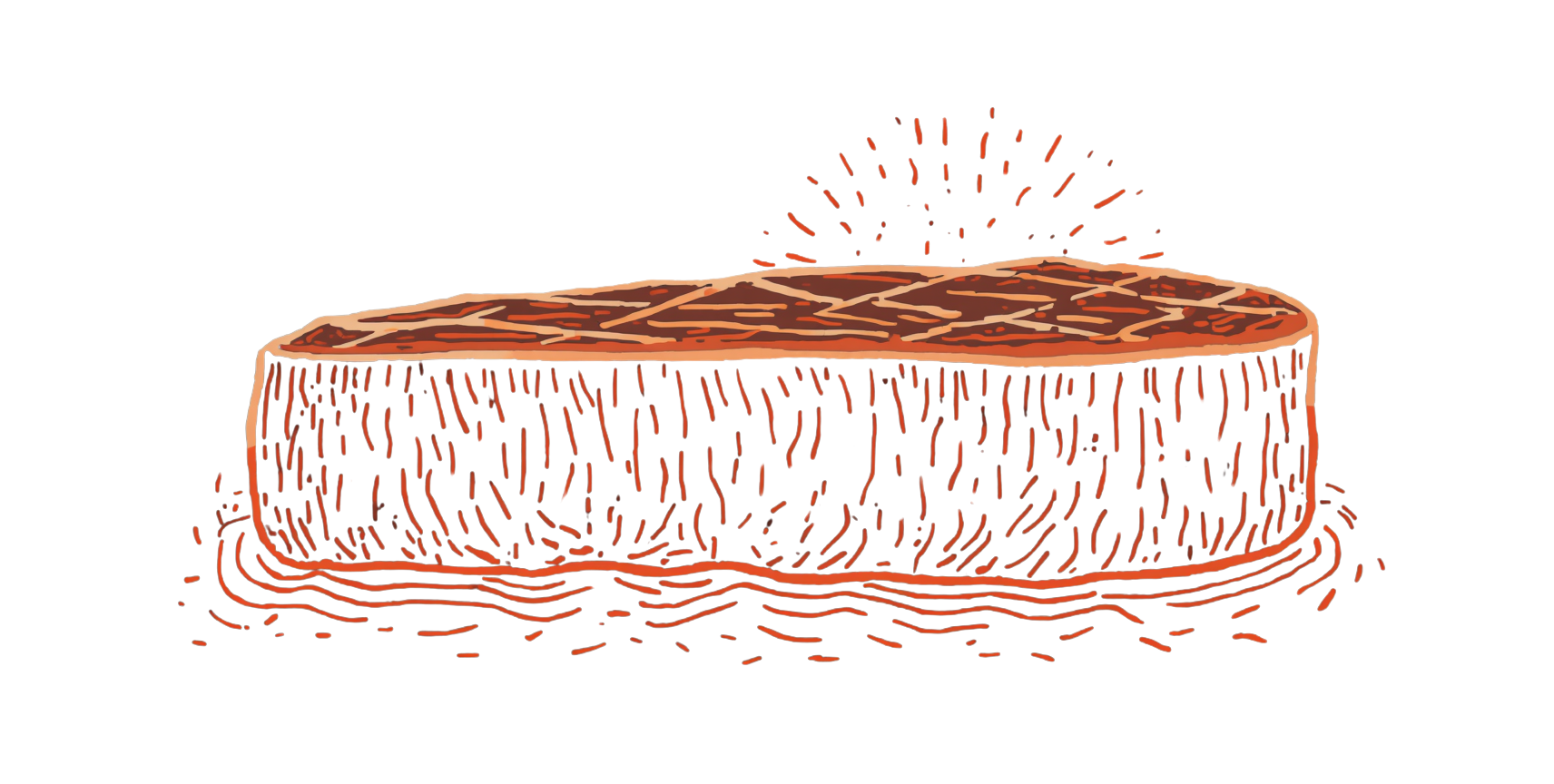
Maillard Reaction
The Maillard reaction is a chemical reaction between amino acids (the building blocks of protein) and reducing sugars that produces brown color and hundreds of complex flavor compounds when meat is cooked. Meathead calls it the most important reaction in cooking. It's why a reverse-seared steak develops that dark crust in 90 seconds; it's the core of how bark forms on a brisket over hours; it's in toasted bread, roasted coffee, and the brown bottom of every pan-fried anything. The key requirements are heat (~285°F+ surface temp), a dry surface (water blocks the reaction), and time (seconds at high heat, hours at low). Distinct from caramelization — that's sugar alone breaking down, a totally different reaction that needs 300°F+ and doesn't happen at low-and-slow BBQ temperatures.
- What it is
- A chemical reaction between amino acids and reducing sugars under heat
- Triggers at
- ~285°F surface temperature (continues higher)
- Produces
- Brown color + hundreds of savory flavor compounds (Kenji calls it a cascading waterfall)
- Found in
- Sears, bark, bread crust, coffee, beer, anywhere browning happens
- Sign you have it
- Brown color + rich savory aroma
- What it isn't
- Caramelization (sugar-only reaction, needs 300°F+, different chemistry)
The phenomenon
Take a piece of raw meat. Put it on a hot surface for 60 seconds. The bottom turns brown, develops a hard crust, and starts smelling like roasted meat — complex, savory, slightly sweet. That browning isn't the meat "burning." It's a specific chemical reaction with a name: Maillard, after the French chemist Louis-Camille Maillard who first documented it in 1912.
The Maillard reaction is the chemistry that produces almost every brown-and-flavorful surface in cooking. A steak sear, toasted bread, dark roast coffee, the brown bottom of pan-fried fish, the dark crust on a long-cooked brisket — same reaction, different temperatures and times. It's arguably the single most important chemistry in cooked food.
The science behind it
The reaction happens between two specific things: amino acids (the building blocks of protein, abundant on the surface of meat) and reducing sugars (a particular kind of sugar that includes glucose, fructose, lactose — present in small amounts in meat naturally, and added by most dry rubs).
When the surface temperature climbs above ~285°F, the amino acid and reducing sugar molecules collide with enough energy to rearrange into a complex cascade of new compounds. Kenji at Serious Eats describes it as a cascading waterfall: hundreds of new molecules form and break apart simultaneously, far faster than any one chemist can track. The end products are a mix of brown pigments (melanoidins) and hundreds of flavor compounds, including the savory, meaty, slightly nutty notes that define cooked meat to most people.
Two prerequisites matter:
A dry surface. Water at the meat surface caps the temperature at 212°F (water's boiling point) and prevents the surface from climbing into the Maillard zone. Pat the meat dry before searing. The stall is the same physics — evaporation pinning the internal temperature. Dry the surface and Maillard takes off.
Time at temperature. At 500°F+ (a hot pan or grill), Maillard happens in 60-90 seconds. At 225°F (a low-and-slow BBQ pit), surface temperatures briefly spike higher and Maillard happens slowly, accumulating over hours. The reaction doesn't need extreme heat — just sustained heat above the threshold.
Distinct from caramelization — a different reaction where sugar alone breaks down at 300°F+. Caramelization doesn't involve amino acids and doesn't happen at low-and-slow BBQ temperatures. The deep brown color of bark and crust is Maillard, not caramel.
In the cook
Maillard isn't one event — it's happening anywhere on a meat surface above ~285°F. That's several different moments across BBQ:
| Cook moment | Surface temp | Maillard role + duration |
|---|---|---|
| Direct sear (steak, burgers) | 500–700°F | Primary event; 60–90 seconds per side |
| Bark formation (long cook) | 225–275°F pit; surface briefly spikes higher as it dries | Slow accumulation over many hours |
| Roasted vegetables | 400–425°F | Moderate-paced; 20–40 minutes for full development |
| Burnt ends | 275°F+ | Cubed surfaces expose fresh meat; bonus Maillard over an hour |
| Smoke-roast (poultry, fish) | 275–325°F | Gentle but real; an hour or two for golden skin |
Three practical implications: First, dry the surface before any high-heat cook. A paper-towel pat of a steak or a dry brine the day before transforms how fast and evenly Maillard runs. Second, spritzing during long cooks has nuanced effects on Maillard: adding moisture briefly slows surface drying but increases smoke uptake, so the trade-off varies. Third, sugar in the rub feeds Maillard (sugars are one of the two required reactants). A modest amount accelerates browning; too much produces a candy-coated surface and risks tipping into burnt territory.
When it's done
Maillard doesn't reach a discrete endpoint — it's continuous and will keep happening as long as heat is applied. The decision point on a real cook is recognizing enough Maillard before it tips into too much (burnt). The line between optimal and burnt is mostly sensory:
| Sign | Optimal | Too far |
|---|---|---|
| Color | Deep brown, mahogany, golden | Black, charred |
| Aroma | Savory, nutty, rich | Acrid, burnt, bitter |
| Surface texture | Crust, slightly crisp | Brittle char, dust |
| Flavor | Umami, complex, lingering | Bitter, ashy |
The transition from optimal to burnt is faster than most people expect — especially on direct sears where surface temp is >500°F. The cook's tool here is attention: watch the color shift, smell the aroma move from rich to acrid, pull before either crosses the line. On a long cook where Maillard is slow-building ( bark development), the same signs apply but the danger zone is hours away rather than seconds.
What people get wrong.
Maillard and caramelization are the same thing
They're different reactions. Caramelization is sugar alone breaking down at 300°F+ (think the bottom of a crème brûlée crust). Maillard requires amino acids AND reducing sugars together. The deep brown color on cooked meat — including the dark crust on bark — is Maillard, not caramel. Surface temperatures during BBQ rarely hit caramelization range anyway.
Maillard only happens at high heat
It runs faster at high heat (a 500°F sear gets you Maillard in 60-90 seconds), but it also happens slowly above 285°F surface temperature. During a long 225°F pit cook, the surface temperature briefly spikes well above the pit temp as moisture evaporates and the surface dries — slow Maillard builds gradually over hours. That's how bark forms without ever crossing into sear temperatures.
Maillard is just browning
Browning is the visual effect, but Maillard is fundamentally about flavor — it produces hundreds of complex molecules, including the savory, nutty, slightly sweet compounds that define cooked-meat taste. The color is a byproduct. You can get a similar brown by adding food coloring, but you can't fake the flavor cascade.
Wet meat will brown
Water at the meat surface caps surface temperature at 212°F — below the Maillard threshold. A wet surface steams; a dry surface browns. This is why a dry brine the day before, or a paper-towel pat right before searing, produces dramatically better crust than putting wet meat directly on heat. The same physics that drives the stall.
What each of them says.
2 of the people we trust have covered this. Read or watch each in their own words.
- 01
 Meathead GoldwynAmazingRibs.com
The Maillard reaction is arguably the single most important reaction in cooking. It's the chemistry that gives meat its color, its brown crust, and the bulk of its complex savory flavor. It happens when amino acids meet reducing sugars at high enough surface temperatures — around 285°F and up. Below that, you get cooked meat but not the deep flavor; above it and into the right time window, you get the sear, the crust, the bark. Wet surfaces block Maillard because evaporation caps surface temperatures at 212°F. Dry the surface, get the heat up, give it time.
- 02
 Mad Scientist BBQYouTube — Jeremy Yoder
Jeremy explicitly works through the Maillard reaction as part of his methodical brisket-science framework. Chemistry-teacher background shows in his explanation of how surface temperatures, dehydration, and time all combine to drive Maillard during a long cook — clearest BBQ-video framing of why long-and-low produces deep brown bark without ever hitting steak-sear temperatures.
Cook it. Save the record.
Every cook gets a permanent entry — cut, fuel, temp, time, photo, what worked. Next time you want to nail that exact crust, you'll have the receipt.