
Griddle
A griddle is a flat-top: a solid sheet of steel heated from below by gas burners, with no grates and no flame touching the food. It cooks by conduction, like a giant cast-iron pan, and the Blackstone is the rig that turned it into a backyard staple. Its killer app is the smash burger — full contact between beef and screaming-hot steel is maximum Maillard browning — but it's really the whole short-order menu: eggs, bacon, pancakes, fried rice, fajitas, and everything else that falls through a grill grate. Light only some of the burners and you get an easy two-zone setup. The tradeoff is everything a grate gives you: no grill marks, no char, no smoke — a griddle complements a grill, it doesn't replace one.
- Fuel
- Propane (some natural-gas or portable models)
- Sizes
- 17″ portable up to 36″ four-burner carts
- Price
- ~$200 to $600 for a backyard flat-top
- Temp range
- Up to ~500–600°F across the steel surface
- Best at
- Smash burgers, breakfast, high-volume flat cooking
- Skill level
- Easy to cook on; seasoning is the learning curve
What it is
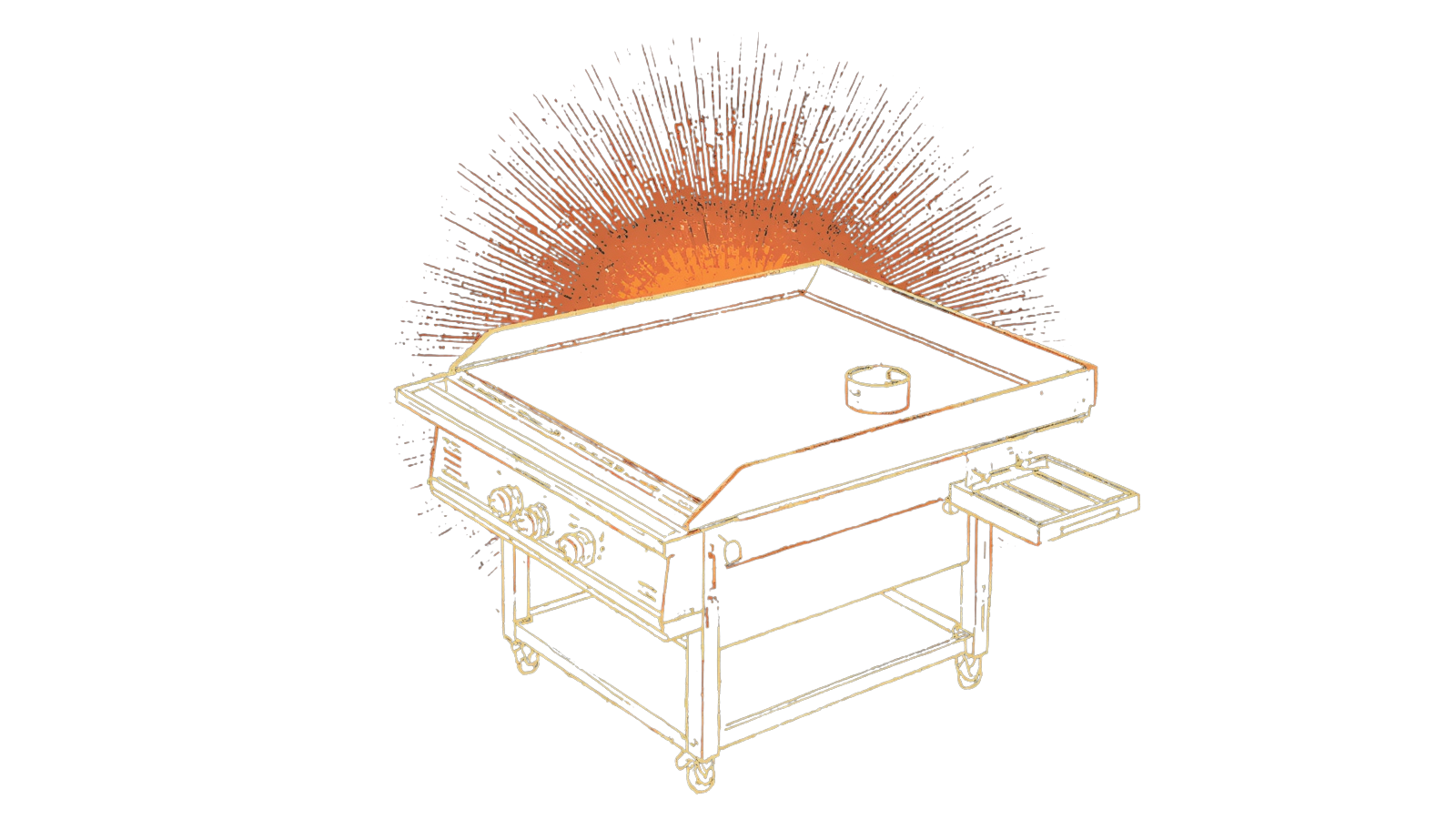
A griddle, or flat-top, is a thick flat plate of steel set over gas burners on a cart, with a grease trough at one edge that drains to a cup. It's the backyard cousin of the diner flat-top, the Japanese teppan, and the Spanish plancha — a solid cooking surface instead of grates. Blackstone popularized the home version and largely defined the category, alongside Camp Chef, Weber, and others.
That solid surface is the whole difference. A grill cooks food over a fire on bars; a griddle cooks it on a hot metal sheet, with the heat source completely below and sealed off from the food. It's much closer to a giant outdoor skillet than to a grill — which is exactly why it does things a grill can't.
How the heat moves
Gas burners under the plate heat the steel, and the steel cooks the food by direct conduction — the same way a pan on a stove works, just much bigger. No flame ever touches the food, and there's no lid or convection; the cooking happens entirely at the surface where food meets hot metal. Because the contact is total rather than the thin lines of a grate, browning is fast and even across the whole footprint of whatever you're cooking.
Most griddles have several independently-controlled burners, so lighting some and not others gives you a hot zone and a cooler one — sear smash burgers on the screaming side, hold them and toast buns on the other. The main heat-evenness catch is steel thickness: thin plates develop cool spots between the burners, while thicker steel holds and spreads heat more evenly.
Setting it up
The one real chore is seasoning. Like cast iron, a griddle's steel needs a baked-on layer of polymerized oil to turn it dark, slick, and rust-resistant: heat it, wipe on a thin coat of oil, let it smoke and darken, and repeat a few times before the first cook, then maintain it with a light oiling after each use. Skip it and the bare steel rusts and sticks.
Cooking is simple from there: preheat the plate, oil it, light your zones, and go. Push grease toward the trough with your scraper as you cook, empty the cup, and give the hot surface a scrape and a wipe between batches. When you're done, scrape it clean, wipe on a protective film of oil, and cover it so it doesn't rust before next time.
Where it earns its keep
The flat-top unlocks an entire menu a grill simply can't do. Smash burgers with a lacy, crusted edge; full breakfasts — eggs, bacon, pancakes, hash browns — all at once; fried rice, fajitas, teppanyaki-style vegetables, and anything small or delicate that would fall through or stick to grates. The solid surface means total contact and Maillard browning edge-to-edge, no flare-ups (grease drains away instead of igniting), and enough surface to feed a crowd fast.
It's best understood as a complement to live-fire cooking, not a competitor. Where a gas grill chars and a smoker smokes, a griddle does the short-order and breakfast work neither can touch — which is why the people who own one tend to use it constantly.
Where it falls short
A griddle gives up everything that comes from cooking over fire: no grill marks, no char, no live-fire flavor, and no smoke. It browns beautifully but it cannot make a steak taste like it was cooked over coals, and it can't smoke or cook low-and-slow at all. It's a flat-top, not a grill or a smoker, and it doesn't replace either.
It also asks for upkeep a grate doesn't: season it and keep it oiled or it rusts, and stay on top of the grease trough or it overflows. Thin models cook unevenly, and there's real cleanup after a greasy cook. None of it is hard — it's just the price of that big steel surface, and the reason a griddle lives alongside a grill rather than instead of it.
What goes wrong.
Skipping the seasoning
Bare griddle steel rusts and sticks. Before the first cook, build a seasoning layer — thin oil, heat until it smokes and darkens, repeat a few times — and re-oil lightly after every use. A well-seasoned top is dark, slick, and weatherproof.
Cooking on a cold plate
An underheated griddle steams and sticks instead of searing. Give it a full preheat, then oil it just before the food goes down — you want it hot enough that a drop of water dances and evaporates.
Using one temperature for everything
Light only some of the burners so you have a hot zone and a cooler one — sear on the hot side, hold and toast on the cool side. Running the whole plate at one heat turns timing into a juggling act.
Ignoring the grease trough
Fat runs across the flat surface to the trough and cup — if you don't push it along and empty it, it overflows and can catch. Scrape grease toward the trough as you cook, and don't let the cup fill up.
Expecting grill flavor
No grates, no flame, no smoke — a griddle browns by contact, it doesn't char or smoke. If you want grill marks and live-fire flavor, cook on a grill; use the griddle for what only a flat-top can do.
What each of them says.
2 of the people we trust have covered this. Read or watch each in their own words.
- 01
 Steven RaichlenBarbecue Bible
Raichlen treats the griddle as the grill's alter-ego — built for the foods you can't cook well on a grate: smash burgers, eggs and breakfast, delicate fish, shrimp, and smoky fried rice. He traces the flat-top across cuisines, from the Japanese teppan to the Spanish plancha to Latin American champa cooking. The catch is upkeep: a griddle is gloriously stick-resistant, but only when it's properly seasoned and maintained.
- 02
 Meathead GoldwynAmazingRibs.com
A flat-top is a solid steel surface over several gas burners that delivers even heat across a big cook area, and lighting only some of the burners gives you a hotter side and a cooler one. It excels at exactly the foods that fall through or stick to grill grates — eggs, pancakes, diced vegetables, caramelized onions, and smash burgers. The trade is that you lose the grill marks and smoky flavor of flame-direct cooking, and thinner steel can run uneven between the burners.
Cook it. Save the record.
Every cook gets a permanent entry — cut, fuel, temp, time, photo, what worked. Next time you want to nail that exact crust, you'll have the receipt.