
Vortex Insert
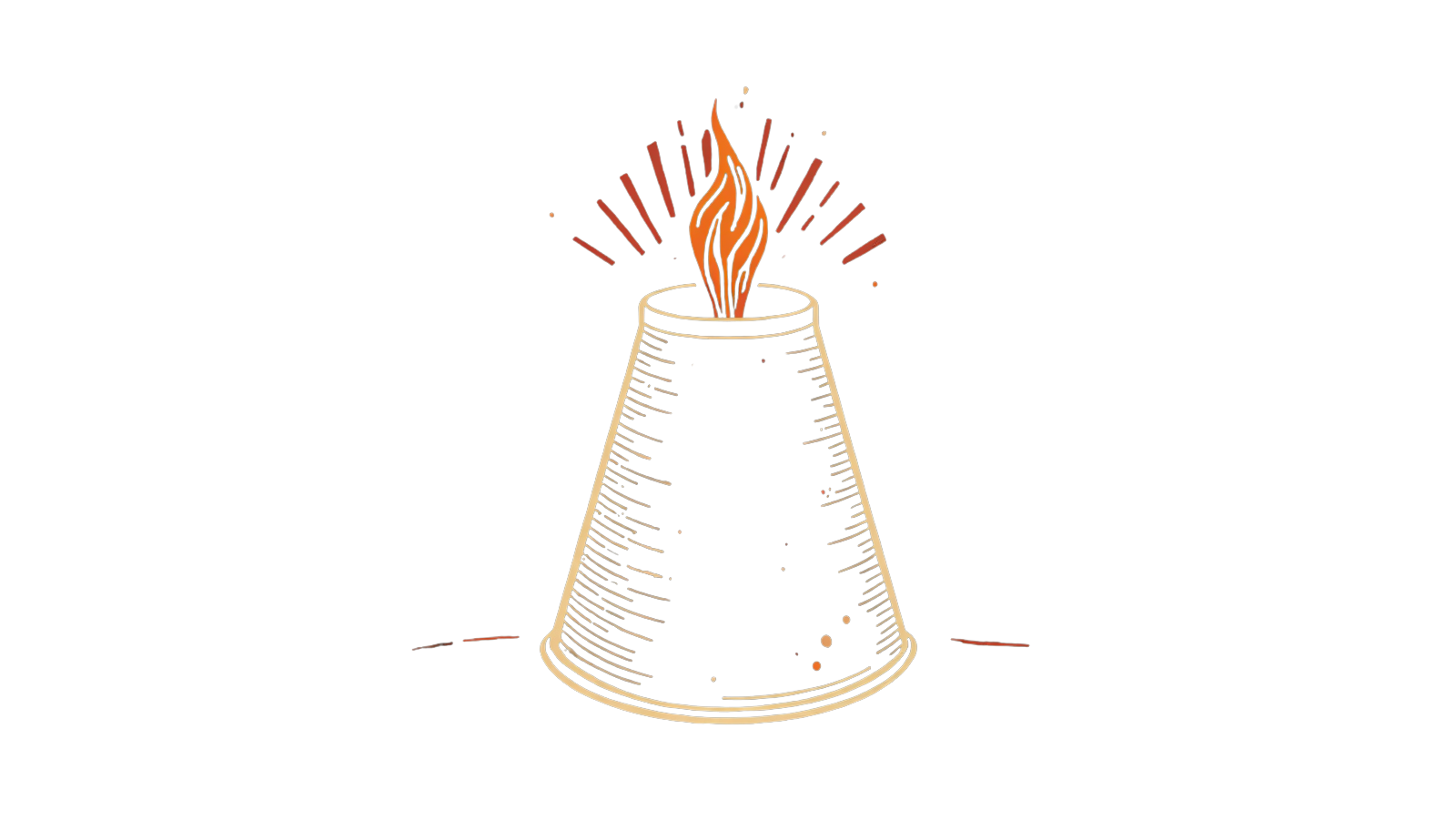
The Vortex is a truncated stainless cone — wide rim, narrow rim, open both ends — that sits on the charcoal grate of a kettle grill and concentrates the fire. Pack charcoal inside, ring the outer edge of the cooking grate with food, close the lid: the coals run screaming hot in the center while the outside ring sits in a clean indirect zone. It's the kit behind the Vortex method for crispy chicken wings — the cook that made the accessory famous — and it flips four ways (wide-up or narrow-up, coals inside or coals around) to switch between high-heat radiant searing and softer indirect roasting on the same $60 kettle accessory.
- Fits
- 18″, 22″, and 26″ kettles + most kamado fireboxes
- Material
- 20-gauge 304 stainless steel
- Price
- ~$50–70 from Vortex BBQ
- Best at
- Crispy wings + ring-around indirect cooks on a kettle
- Compatible cookers
- Weber kettles, Big Green Egg, Kamado Joe, drum smokers
- Maker
- Vortex BBQ — Indianapolis, IN
What it is
The Vortex is a steel cone with both ends cut off — a wide rim at one end, a narrower rim at the other, open all the way through. It's spun from 20-gauge 304 stainless and made by Vortex BBQ, a small Indianapolis shop that started selling the accessory online in the early 2010s. There are three sizes (small, medium, large) keyed to the 18-inch, 22-inch, and 26-inch Weber kettles, and the cone drops directly onto the charcoal grate without any modification to the cooker.
The shape is the whole product. By piling charcoal inside a cone instead of spreading it across the grate, you stack the heat vertically and concentrate it under a tight footprint — which leaves the rest of the grate available for food sitting in clean, indirect convection. The cone is the same accessory whether you fly it narrow-end-up (a tall, focused chimney of heat for wings and high-heat roasting) or wide-end-up (a broader hot zone for searing). It also works inverted on smaller kamados and ugly drums.
How the heat moves
Packed with lit coals, a Vortex acts like a small open chimney. The cone walls trap the radiant heat coming off the charcoal and channel the rising hot air straight upward through the open top — concentrating the fire into a narrow vertical column instead of letting it spread sideways across the grate. With the kettle lid closed, that column rolls up, hits the dome, and circulates back down the outside of the bowl, washing the outer ring of the cooking grate with indirect convection heat on the way past.
The result is two cleanly-separated zones on one fire: a screaming-hot center directly above the cone (easily 600°F+ for radiant searing) and a moderate indirect ring around the perimeter that runs roughly 375–450°F — hot enough to render skin and roast chicken to done, gentle enough that nothing on the outside of the grate gets a direct flame. Food on the ring cooks by hot air, not by line-of-sight to the coals. Like any charcoal cooker, you steer the overall temperature with the kettle's bottom intake vent.
Setting it up
The four-configuration claim is what Vortex BBQ leans on in their own marketing — the cone gives you a kettle that does several different cooks without changing accessories:
Narrow-up, coals inside (the wing setup)
The canonical configuration. Cone sits narrow-end-up on the charcoal grate, packed with lit lump or briquettes; food rings the outer edge of the cooking grate above. This is the Vortex method for crispy chicken wings — 20–30 minutes, no flipping, juicy meat and shatter-crisp skin.
Wide-up, coals inside (the sear setup)
Flipped wide-end-up, the cone spreads the heat across a broader footprint directly under the grate — closer to a standard high-heat searing bed without needing a full kettle of coals. Useful for reverse-sear finishes on a few steaks.
Coals around the cone (indirect roasting)
Ring the cone with lit charcoal instead of packing it inside, and the cone becomes a heat baffle in the middle. Food sits in the center, the perimeter fire cooks it indirectly — a clean configuration for a whole spatchcocked chicken or a small pork loin.
Most cooks light a chimney of charcoal first, then dump the lit coals straight into the cone — full to the rim for wings, partially filled for lower-temp cooks. You can also pack the cone with unlit briquettes and light the top, snake-style, for a longer slower-coming-up cook. Never use lighter fluid; a chimney starter is the canonical method on any kettle.
Where it earns its keep
The Vortex earned its reputation on one cook: crispy chicken wings on a Weber kettle, no flipping, no babysitting, twenty to thirty minutes from grate to plate. Malcom Reed of HowToBBQRight popularized the technique on YouTube, and the result is genuinely hard to beat — wings ring the outer grate in the indirect convection zone, render their fat, and the column of heat rising up the middle browns the skin to shatter-crisp without scorching the meat.
Beyond wings, the cone earns its $60 on any cook that wants a focused hot zone plus a clean indirect ring on one fire: spatchcocked chicken, bone-in pork chops, a ring of sausages, a quick batch of skin-on chicken thighs. It uses noticeably less charcoal than a full bed for the same outcome, lights faster, and packs flat for storage. As a single-job accessory that makes one famously good cook reliable on a kettle anyone already owns, it's the cheap upgrade that pays for itself the first time you make wings for a crowd.
Where it falls short
The Vortex is a specialist, not a general-purpose grill accessory — and reviewers who test grilling gear for a living are honest about its limits.
Not a true two-zone setup
The cone gives you a hot center and a softer ring, but it's not a flat hot side / cool side layout. For honest two-zone fire cooking, a banked bed of charcoal still beats it — Meathead ultimately prefers a Slow ‘N Sear for proper two-zone work and only grades the Vortex a 2-star Bronze.
Limited capacity on the ring
Food has to sit on the outer edge of the cooking grate, which is a narrow ring on a 22-inch kettle. Fine for a dozen wings; tight when you're trying to feed a crowd. The 26-inch Vortex on a 26-inch kettle opens that up, but most people own the 22.
Wrong tool for long smokes
The Vortex is a high-heat accessory. For a brisket or a pork shoulder you want a long, low burn — a snake of briquettes around the perimeter handles that on the same kettle.
Hot to handle
Stainless steel filled with lit coals gets dangerously hot, and there's no handle — repositioning mid-cook means heavy gloves and patience. Set it once and leave it.
What goes wrong.
Overpacking the cone
Cramming charcoal above the rim defeats the chimney effect — the column of heat spills sideways and the indirect ring starts taking direct flame on the inside edge. Pack it to the top rim, not over it.
Crowding food into the inside ring
Food placed close to the cone catches direct radiant heat and burns on the bottom while the top is still raw. Ring the food on the OUTER edge of the cooking grate — shoulder-to-shoulder around the perimeter — so it sits cleanly in the indirect convection zone.
Lifting the lid to check the wings
The Vortex cook is fast (20–30 minutes) and runs on hot circulating air with the lid closed. Every peek drops the dome temp and stalls the skin crisp. Set the vents, close the lid, trust the timer — it really is no-flip.
Trying to use it for low-and-slow
The cone's job is concentrating heat, not stretching it. For brisket or pork shoulder, take the Vortex out and run a snake of unlit briquettes around the perimeter of the kettle instead.
Repositioning bare-handed
Stainless plus a full load of coals plus 600°F+ adds up to a serious burn risk. There's no handle by design. Use heavy welding-style gloves to move it before or after a cook, and don't try to nudge it mid-cook.
What each of them says.
3 of the people we trust have covered this. Read or watch each in their own words.
- 01
 Meathead GoldwynAmazingRibs.com
Meathead is measured on the Vortex: a 20-gauge 304 stainless cone that gives a kettle four configurations (wide-up or narrow-up; coals inside or around) to create direct and indirect zones in the same cook. He calls it a clever, well-built accessory but stops short of crowning it best-in-class, ultimately preferring the Slow 'N Sear for two-zone work and grading the Vortex a 2-star Bronze Medal.
- 02
 Malcom ReedHowToBBQRight / YouTube
Malcom runs the canonical Vortex wings cook on a 22-inch Weber kettle: narrow-end-up, charcoal piled inside, wings ringing the outer edge. Twenty to thirty minutes later you get crispy skin, juicy meat, and no flipping required — the clearest demonstration of why the Vortex earned its reputation.
- 03Malcom ReedHowToBBQRight / YouTube
Same Vortex setup, different flavor profile — Cajun-rubbed wings tossed in a sweet-and-spicy Voodoo sauce. Useful as a second reference if a reader wants to see the method applied across recipes and confirm the technique generalizes.
Cook it. Save the record.
Every cook gets a permanent entry — cut, fuel, temp, time, photo, what worked. Next time you want to nail that exact crust, you'll have the receipt.