
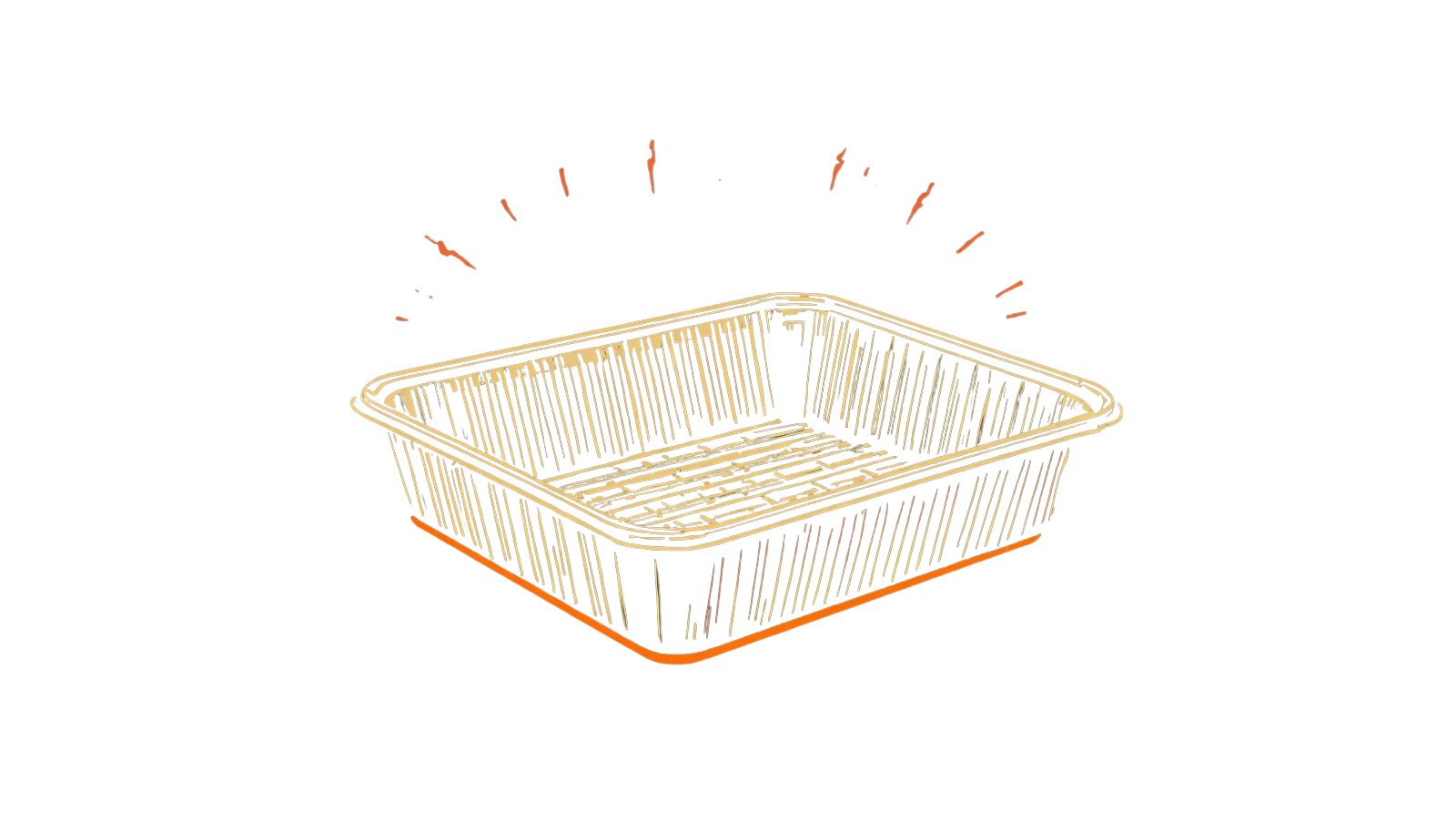
Drip Pan
A drip pan is a shallow rectangular pan — usually disposable aluminum, occasionally reusable stainless — that slides under the food on an indirect cook to catch grease and drippings before they hit the fire. The job is three things at once: it stops flare-ups by keeping rendered fat off the coals, keeps the bottom of the grill clean, and gives you a pool of drippings to spoon into gravy or jus. Steven Raichlen’s canonical two-zone fire slides the pan into the channel between two banks of charcoal, under whatever’s cooking indirect on the cool side. Meathead Goldwyn draws the line that trips up most cooks: a drip pan sits UNDER the food to catch drippings; a water pan sits OVER the heat source to add humidity. Same shape, different jobs, and cooks who try to combine them tend to choke evaporation with a film of grease. Half-pan (~12″ × 10″) and quarter-pan (~9″ × 6″) are the workhorse sizes; 9″ × 13″ covers a whole packer.
- Material
- Disposable aluminum (most common) · Reusable stainless steel · Cast iron (heat-mass option)
- Sizes
- Quarter-pan (~9″ × 6″) · Half-pan (~12″ × 10″) · 9″ × 13″ (whole packer / large roasts)
- Price
- ~$1–3 each for disposable aluminum (bulk packs) · $15–30 for reusable stainless
- Best at
- Catching grease on indirect cooks — flare-up prevention, cleanup, and dripping capture for gravy
- Setup
- Slides between the coal banks on a two-zone fire, directly under whatever is cooking indirect
- Care
- Aluminum: line with foil, toss after the cook · Stainless: deglaze warm, then hand-wash
What it is
A drip pan is a shallow rectangular pan that sits below the food on an indirect cook to catch whatever falls off — rendered fat, meat juices, marinade, spritz runoff. The classic version is a disposable aluminum half-pan, the same kind used for steam-table service: cheap, lightweight, stamped foil, sized to fit in the channel between two banks of coals on a kettle grill. Reusable stainless steel pans cover the same job for cooks who’d rather scrub than throw out, and a shallow cast-iron pan adds heat mass that smooths temperature swings on a long smoke.
Sizes track the cook. A quarter-pan (~9″ × 6″) fits the channel on a 22-inch kettle under chicken pieces or pork tenderloin. A half-pan (~12″ × 10″) is the workhorse for ribs, pork shoulder, and most weeknight indirect work. 9″ × 13″ sheet-pan size covers a whole packer brisket or a large prime rib. Whichever size, the defining trait is the same: shallow walls (1–2 inches), wide bottom, no lid — designed to receive drips, not cook in.
The hardware-store aluminum loaf pan in the camping aisle and the restaurant-supply “hotel pan” in quarter and half sizes are the two pans most cooks actually use. Weber, Char-Broil, and the rest of the grill-aisle accessory brands all sell them in bulk packs; the brand barely matters, the dimensions do.
How it works
The pan does three jobs at once, all of which fall out of the same simple fact: it’s the thing standing between the food and the fire on the indirect side of the grill.
Flare-up prevention
Rendered fat hitting hot coals ignites in a fast, greasy flame that licks up onto the food and deposits acrid soot. The pan intercepts the fat before it reaches the fire. On a two-zone setup with the meat on the cool side, this is the single most effective thing you can do to keep a cook clean.
Drippings capture
Drippings caught in the pan are the base for jus, gravy, or a pan sauce. Line the pan with foil for easy pour-off, and on hot smokes throw in a splash of water or stock at the start so the drippings don’t scorch on the bottom before you collect them.
Cleanup
Grease that would have baked onto the bottom of the kettle or the firebox floor ends up in the pan instead. Toss the aluminum after the cook, or deglaze the stainless one with warm water. Either way, the grill stays clean for the next session.
Optional: humidity (the water-pan question)
Fill the pan with water and it doubles as a humidity source — the same idea as a dedicated water pan in a vertical smoker. Meathead’s warning: do this in ONE pan, not two. A drip pan layered under a separate water pan ends up coating the water with grease, which chokes evaporation. If you want humidity, fill the drip pan itself, and top it up so it never boils dry and scorches the drippings.
Meathead Goldwyn draws the line cleanly: a drip pan goes UNDER the food (to catch what falls off); a water pan goes OVER the heat source (to add humidity and buffer temperature). Same hardware can do both, but only if it’s playing one role at a time. Two stacked pans — drip on top of water — is where the failure mode lives.
Where it falls short
The drip pan is a near-default accessory on indirect cooks, but the limits are real:
Direct cooks
On a hot, direct sear the food is over the fire, not next to it — a drip pan doesn’t fit anywhere useful, and you want the flare-up risk managed by the cook’s timing instead. Drip pans are an indirect-cooking tool.
Flimsy aluminum collapses when full
A cheap stamped aluminum pan loaded with a quart of hot grease at the end of a long cook can buckle when you try to lift it out. Slide a sheet pan or a piece of cardboard underneath before transporting, or step up to a heavier foil pan for big cooks.
Boils dry on long smokes
Fill it with water at the start of a 12-hour brisket cook and you’ll boil off most of it by hour six. Once it’s dry, the drippings on the bottom scorch and the pan starts adding bitter burnt-fat smoke to the cook. Top up periodically or start with stock that’s OK to reduce.
Stacked on a water pan
Run a drip pan over a separate water pan and the grease that the drip pan was supposed to catch ends up coating the water surface, killing evaporation. If you want both jobs, do them in one pan, not two.
What goes wrong.
Using one on a direct cook
A drip pan only makes sense when the food is OFF the fire — on the cool side of a two-zone fire, above a heat deflector on a kamado, or in the cook chamber of an offset. Trying to slip one under a direct-grilled steak just blocks the radiant heat you’re trying to use. Save the pan for indirect.
Stacking it on top of a water pan
Meathead's warning: a drip pan layered over a separate water pan coats the water with rendered fat, killing evaporation. The water pan stops being a water pan and the drip pan stops being a drip pan. Do one job in one pan — if you want humidity, fill the drip pan itself.
Letting it boil dry
If you fill the pan with water for humidity, top it up every couple of hours on a long smoke. Once it boils dry, the drippings on the bottom scorch and start adding acrid burnt-fat smoke to the cook — the opposite of what you wanted from the pan.
Lifting a full flimsy aluminum pan by the edges
A quart of hot grease in a stamped-aluminum pan is heavier than the pan can handle when grabbed by the rim. The pan flexes, the grease sloshes, and the cook ends with a fire-hazard puddle. Slide a sheet pan or piece of cardboard underneath before you move it.
Skipping the foil liner
A reusable stainless pan that catches a full cook's worth of caked-on rendered fat is a 20-minute scrub job. Line aluminum and stainless pans alike with heavy-duty foil at the start — when the cook ends, lift the foil out, drippings and all, and the pan stays clean.
What each of them says.
3 of the people we trust have covered this. Read or watch each in their own words.
- 01
 Meathead GoldwynAmazingRibs.com
Meathead draws a sharp line: drip pans go under the food, water pans go over the heat source. A drip pan catches drippings for gravy, keeps grease off the flame to kill flare-ups, and stops oil from coating a separate water pan and choking evaporation. Line it with foil for cleanup, and if you fill it with water, top it up so it never dries out and scorches your drippings.
- 02
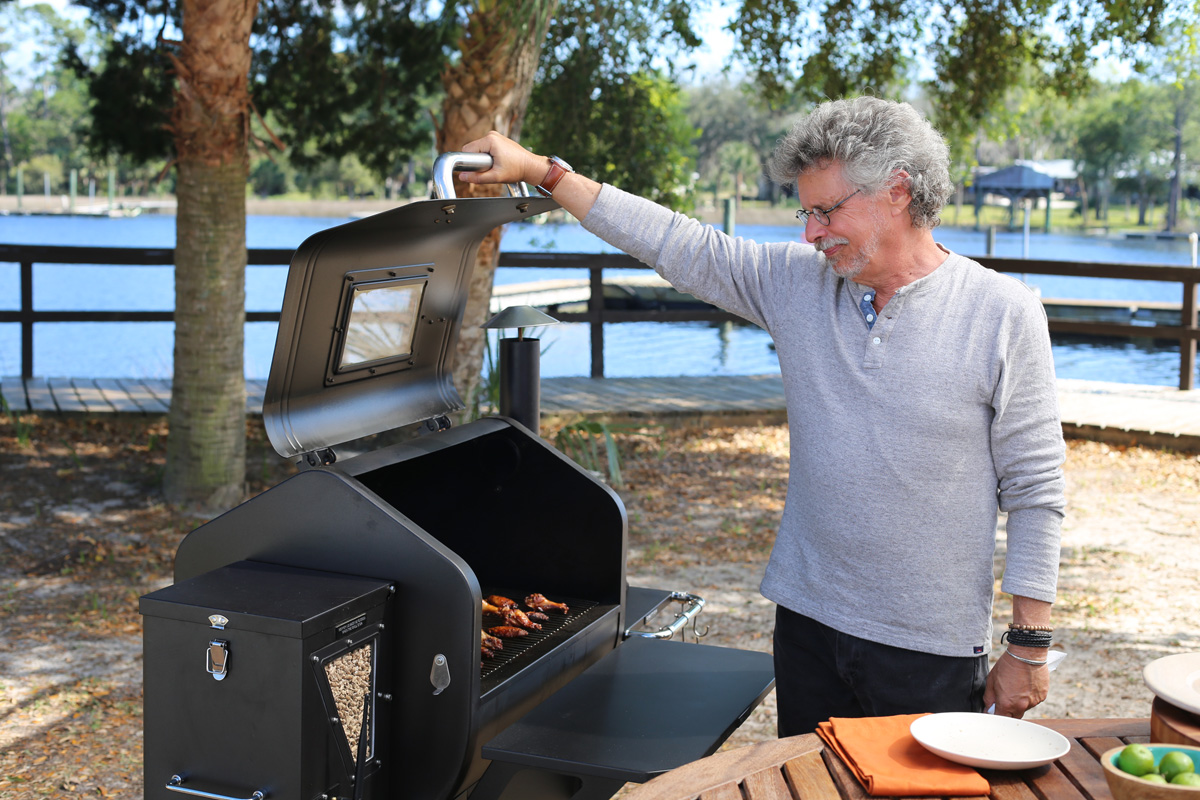 Steven RaichlenBarbecue Bible
Raichlen's classic indirect-grill setup: bank the coals in two mounds on opposite sides of the grate and slide a foil drip pan into the channel between them. The pan catches drippings, blocks direct flame, and gives the food a cool zone to cook over while smoke and convective heat do the work.
- 03
 Mad Scientist BBQYouTube
Jeremy Yoder runs the controlled test that settles the drip-pan-doubles-as-water-pan question: side-by-side cooks with and without water in the pan, measured for bark, color, and moisture. Useful for deciding whether to bother filling your drip pan or just let it catch grease.
Cook it. Save the record.
Every cook gets a permanent entry — cut, fuel, temp, time, photo, what worked. Next time you want to nail that exact crust, you'll have the receipt.