
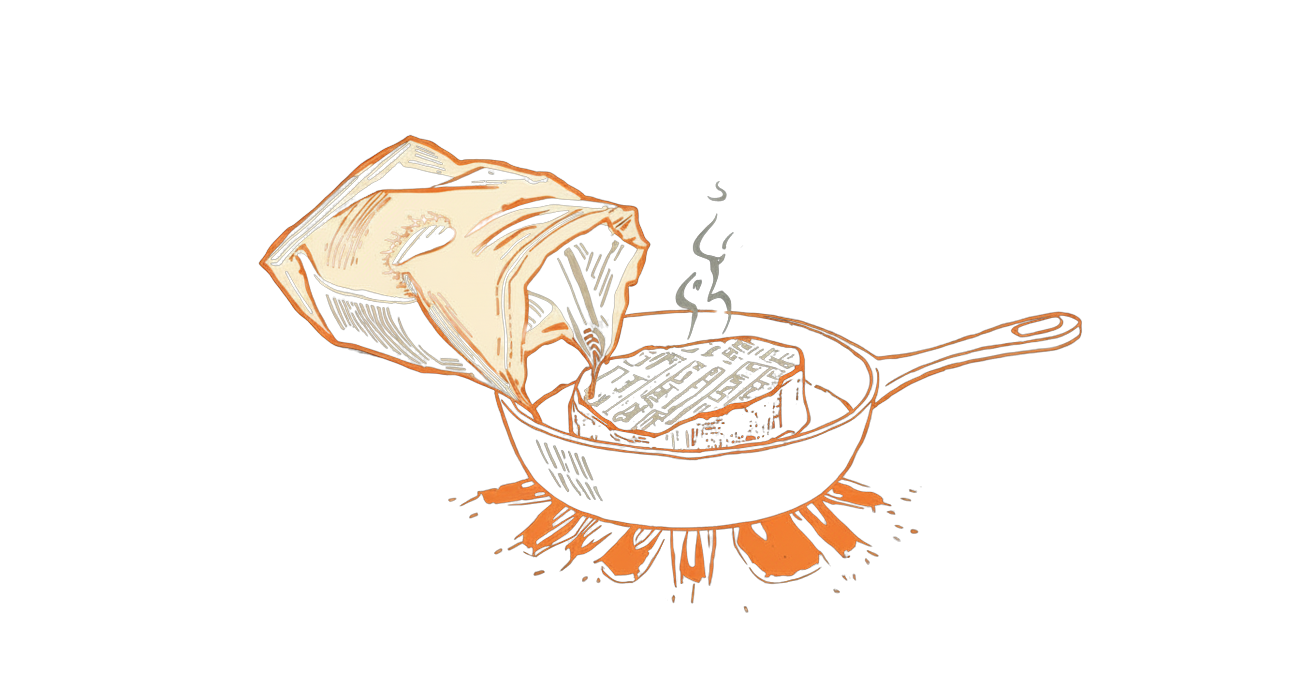
Sous Vide
Sous vide (French, “under vacuum”) cooks a vacuum-sealed steak in a water bath held at a precise temperature — say 129°F for medium-rare — so the interior arrives at exactly that doneness, edge to edge, with no grey band and no way to overshoot. Because water transfers heat gently, the steak can sit in the bath for an hour or three without overcooking: doneness is set by the water's temperature, not by timing. The catch is that a water bath can't brown anything, so the cook finishes with a hard, fast sear over a hot grill or cast iron — the same Maillard crust a reverse sear builds, just reached from a more precise starting point. The two are close cousins — both cook gently first and sear last — but sous vide swaps the low oven for a water bath and trades a little hands-on grilling for total temperature control. Kenji popularized the home-kitchen version at Serious Eats, and it's now the most foolproof way to hit a target doneness on an expensive cut.
- Bath temp
- Set to your exact target doneness — e.g. 129°F for medium-rare
- Bath time
- 1–4 hrs for steak (extra time softens, never overcooks)
- Sear
- 60–90 sec/side over high heat, after a thorough pat-dry
- Why it works
- Water sets doneness precisely; the sear adds the crust
- Gear
- Immersion circulator + a sealed bag (vacuum or water-displacement zip-top)
- Best for
- Thick steaks, expensive cuts, cook-ahead, exact doneness
Before you cook.
- Equipment
- Immersion circulator (Anova, Joule, etc.), a deep pot or container, vacuum sealer or zip-top bags, instant-read thermometer, and cast iron or a hot grill for the sear.
- Season + seal
- Salt the steak, bag it with optional aromatics (garlic, thyme), and remove the air — a vacuum sealer, or the water-displacement method with a zip-top bag.
- Set the bath
- Preheat the water to your target doneness before the steak goes in. The bath temp IS the finished temp — there's no carryover to plan around.
- Before the sear
- Pull the steak, pat it bone-dry, and rest or briefly chill it so the surface sears instead of steams.
What to cook with it.
Other ways to do it.
Sous-vide-que
Meathead's BBQ spin — after the bath, chill the steak, then finish on the smoker or grill so it picks up wood smoke and char. The chill makes a true reverse sear possible and lets you cook well ahead of serving.
Cold sear (the big chill)
Drop the bagged steak into an ice bath after cooking, then sear straight from cold. The chilled surface lets the pan or grill build a deep crust with no risk of pushing the interior past target — the best crust of any sous vide method.
Torch finish
Sear with a propane/searing torch instead of a pan — total control over which spots brown, no smoke-point worries. A ripping-hot grate or the searing side of a two-zone fire does the same job.
Tough-cut long bath
Hold a tough cut — short rib, chuck — at 131–150°F for 24–72 hours and the collagen slowly renders to gelatin while the meat stays a rosy medium-rare. The one thing a grill alone can't do.
What goes wrong.
Steaming, not searing
A wet surface won't brown. Pat the steak completely dry after the bath — and chilling it first drives off even more surface moisture before it hits the heat.
Searing too long
The interior is already at target, so the sear is only about the crust. Keep it to 60–90 sec/side over the highest heat you've got, or you'll push past your doneness.
Bag floated or leaked
An under-sealed bag floats and cooks unevenly; a torn bag lets water in. Use the water-displacement method to remove air, and clip the bag to the side so it stays submerged.
Mushy from over-holding
Sous vide can't overcook on doneness, but very long holds soften texture. A tender steak left 4+ hrs at temp can turn pasty — match bath time to the cut.
Expecting a crust from the bath
The water bath does doneness, nothing else. Every bit of browning and Maillard flavor comes from the sear — skip it and you've got grey, pallid meat.
What each of them says.
4 of the people we trust have covered this. Read or watch each in their own words.
- 01
 J. Kenji López-AltSerious Eats
Sous vide cooks the steak to an exact target temperature in the water bath — around 129°F for medium-rare — so it's perfectly even edge to edge with no chance of overshooting, then a hard, fast sear builds the crust at the very end. The bath does the doneness; the sear does the browning. Ribeyes and strips are the easy picks, and the surface has to be dry before it hits the heat or the crust won't set.
- 02
 Meathead GoldwynAmazingRibs.com
Sous-vide-que marries three methods: the water bath cooks the interior precisely and evenly, then the grill and smoker add the browning and wood aroma water alone can't. Chilling the steak after the bath and before the sear makes a true reverse sear possible — the cold surface lets you crust the outside without pushing the inside past target, and it lets you cook ahead and finish on demand.
- 03
 Susie BullochHey Grill, Hey
Vacuum-seal the steak with garlic and thyme, cook in the water bath just over an hour to a precise doneness, then sear hard on a ripping-hot grill or cast iron. Exact temperature control means no overcooking — the steak comes out evenly tender, and the sear is the only step that needs your full attention.
- 04
 Mad Scientist BBQYouTube — Jeremy Yoder
Jeremy runs a low-cost 'redneck sous vide' — a cooler of warm water, no machine — then reverse-sears the steak, showing the principle works without expensive gear.
Cook it. Save the record.
Every cook gets a permanent entry — cut, fuel, temp, time, photo, what worked. Next time you want to nail that exact crust, you'll have the receipt.