
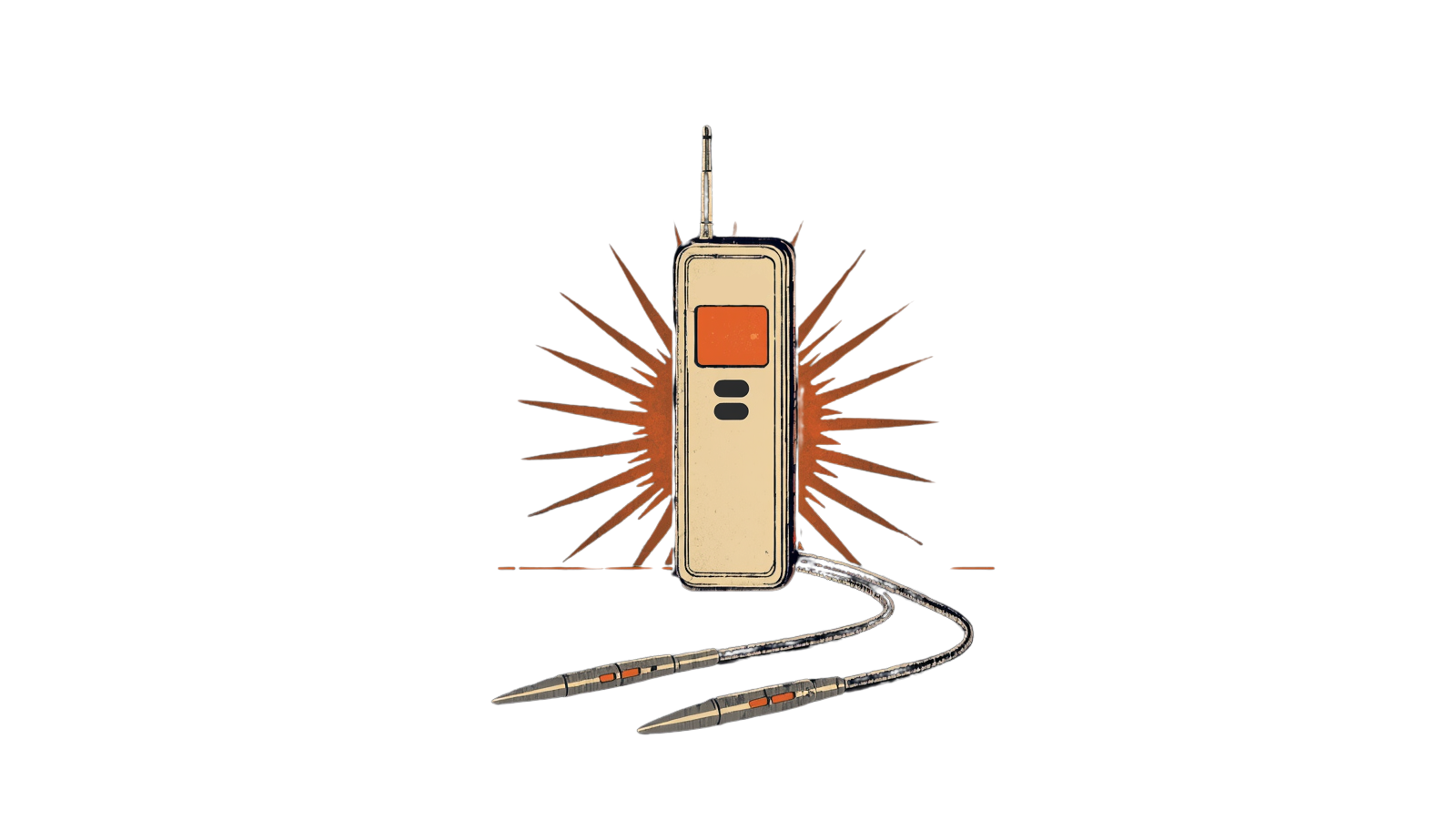
Leave-In Probe Thermometer
A leave-in probe thermometer is a thin stainless steel probe on a heat-resistant cable that stays buried in the meat for the entire cook, wired to a base unit or wireless receiver that reads the internal temperature without ever lifting the lid. Dual-probe rigs — ThermoWorks Smoke, Maverick ET-733, Inkbird IBT-2X — run one probe in the meat and a second clipped at grate level for pit ambient, so a single glance tells you both how the cook is running and how close the meat is to done. It’s the tool the overnight smoke was built around: a brisket low and slow runs 10–16 hours with a multi-hour stall in the middle, and every lid lift to peek with an instant-read bleeds heat and stretches the cook. A leave-in flips the relationship: you set the probe once, walk away, and the cook tells you what it’s doing. RF and Bluetooth/Wi-Fi receivers let you watch the graph from the couch or the grocery store without going near the cooker.
- Accuracy
- ±1–2°F at smoking temps on quality units
- Probes
- Single or dual (meat + pit ambient); some run 4+ channels
- Connection
- RF (300+ ft, line-of-sight) · Bluetooth (~30 ft) · Wi-Fi (anywhere)
- Price
- ~$60 Inkbird · ~$100 Maverick · ~$170 ThermoWorks Smoke
- Best at
- Long unattended cooks — brisket, pork butt, overnight smokes
- Canonical models
- ThermoWorks Smoke / Smoke X, Maverick ET-733, Inkbird IBT-2X
What it is
A leave-in probe thermometer is built around a thin stainless steel needle on the end of a braided cable rated for high heat. The probe pierces the meat, the cable runs out under the lid, and the other end plugs into a base unit that displays the temperature continuously. Unlike an instant-read — which you stick in and pull out in seconds — the leave-in is designed to sit inside the cook from start to finish.
The canonical setup is two probes, not one: a meat probe buried in the thickest part of the cut, and an ambient probe clipped to the grate next to the food. The pit probe measures what the cooker is actually doing at grate level, which is almost never what the dome thermometer in the lid says — lid dials commonly read 25–50°F off because they’re reading hot air high in the dome, not the cooler air down where the food sits.
Most cooks pick one of three reference models. The ThermoWorks Smoke (and four-channel Smoke X4) is the AmazingRibs Platinum pick — RF wireless, dual probes, no app required. The Maverick ET-733 is the long-running budget RF standard. The Inkbird IBT-2X is the Bluetooth value option for cooks who want phone alerts and don’t need 300 feet of range.
How it works
The probe itself is a thermistor or thermocouple sealed inside a steel sleeve. As the meat (or the air around the ambient probe) heats up, the sensor’s electrical resistance changes; the base unit converts that change into a temperature reading several times a second and updates the display in real time. The cable is the engineering constraint — it has to flex out under a closed lid without breaking, survive 500°F+ ambient air, and shrug off fat and condensation for the length of an overnight cook.
The base unit then has to get that reading to you wherever you are. Three radio choices, with real tradeoffs. RF (radio frequency) is the long-haul option: a dedicated transmitter pairs with a dedicated receiver and holds signal at 300 feet through walls. No app, no router, no Bluetooth handshake to drop. It’s why the ThermoWorks Smoke earns the leave-in crown in serious reviews — the receiver actually works at the far end of the yard. Bluetooth reaches about 30 feet to a phone — fine for a patio, useless from inside the house. Wi-Fi units (ThermoWorks Signals, Fireboard, Meater Block) route through your home network and reach you anywhere with cell service, at the cost of needing a working router and an app.
Setting it up
Three placement decisions cover most leave-in cooks. The probe goes in once, before the cook starts, and stays put.
Meat probe — thickest part, no bone
Slide the probe into the geometric center of the thickest section of the cut, angled in from the side so the cable runs flat along the meat. Avoid bone (reads hotter than meat) and large fat seams (reads cooler). On a brisket, that’s the flat — not the point — with the probe angled across the grain. On a pork butt, aim for the dense muscle mass away from the blade bone.
Pit probe — grate level, near the food
Clip the ambient probe to the cooking grate within a few inches of the meat using the included grate clip. This is the temperature you actually steer to — the dome thermometer in the lid is reading dome air, not grate-level air, and is commonly off by 25–50°F. If the pit probe says 240°F and the dome says 285°F, trust the pit probe.
Cable routing — under the lid, not through a gap
Run the braided cable straight out from under the lid gasket at the back of the cooker, away from direct flame and the hottest part of the firebox. A slight gap under the lid is fine on a kettle or kamado; don’t pinch the cable in a hinge or drape it over a hot firebox lid where the insulation can melt.
Most units let you set high and low alarms on each channel. On a long smoke, set the pit alarm to fire if ambient drifts more than ~15°F off target (so a stalled fire wakes you up) and set the meat alarm at the wrap temp or the pull temp. The whole point of the leave-in is you stop watching the display; let the alarms do it.
Where it earns its keep
The leave-in probe earns its place on any cook that runs longer than the cook’s attention span. The classic cases:
Overnight brisket and pork butt
A brisket low and slow runs 10–16 hours; nobody is staring at a dome thermometer at 3am. RF receivers next to the bed wake you only if the pit drifts or the meat hits wrap temp. This is the cook the tool was built for.
Reading the stall in real time
The stall — hours where the internal temp flatlines — is invisible without a continuous reading. A leave-in draws the graph, so you know whether to wait it out or reach for the crutch.
Reverse-searing thick steaks
A reverse sear on a thick ribeye depends on pulling the meat off the cool side at exactly the right internal temp (~115°F for medium-rare) before the hard sear. A leave-in calls it for you so the window doesn’t close.
Steady pit on a thin-walled cooker
On a kettle or offset where the dome dial lies and wind cuts grate temperature, the pit probe is the only honest reading you have. Steer the vents to the pit probe, not the dial.
Where it falls short
The leave-in has real limits, and they all come back to the same thing: it’s one fixed reading from one fixed location.
Not a replacement for an instant-read
The leave-in tells you the temp at one spot. To check doneness on a brisket you have to probe in multiple places — the flat, the point, between muscles — for that “sliding into warm butter” feel. That’s an instant-read job. The two tools pair; they don’t substitute.
Bluetooth range disappointments
Manufacturer range claims assume open line-of-sight. Bluetooth units rated for “150 ft” routinely drop signal through one wall. If you want to track the cook from the couch or the kitchen, get an RF unit or a Wi-Fi unit, not Bluetooth.
Cables fail
The braided cable is the part that breaks first — pinched in a lid, melted on a firebox, kinked at the probe junction. Replacement probes run $20–30 a pair; keep a spare. A dead probe mid-brisket is the cook’s nightmare.
Overkill for hot-and-fast
For a 10-minute steak or a quick batch of burgers hot and fast, a leave-in is more setup than the cook deserves. The tool earns its keep on long cooks; for short ones, an instant-read is faster and easier.
What goes wrong.
Probe in fat or against bone
Bone conducts heat faster than meat and reads hot; a thick fat seam insulates and reads cool. Either gives you a number that doesn’t match the muscle around it. Place the probe in the dense, meaty center of the thickest section — on a brisket, the flat with the probe angled across the grain.
Steering to the dome thermometer instead of the pit probe
The dial in the lid reads dome air, not grate-level air, and is commonly off by 25–50°F. Once a pit probe is clipped at grate level next to the food, that's the only ambient reading worth steering the vents to. Tape over the dome dial if it tempts you.
Cable run through the lid hinge
Pinching the cable in a hinged lid every time the grill opens crushes the insulation and kills the probe in a few cooks. Run the cable out under the back of the lid gasket, away from the hinge, with a little slack — and away from the hottest part of the firebox where the insulation can melt.
Trusting one number for doneness on a brisket
A leave-in says “203°F” at one spot in the flat; that doesn’t mean the whole brisket is done. Tough cuts finish on feel — probe-tender in multiple spots with an instant-read — not a single temperature. Use the leave-in to call you over; use the instant-read to call the cook.
No alarms set, eyes glued to the display
Defeats the whole purpose. Set a high alarm on the pit (so a stalled fire wakes you up), set the meat alarm at wrap or pull temp, then stop staring at the receiver. If you're watching the display constantly, you might as well lift the lid.
What each of them says.
3 of the people we trust have covered this. Read or watch each in their own words.
- 01
 Meathead GoldwynAmazingRibs.com
Meathead awards the ThermoWorks Smoke a Platinum Medal, calling it the leave-in probe to beat for serious outdoor cooks. He singles out the RF (not Bluetooth) connection as the reason it actually holds signal at 300 feet, plus the dual-probe setup that lets you watch meat and pit temperature simultaneously without opening the lid — the whole point of a leave-in for a long smoke.
- 02
 Susie BullochHey Grill Hey
Susie's rule for long, slow cooks: an instant-read isn't your friend — every lid lift bleeds heat. She names the ThermoWorks Smoke X4 her favorite leave-in for tracking multiple cuts (or one cut plus pit ambient) and pairs it with the Signals for hands-free smoking sessions where opening the cooker would set the cook back.
- 03
 Mad Scientist BBQYouTube
Jeremy Yoder walks through a full brisket cook with leave-in probes monitoring both meat and pit temp — concrete demonstration of probe placement (flat, not point; angled across the grain) and how the temp graph tells you when you're in the stall vs. probing tender.
Cook it. Save the record.
Every cook gets a permanent entry — cut, fuel, temp, time, photo, what worked. Next time you want to nail that exact crust, you'll have the receipt.