
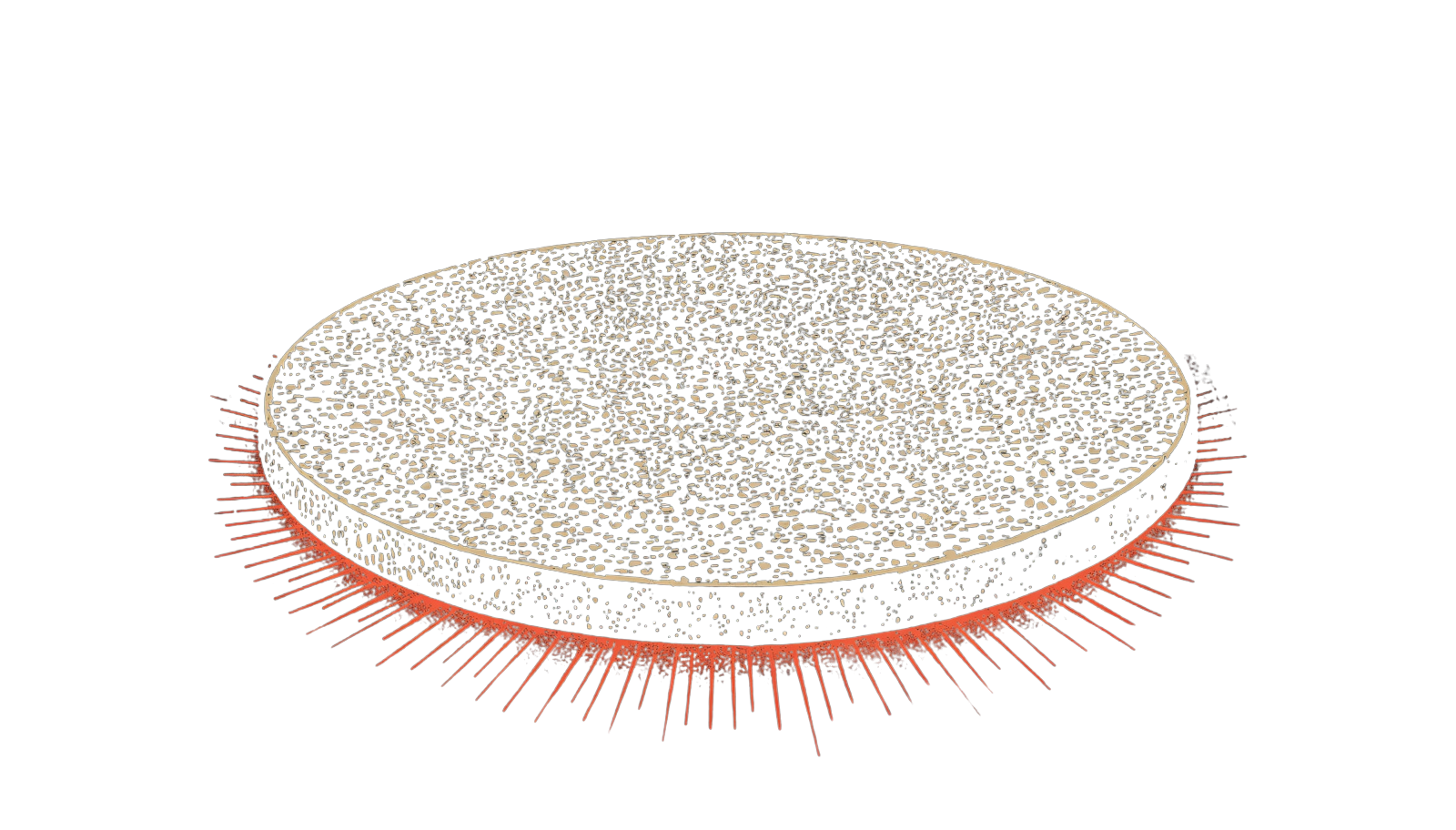
Pizza Stone
A pizza stone is a flat slab — usually ceramic or cordierite — that sits on the grate and acts as a thermal battery for the cook. The cooker preheats; the stone absorbs that heat for an hour or so; then the dough hits the stone and the radiant heat coming back out of it crisps the bottom of the crust in a couple of minutes instead of the eight or ten a metal grate would take. Cordierite is the material to look for — the same refractory mineral used in catalytic converters — because it shrugs off thermal shock better than plain ceramic. The reason you reach for one outdoors is dome temperature: a kettle or kamado with the lid down and coals piled high will run 700-900°F, which is real Neapolitan territory — well past anything a kitchen oven can reach. Brands worth knowing: NerdChef, FibraMent-D, Pizzacraft. The honest counterpoint comes from Kenji, who found that in a home oven a baking steel beats a stone because it stores far more thermal energy and conducts heat faster — if your only cooker is an indoor oven, steel is the upgrade.
- Material
- Cordierite (preferred — thermal-shock resistant) or ceramic
- Sizes
- 13–16″ rounds are standard; 14–16″ rectangles for ovens
- Price
- ~$30–80 for a quality cordierite round
- Best at
- Crisp crust at 700-900°F dome temps on a kettle or kamado
- Care
- Brush off; never soap, never quench hot. Patina is a feature.
- Notable brands
- NerdChef · FibraMent-D · Pizzacraft · Weber
What it is
A pizza stone is a thick, flat slab of refractory material you preheat inside a cooker and then bake directly on. The point is thermal mass: a slab heavy enough to soak up an hour's worth of heat and dense enough to dump that heat back into the bottom of a crust the instant dough lands on it. That's what a real pizza oven's floor does, and a stone is the cheapest way to fake one in a kettle, a kamado, or a kitchen oven.
The two common materials are ceramic and cordierite. Cordierite is the same refractory mineral used to line kilns and build catalytic converters — it absorbs heat well and tolerates thermal shock far better than plain ceramic, which can crack if a cold stone meets a ripping fire or a wet dough hits a screaming surface. For an outdoor cooker that routinely runs 700°F+, cordierite is the safer buy.
Sizes cluster at 13–16 inches for round stones built for kettle grates, and 14–16 inch rectangles for indoor ovens. Brands worth knowing: NerdChef and FibraMent-D on the heavy-duty end (thick, dense slabs the pizza obsessives swear by), Pizzacraft and Weber on the everyday backyard end. Thickness matters as much as material — a thicker stone holds more heat and recovers faster between pies, at the cost of a longer preheat.
How the heat moves
A pizza stone works as a heat battery and a radiator at once. As the cooker preheats, the stone absorbs energy from the coals or burners over 30–60 minutes — its mass and density determine how much it can hold. When the dough lands, that stored heat conducts directly into the bottom of the crust and the stone radiates from below at the same time, blasting the dough surface before the cheese on top has a chance to over-bake.
That stored-heat trick is what crisps a crust in two minutes instead of eight. A bare metal grate doesn't have the mass; the dough sits in moving air that transfers heat slowly, and the bottom stays pale while the top burns. A stone flips that — bottom browns first, top finishes evenly.
The thermal-shock part is also physics. Ceramic and cordierite expand when they heat up; if one part of the stone heats fast while another stays cold, the differential cracks the slab. That's why you preheat with the stone in the cooker from the start — never drop a cold stone onto hot coals — and why a splash of cold water on a hot stone is the fastest way to ruin one.
Setting it up
Outdoor setups split by cooker. The common thread: stone goes in cold, comes up with the cooker, gets dough only once the surface itself reads hot.
Kettle grill
Bank a heavy chimney of lit coals around the perimeter, leaving an open zone in the middle. Stone goes on the grate over the open zone, lid down, vents wide. Wait for dome temp to climb toward 600°F and the stone surface to read around the same. A two-zone fire variant works well: hot side bakes, cool side lets you slide a pie sideways if a corner is charring too fast.
Kamado
The kamado is the closest a backyard cooker gets to a wood-fired oven — the ceramic dome holds heat, and with vents wide it'll climb to 700–900°F. Run a heat deflector underneath the stone to protect the surface from direct flame impingement, and give it a real preheat (45–60 minutes). The dome at temperature is the whole point: the stone cooks the bottom while radiant heat off the ceramic cooks the top.
Indoor oven
Stone on the middle rack, oven cranked as high as it goes (550°F is typical), preheated for an hour — Kenji's minimum. This is where the steel-vs-stone debate lives: steel stores more energy and conducts heat faster, so it crisps the crust before the cheese over-bakes inside a temperature-limited oven. Stone still works indoors; it just asks for the longer preheat to compensate.
Dress the dough on a wooden peel dusted with semolina or cornmeal — flour alone will stick. Work fast: the longer wet dough sits on the peel, the more it grabs. A short, confident shake-and-slide lands the pie on the stone in one motion. If it's sticking, lift a corner and dust under with more semolina before the next attempt.
Where it earns its keep
The case for a stone is the dome temperature outdoor cookers can reach. A kettle with a banked load of lump runs 700°F+ with the lid down — a kamado vented wide will push past 900°F. That's Neapolitan-pizza territory: 90 seconds at the floor, leopard-spotted blistering on the rim, the kind of crust a 550°F kitchen oven physically can't produce no matter how long the preheat.
The stone is what makes that range usable. Without it the bottom of the dough sits on a bare grate, the fire scorches it from below in seconds, and the center stays raw. With it the heat is distributed, the bake is even, and the cooker's peak temperature actually translates into a finished pie instead of a charred disc with a wet middle.
Stones aren't just for pizza, either. A preheated cordierite slab bakes rustic loaves with a crisp bottom crust, crisps the underside of flatbreads and naan, and in a pinch cooks a sear-grade steak by direct conduction the way restaurant plancha service does. The rule is the same as the pizza case: thermal mass beats a hot grate for anything you want to brown evenly from below.
Where it falls short
The limits are real and mostly about brittleness and the patience the stone asks for.
Thermal shock cracks it
A cold stone dropped onto a hot fire, or a hot stone hit with cold water, will crack — sometimes in half. Cordierite is more forgiving than ceramic, but neither survives a real temperature shock. The slab is a consumable on the time horizon of years, not decades, and a fumble can end it in one cook.
Preheat is non-negotiable
A stone needs 30–60 minutes at temperature before the first pie. Shortcut the preheat and the dough goes onto a surface that feels hot but hasn't soaked up enough energy — the bottom comes out pale and the cheese over-bakes while you wait. Plan the cook around the stone.
Recovery between pies
Each pie pulls heat out of the stone as it bakes; a thinner slab can drop 100°F between pizzas and the second pie comes out softer than the first. Thicker, denser stones recover faster. For back-to-back pies, give the stone 3–5 minutes to rebuild between launches.
Steel beats it in a home oven
Kenji's side-by-side at Serious Eats was decisive: in a 550°F home oven, a baking steel stores far more thermal energy and conducts heat much faster than a stone, which is what crisps the crust before the top over-bakes. Indoors, the upgrade path is steel. Outdoors at 700°F+ the gap closes — the cooker has the heat to compensate.
Stains forever, by design
Cheese, grease, and char build a permanent patina the first few cooks, and that patina is a feature, not a defect — like cast-iron seasoning. Soap will soak into the porous surface and taint the next bake, so the stone gets brushed and scraped, never washed.
What goes wrong.
Quenching a hot stone
Rinsing a hot stone under the tap, or dropping it on a cold counter, cracks it on contact — thermal shock doesn't care that you didn't mean to. Let the stone cool in the cooker after the last pie. Cleanup happens cold the next morning, brush only.
Skipping the preheat
A stone that feels hot to the hand isn't loaded yet. Without a full preheat the slab can't dump enough heat into the dough to crisp the bottom — the pizza comes out pale underneath, soggy in the middle. Plan 45–60 minutes at temperature on a kamado, an hour in an indoor oven, before the first pie lands.
Soaping it
Cordierite and ceramic are porous; detergent soaks in and leaches back out during the next bake, tainting the crust. The stone gets brushed and scraped cold — no soap, no dishwasher. Patina is the right outcome.
Flouring the peel instead of dusting with semolina
Plain flour absorbs moisture from wet dough and turns into glue between the dough and the peel — the pie won't slide. Semolina or coarse cornmeal acts like ball bearings; dust the peel just before dressing the pie and the launch is one confident shake.
Cold pie, cold dough, cold stone
Pulling dough straight from the fridge onto a screaming stone seizes the gluten and traps moisture — the crust comes out tough. Let the dough rest at room temperature for 30–60 minutes before stretching, and run the cook hot and fast — pizza belongs in the screaming end of the cooker, not the patient end.
What each of them says.
4 of the people we trust have covered this. Read or watch each in their own words.
- 01
 J. Kenji López-AltSerious Eats
Kenji baked dozens of pies side-by-side and found steel beats stone in a home oven — it stores ~18x the thermal energy and conducts heat ~20x faster, which is what crisps the crust before the cheese over-bakes. Stone still works, but you have to preheat it longer (an hour at 500°F minimum) and accept slower bottom browning. His one-line verdict: steel blew his favorite stone out of the water.
- 02
 Meathead GoldwynAmazingRibs.com
Meathead's pick is cordierite — the same refractory mineral used in catalytic converters — because it absorbs heat beautifully and shrugs off thermal shock better than ceramic. He seasons new stones like cast iron (wash, oil both sides with a high-smoke-point fat, bake at 350°F twice) so the surface darkens and releases dough cleanly. On a kettle or kamado, preheat the stone with the lid down until the top hits ~600°F before the dough lands.
- 03
 Malcom ReedHowToBBQRight / YouTube
Malcom builds a pulled-pork pizza on a kettle setup, walking through the practical stone-on-grill workflow — preheat, dust the peel with cornmeal, slide and close the lid. Good demo of what “pizza on a backyard grill” actually looks like for someone who's never done it.
- 04
 Chud's BBQChuds BBQ / YouTube
Bradley tests whether a pellet grill can actually deliver a real pizza — uses a stone as the accessory that gets the cooker hot enough to crisp a bottom crust. Honest result on what a pellet-rig limit really is vs a kamado dome.
Cook it. Save the record.
Every cook gets a permanent entry — cut, fuel, temp, time, photo, what worked. Next time you want to nail that exact crust, you'll have the receipt.