
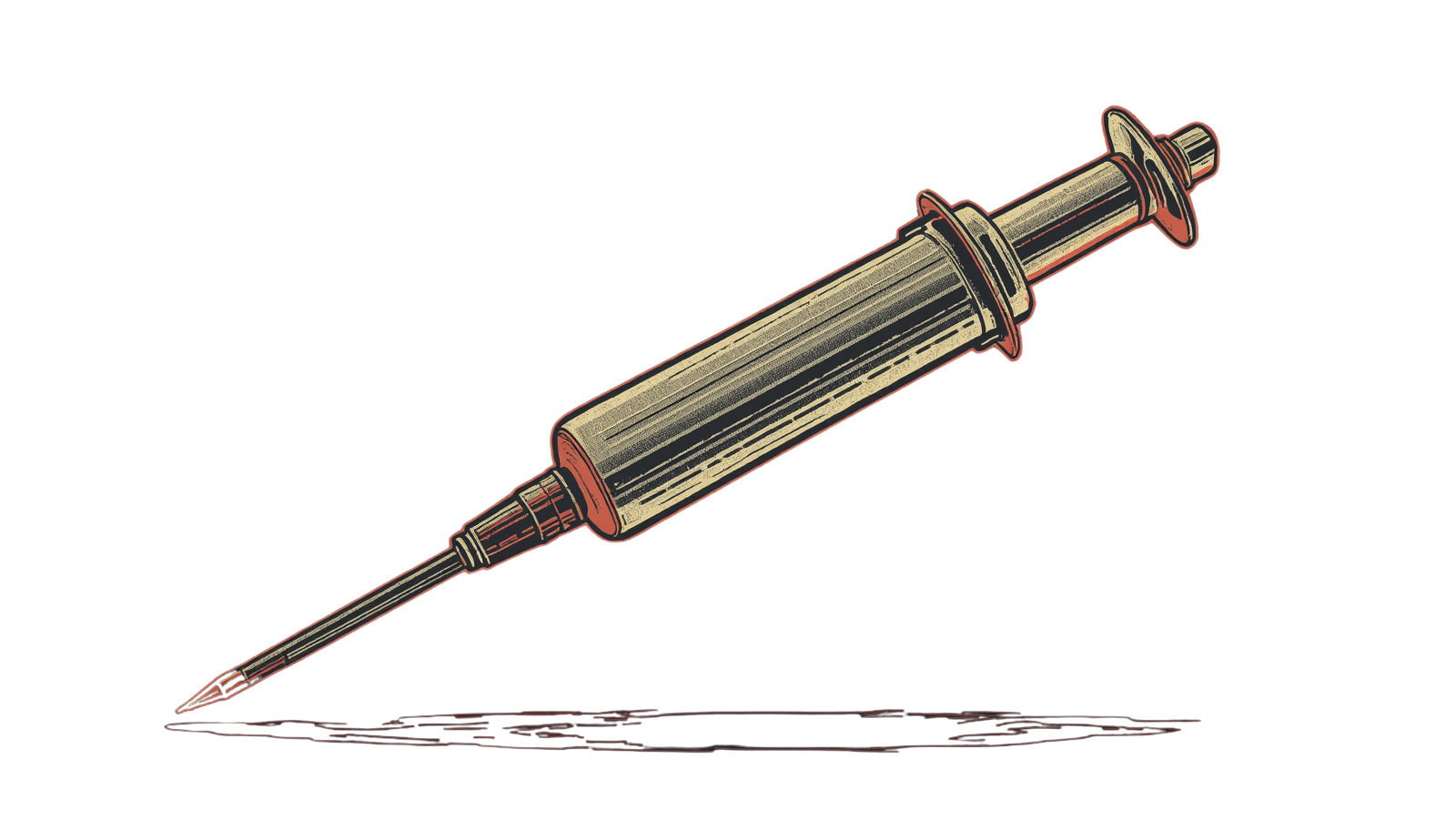
Meat Injector
A meat injector is a stainless steel syringe — a reservoir, a plunger, and a hollow needle — that pushes liquid seasoning deep into the muscle instead of just resting it on the surface. Surface rubs only penetrate a few millimeters; a dry brine takes days. Injection seasons the inside of a pork butt or brisket flat in minutes, which is why it's standard kit for competition pitmasters cooking low and slow on the KCBS circuit. The category splits hard on materials: stainless steel injectors with silicone gaskets last; cheap plastic syringes crack under plunger pressure and brass or aluminum react with the salt in the brine. Brand-canonical picks are the SpitJack 2-ounce injector gun, Cave Tools, and Ofargo — all stainless, all field-rebuildable.
- Material
- Stainless steel barrel + needles, silicone gaskets
- Capacity
- 1–2 oz reservoir; gun-style holds 2 oz+ for big cuts
- Needles
- Solid-tip for thin liquids, multi-port side-hole for thicker brines
- Price
- ~$15–25 syringe-style · $50–100 gun-style (SpitJack)
- Best at
- Pork butt, brisket flat, whole turkey — large lean or thick cuts
- Care
- Disassemble after every use; rinse, brush needle, air-dry
What it is
A meat injector is a hand-held syringe sized for large cuts of meat. The body is a reservoir — usually 1 to 2 fluid ounces — with a plunger at the top and a long, hollow needle threaded onto the bottom. You draw brine, marinade, or a flavored stock into the barrel, push the needle into the muscle, and squeeze the plunger to deposit liquid directly inside the cut.
The category splits on materials, and that's the entire buying decision. Cheap plastic syringes feel fine the first time you use one, then crack at the plunger seal or shatter at the needle hub under the pressure of a thick brine. Brass, copper, and aluminum react with salt in the brine over time and pit. The standard is stainless steel barrels, stainless needles, and silicone gaskets — the same material set you'd see in a commercial kitchen, field-rebuildable when a gasket wears out. The iconic models are the SpitJack Magnum 2-ounce injector gun (pistol-grip, the competition-circuit favorite), Cave Tools, and Ofargo — all stainless, all rebuildable.
How it works
The injector solves a diffusion problem. A surface rub or wet marinade only penetrates a few millimeters into raw meat — muscle fibers are too dense for salt and flavor to migrate far in the time most cooks have. A dry brine works the same problem from the surface inward over a day or two. Injection skips the diffusion step and deposits the seasoning where it needs to be: in the center of the muscle, distributed across the cut.
Mechanically it's a piston: draw liquid up the needle and into the reservoir by pulling the plunger back, then drive it back out by pushing the plunger forward. The needle is the working tip — solid-point needles deposit a single pocket at the needle's end and suit thin liquids, while multi-port needles have side holes that spray the brine along the needle's length as you withdraw it, spreading the deposit more evenly across the muscle. The best feel comes when needle, reservoir, and plunger are all stainless and the silicone gasket is intact — nothing leaks back past the plunger, nothing reacts with the salt, and the needle stays sharp enough to slide in without tearing the muscle.
Setting it up
Two pieces of prep do most of the work: building a brine the needle won't clog on, and laying out an injection pattern that actually distributes the liquid.
Build the brine
Salt + sugar + flavor liquid (apple juice, broth, Worcestershire) is the competition base. Whisk thoroughly so the salt and sugar dissolve, then strain through a fine mesh or coffee filter before loading the injector. Particles of rub or spice will clog the needle mid-cut every time.
The 1-inch grid pattern
The competition-canonical pattern is a 1-inch grid across the surface of the cut. Insert the needle at an angle, push it in to depth, then squeeze the plunger as you slowly withdraw — the spray paints liquid along the needle's path instead of pooling at one spot. Move 1 inch over and repeat. On a pork butt, that's 20–30 sites; you'll refill the reservoir.
Plan for blowback
Brine sprays back out of the injection sites as you press the plunger — this is normal, not a sign the cut is “full.” Inject inside a deep hotel pan or roasting tray to catch the runoff so you can pour it back into the bowl and reuse it.
The single thing that ends an injector's life early is dried brine inside the barrel. Disassemble fully after every cook — unscrew the needle, pull the plunger out, push hot water through the needle with a thin brush, and air-dry every piece before reassembly. The whole job takes 90 seconds and buys years of life.
Where it earns its keep
The injector earns its place on three jobs — the same three jobs that put it in nearly every competition pitmaster's box.
Pork shoulder / butt
The canonical use. An 8-pound butt has a thick center that a surface rub never reaches in time; injection seasons it through and adds a moisture buffer for the long cook. This is the cook Malcom Reed and most of the KCBS circuit trace their injection technique back to.
Brisket flat
The flat is the lean half of a brisket and the half that dries out first. A beef-broth-based injection in the flat (often skipping the already-fatty point) is a hedge against the long hours past 200°F that low-and-slow brisket demands.
Whole turkey
Wet-brining a whole turkey takes a 5-gallon bucket, a day in the fridge, and rearranged shelves. Injection delivers the same salt-and- flavor payload into the breast and thighs in five minutes — the practical brining method when the fridge is full of the rest of Thanksgiving.
Whole hog
At whole-hog scale, surface seasoning alone doesn't finish the job. Pitmasters running whole-hog cooks inject the hams and shoulders before the fire goes on, the only way to season the inside of an animal that big.
Where it falls short
The injector is a one-trick tool, and the trick is the tradeoff. Where it stops earning its keep:
Thin, tender, or already-juicy cuts
Steaks, chops, chicken breasts, fish, pork tenderloin — cuts that cook quickly and don't have a moisture problem — gain nothing from injection and end up with visible needle tracks and pooled brine. Surface salt or a dry brine is the right tool there.
Skin and crust
Injection puts moisture inside the cut, which works against the crisp-skin and dark-bark goals. Inject the meat under the skin, not through it, and pat the surface dry before the rub goes on or the cut will steam instead of brown.
Plastic injectors
The $5 plastic syringe in the grocery-store BBQ aisle will crack at the plunger hub or shatter at the needle threads — usually mid-cut, into the brine. Spend $20 on a stainless syringe or $60 on a SpitJack gun and never replace it again.
Particulate brines
Pouring an unstrained rub-based brine into the reservoir clogs the needle on the second or third site. Strain everything through a fine mesh or a coffee filter, even when the recipe doesn't mention it.
What goes wrong.
Loading an unstrained brine
Spice particles, undissolved salt, or chopped aromatics will clog the needle mid-cut and force you to disassemble in the middle of injecting a butt. Strain every brine through a fine-mesh sieve or coffee filter before it touches the reservoir, even when the recipe doesn't say to.
Injecting straight down at one spot
Driving the needle in vertically and emptying the plunger in place deposits a single pocket of brine that pools in one channel and runs back out the entry hole. Insert at an angle, push to depth, and squeeze the plunger slowly as you withdraw — the spray paints liquid along the needle's path and distributes it across the muscle.
Buying plastic to save $15
The cheap plastic syringes crack at the plunger seal or shatter at the needle hub under the pressure of a thick brine, usually mid-cook. Stainless steel barrels with silicone gaskets — SpitJack, Cave Tools, Ofargo — are the floor; everything else is disposable.
Skipping the breakdown after the cook
Brine left inside the barrel dries to a salt-and-sugar crust that seizes the plunger and pits the metal. Unscrew the needle, pull the plunger, push hot water through with a thin brush, and air-dry every piece before reassembly. Ninety seconds, every cook.
Injecting tender, quick-cooking cuts
Steaks, chops, chicken breasts, and pork tenderloin gain nothing from injection — they cook fast, hold their moisture, and end up with visible needle holes leaking brine onto the grate. A surface salting or a dry brine is the right tool for those cuts. Save the injector for big, lean, or long-cook pieces.
What each of them says.
3 of the people we trust have covered this. Read or watch each in their own words.
- 01
 Meathead GoldwynAmazingRibs.com
Meathead is unambiguous: skip plastic and skip brass, copper, or aluminum (they react with salt). Buy stainless steel, at least 2-ounce capacity, with sharp tips, sturdy needle connections, and silicone gaskets that disassemble for cleaning. He calls out SpitJack's 2-ounce injector gun as a proven pick and warns that the inexpensive plastic syringes inevitably crack or burst under pressure.
- 02
 Steven RaichlenBarbecue Bible
Raichlen frames injecting as 'marinating from the inside out' — the most efficient way to get flavor and moisture into large cuts, since surface marinades only penetrate millimeters and brining takes days. He recommends straining the injection liquid through a fine mesh or coffee filter first so spice particles don't clog the needle, and lists pork shoulder, brisket, whole turkey, and whole hog as the canonical candidates.
- 03
 Malcom ReedHowToBBQRight / YouTube
Reed walks through the competition-canonical injection pattern on a pork butt — 1-inch grid, needle in at an angle, plunge slowly while withdrawing. This is the technique most competition pitmasters trace back to.
Cook it. Save the record.
Every cook gets a permanent entry — cut, fuel, temp, time, photo, what worked. Next time you want to nail that exact crust, you'll have the receipt.