
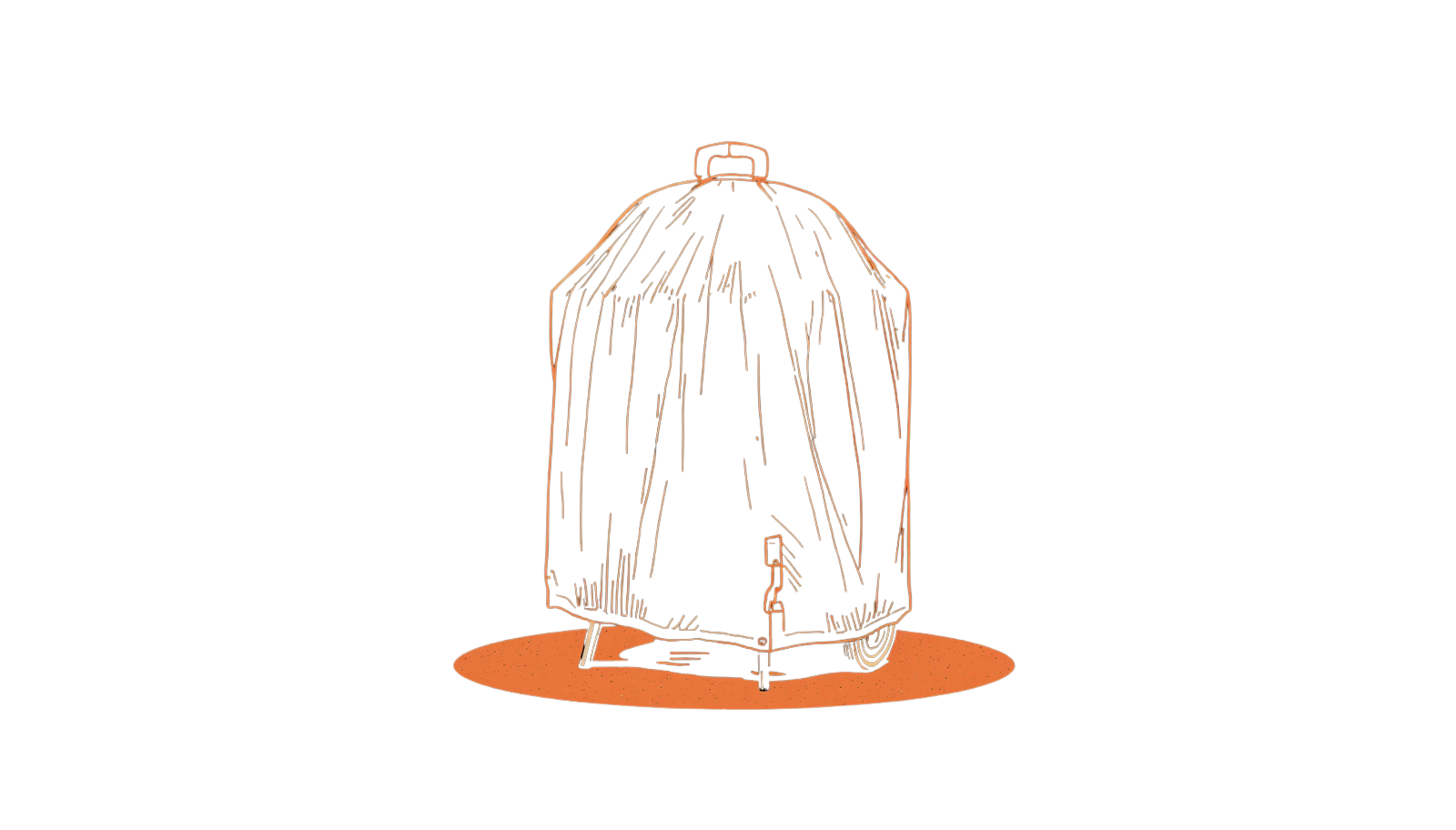
Grill Cover
A grill cover is the outdoor-fabric shell you drop over your kettle, pellet grill, or smoker between cooks — sun protection, rain shield, pollen and bird-droppings barrier, leaf-and-twig blocker. The material ladder is short: thin polyester at the cheap end, vinyl-coated polyester in the middle, heavy-duty 600D canvas impregnated with polyurethane or PVC at the top. Meathead Goldwyn’s long-running verdict on AmazingRibs is that the cheap end lasts a year or two and the premium end lasts five-plus — the math favors buying once. The catch is the one most cover buyers don’t hear: a cover that traps moisture can actually rust a grill faster than no cover at all. Covers earn their keep on rigs that already collect water inside (pellet smokers, WSMs, Hasty Bakes) and on shiny stainless you want to keep shiny — not as a reflex over every grill.
- Material
- Polyester (basic) · Vinyl-coated polyester (waterproof + UV) · 600D canvas with PU or PVC backing (premium)
- Fit
- Universal (loose, generic shape) · Fitted (rig-specific cut, follows the cart and legs)
- Features that matter
- Full-length skirt past the legs · Breathable vent panels · Tie-down straps or drawcord · UV-resistant coating
- Price
- $20–40 (entry polyester) · $50–90 (vinyl-coated) · $100–200+ (heavy-duty canvas, premium-brand fitted)
- Lifespan
- Cheap covers 1–2 years · Mid-tier 3–5 years · Premium 5–10 years
- Care
- Hose off seasonally, air-dry fully before re-covering, never bag a wet grill, replace once seams split or coating flakes
What it is
A grill cover is an outdoor-fabric shroud sized to drop over a specific grill or class of grills, sealing it off from the weather between cooks. The mainstream materials ladder is short and obvious. Entry-level covers are thin polyester — cheap, light, basically a tarp with a hem. The middle of the market is vinyl-coated polyester with a PVC or polyurethane backing — the coating is what makes a cover actually waterproof rather than just rain-resistant. The premium tier is heavy-duty canvas (rated by denier, with 600D and up being the honest benchmark) impregnated with polyurethane or PVC, UV-stabilized so it doesn’t turn brittle in two summers of direct sun. Meathead Goldwyn’s rule of thumb on AmazingRibs is that the cheap ones last a year or two and the premium ones last five-plus — the math favors buying once.
The features that actually distinguish a working cover from a flimsy one are easy to scan for: a skirt long enough to cover the legs and the lower shelf of a cart grill (not just the dome), tie-down straps or a hem drawcord that keeps the cover on through wind, mesh vent panels at the back or sides for airflow, and a UV- resistant coating that delays brittle-cracking from sun exposure. Fit is either universal (loose, generic dome-and-cart shape, cheaper) or fitted (cut to a specific model, follows the silhouette including the side shelves, costs more and seals better). The manufacturer cover for your specific grill — Weber for a kettle, Traeger for a pellet, Big Green Egg for a kamado — is usually the safest fit bet; the cuts have been refined against the actual rig.
How it works
A cover’s job is simpler than the marketing copy suggests. It blocks four things: ultraviolet sunlight (which fades paint, brittles plastic knobs, and degrades the rubber seals on kamados and pellet hoppers), bulk water (rain pooling in the firebox, snow accumulating on the lid), debris (leaves, pollen, bird droppings, twigs from the tree above the patio), and small animals (squirrels and mice nesting in a warm grease tray over winter). All four are slow failure modes — you don’t notice them on any single cook, but you notice them at year three when the side burner won’t light, the cart paint is gone, and the grease tray has a rodent problem.
The mechanism that matters most is what the cover does with moisture. Bulk rain is easy — a coated fabric sheds it. Trapped humidity is harder. Warm cooking residue plus a sealed envelope of cool night air condenses dew on the inside of the cooker, which has nowhere to go because the cover holds it in. This is why vent panels matter: a mesh-paneled cover lets the trapped air exchange without letting rain in. Tie-down straps matter for the inverse reason — a cover that lifts in a gust acts as a sail and ends up across the yard, often dragging the grill or its propane tank with it.
The lifespan signal is visible. Covers fail when the waterproof coating starts to flake (small powdery patches inside, then visible water bleeding through), when seams split, when the UV-degraded fabric crackles and tears at the corners, or when the drawcord rots out. A cheap polyester cover hits these milestones in twelve to twenty-four months; a 600D canvas with PVC backing pushes the same milestones out to five or ten years, which is the entire argument for the premium tier.
Where it falls short
A cover is not a free upgrade. The honest limits and the rust trap underneath them are the part most cover marketing skips:
Moisture trap and rust acceleration
Meathead’s most insistent caveat: a cover sealed over a still-warm or damp grill traps the humidity inside, and constant condensation on bare steel rusts it faster than rain ever would. Pellet smokers, WSMs, and Hasty Bakes already collect water through their construction — those are the rigs covers earn their keep on, along with shiny stainless you want to keep cosmetically clean. A naked cast-iron-grate kettle in a dry climate is sometimes better off uncovered.
Cheap covers fail fast
Thin polyester at the $20 mark turns brittle in a summer of direct sun, splits at the seams in the first windstorm, and ends up shedding flakes of coating onto the grill underneath. Replacing the same $25 cover every year ends up costing more than a single $120 heavy-duty canvas that lasts five-plus seasons.
Wind without tie-downs
A loose cover in a gust is a parachute. Covers without tie-down straps or a hem drawcord end up three yards over, sometimes dragging the grill off the patio or the propane tank off the cart. Either buy a cover with straps or rig your own with bungees through the hem.
Skirt too short
Cheap universal covers drape over the dome but stop at the cart, leaving the legs, lower shelf, and propane tank exposed to weather. UV destroys plastic knobs and regulator hoses from below the same way it destroys the lid finish from above. Measure to the floor before buying.
Replacement is a when, not an if
Every grill cover is a wear item. Even the best 600D PVC canvas runs out of UV resistance and coating integrity at the five-to-ten-year mark. Plan on replacement; don’t expect the cover to outlast the grill.
What goes wrong.
Covering a still-warm grill
The single most common cover mistake. Residual heat plus a sealed envelope means humidity condenses on the inside of the lid and the cooking grates, and the cover holds the dew in instead of letting it dry. Let a charcoal or pellet cook fully cool — at least an hour past the last visible smoke — before you put the cover on.
Bagging a wet grill
Same failure mode, different cause. A cover dropped over a grill that’s wet from rain, dew, or a recent hose-down traps the water against the steel for days. Open the lid, wipe the moisture off the grates and the firebox interior, and let the rig air-dry before re-covering — especially on a stainless or porcelain-enamel finish where surface rust shows fast.
Buying universal when fitted exists
A generic universal cover is fine for an oddball or a grill the manufacturer doesn’t support, but for a mainstream rig — a Weber Kettle, a Traeger pellet, a Big Green Egg — the manufacturer’s fitted cover follows the silhouette down to the legs and the side shelves. It seals better, doesn’t flap, and usually costs $30–60 more than the universal that half-covers the cart.
Skipping the vent panels
A fully sealed cover and no airflow is the rust-acceleration recipe Meathead warns about. Look for mesh vent panels at the back or under the dome — they let trapped humidity exchange without letting rain in. Covers with no vents whatsoever should be ventilated manually every couple of weeks: pop the cover, let the grill breathe for a few hours, put it back.
Skipping the tie-downs
A cover without straps or a drawcord through the hem lifts in the first 20 mph gust and ends up across the yard, often dragging the grill or the propane tank with it. Either buy the cover with the tie-downs built in or run your own bungee cords through the bottom edge — five minutes of setup that saves a $150 cover from becoming a tumbleweed.
What each of them says.
2 of the people we trust have covered this. Read or watch each in their own words.
- 01
 Meathead GoldwynAmazingRibs.com
Meathead’s verdict is that a cheap cover lasts a year or two and a premium one lasts five-plus — canvas laminated or impregnated with polyurethane or PVC outperforms thin vinyl every time. The catch he’s most insistent on: covers can trap moisture and actually encourage rust, so they earn their keep mainly on grills that already collect water inside (pellet smokers, WSMs, Hasty Bakes) and on shiny stainless rigs you want to keep shiny.
- 02
 Mad Scientist BBQYouTube
Jeremy Yoder walks through why exposed steel rusts (oxygen plus moisture), demonstrates an oil-and-fire seasoning pass to polymerize a protective coating, and closes by covering the smoker — the science-side companion to choosing the right cover in the first place.
Cook it. Save the record.
Every cook gets a permanent entry — cut, fuel, temp, time, photo, what worked. Next time you want to nail that exact crust, you'll have the receipt.