
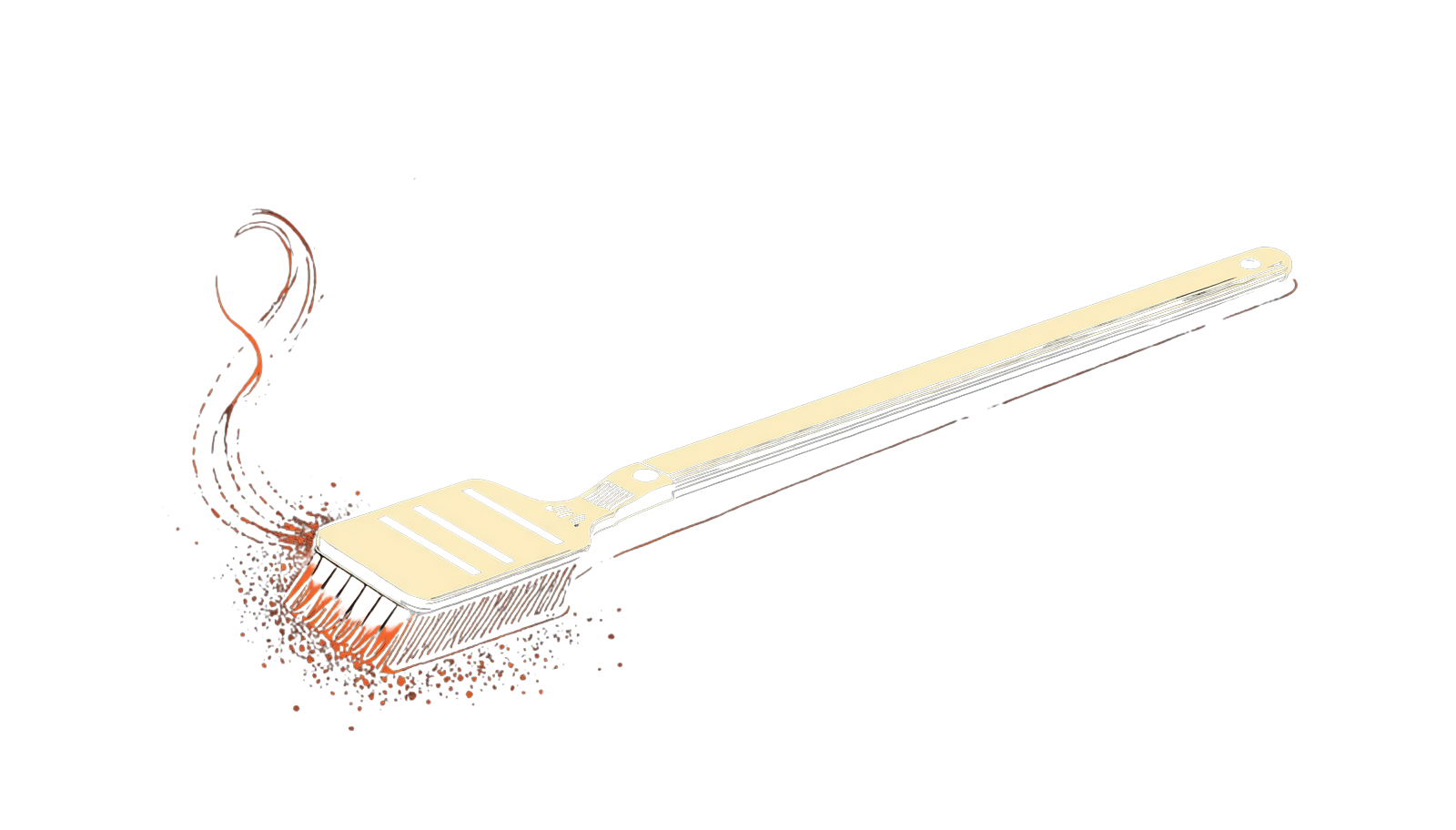
Grill Brush
A grill brush is the workhorse tool for cleaning grates between cooks — you preheat the grill, scrape carbonized fat and protein off the hot bars, and put the food on a clean surface so nothing sticks and last weekend's flavors don't show up in tonight's steak. The classic design is a stiff wire brush, and it has one serious problem: the bristles shed, the loose strands stick in the grate, and they can transfer into food and embed in throats or digestive tracts — a real injury pattern with documented ER cases. The modern alternatives are bristle-free: a wooden scraper that burns its own groove into the bars, an aramid-fiber steam brush (the Grill Rescue is the category-defining example), a stainless coil brush, or a ball of crumpled aluminum foil held in tongs. Whatever you use, the non-negotiable last step is to wipe the cleaned grate with an oily folded paper towel before the meat goes on — it catches any stray bristle or debris and primes the bars so a two-zone sear or a long low-and-slow cook starts on a clean, food-safe surface.
- Variants
- Wire-bristle · Bristle-free (wooden scraper, aramid-fiber steam, stainless coil) · Foil ball
- Material
- Brass / stainless wire, hardwood, aramid fiber, or crumpled aluminum
- Price
- ~$5 wire brushes · $15–30 wooden scrapers and coil brushes · $30–40 steam brushes
- Best at
- Knocking carbonized fat off hot grates between cooks
- Care
- Replace wire brushes the moment bristles loosen; soak wooden scrapers; rinse aramid heads
- Safety note
- Wire bristles can shed and embed in food — documented ER cases via CPSC
What it is
A grill brush is the hand tool used to clean a grill grate between cooks — a head of stiff cleaning material (bristles, fiber, wood, coil, or foil) on a long handle that lets you scrub a hot grate without burning your knuckles. It belongs to the same category as a chimney starter or a pair of tongs: cheap, unglamorous, used every session, and the difference between food that releases cleanly and food that sticks.
The category splits on what does the scraping. Wire-bristle brushes — brass or stainless tufts twisted into a metal handle — are the classic design and still the cheapest option on the rack at any hardware store. Bristle-free brushes covers the rest: hardwood scrapers that burn a groove the shape of your grate into the head the first time you use them, aramid-fiber steam brushes (the Grill Rescue brush is the best-known) that dunk in water and clean by hot steam plus a soft fiber pad, and stainless coil or mesh-pad brushes that scrub without shedding. A balled-up sheet of aluminum foil held in tongs is the no-budget version of the same idea.
How it works
The job is mechanical: knock the layer of carbonized fat, protein, and rub off the bars while the grate is hot, so the next cook sees clean metal. Heat is the brush's best friend — residue burns brittle on a hot grate and flakes off with a fraction of the effort it takes cold, which is why every method below starts the same way: preheat the grill on high (or with a fresh chimney of coals) for 10–15 minutes before you touch a bar.
Wire bristles scrape by sheer abrasion — stiff metal strands dragged across the grate dislodge anything stuck to it. They work fast and they work on every grate geometry, which is why they dominated the category for decades. The hidden cost is that the bristles fatigue from heat, abrasion, and repeated dunking in water, and individual strands work loose. A loose bristle that ends up in food and gets swallowed can embed in the throat or the intestine and put someone in the ER — the CPSC has tracked the injury pattern for years.
The bristle-free alternatives sidestep the shedding problem by getting rid of the loose strand entirely. Wooden scrapers carve a custom-fit profile of your grate into the head and clean by pure friction. Aramid-fiber steam brushes use the heat already in the grate to flash-boil a sponge of water in the head and lift residue with steam plus a soft pad. Stainless coils and mesh pads scrub like wire without bristles to break off. The trade is usually a little more effort or a higher price.
Setting it up
Pick the design that fits the grate and the cook, then follow the same hot-grate routine every time:
Wooden scraper
A solid block of hardwood on a handle. The first cook burns a groove the exact width and spacing of your grate into the head, and from there on it slides along the bars and lifts residue cleanly. Nothing to shed, cheap to replace, and the head reshapes itself if you rotate to a different grill. Best for stainless or porcelain-coated bars that wouldn't welcome a metal abrasive.
Aramid-fiber steam brush
A heat-resistant fiber pad on a head you dunk in water. Press it to the hot grate and the water flash-boils into steam, lifting baked-on residue while the soft pad scrubs. No bristles, food-safe, and surprisingly effective on heavy buildup — the Grill Rescue is the design that defined the category and remains the reference pick.
Stainless coil or mesh brush
A tightly wound stainless coil or a woven mesh pad replaces loose bristles with a single continuous piece of metal — scrubs like a wire brush, can't shed individual strands. A solid compromise for cooks who like the feel and abrasion of metal but want the safety profile of bristle-free.
Crumpled aluminum foil
The no-budget version. Tear a sheet of foil off the roll, ball it up, grip it with long tongs, and scrub. Works surprisingly well on a hot grate, costs almost nothing, and recycles in the kitchen drawer you already own. Skip if you'd rather not stand that close to the heat.
After the scrape, fold a paper towel, soak one corner in neutral oil, grab it with tongs, and run it across the bars. Two things happen at once: the towel catches any stray bristle or debris before the meat does, and the thin oil film seasons the grate so the next cook releases cleanly. This is the step Steven Raichlen and Meathead both call non-negotiable, and the single cheapest piece of insurance against a bristle in the food.
Where it earns its keep
The brush earns its place between cooks — the five-minute reset that keeps every session starting from clean metal. A grate scrubbed hot has nowhere for last cook's sugars to harbor, so a steak releases without tearing the crust off, fish skin doesn't bond to the bars, and the bark on a long pork-shoulder cook builds on fresh smoke, not yesterday's residue.
It also pays off on the deep-clean cycle a few times a season — the brush is the front edge of the once-a-quarter strip-down where the grates come off, the firebox gets vacuumed, the lid gets degreased, and the whole cooker goes back together looking new. A well-cared- for grill lives a decade or two; the brush is the cheapest tool in the bag of habits that gets it there.
Where it falls short
Even the right brush has limits. The honest ones:
Wire bristles will eventually shed
Every wire brush in the world is on a clock — heat and use fatigue the strands, and they will loosen before you notice. The CPSC has tracked emergency-room cases for years. The fix isn't to brush more carefully; it's to retire the brush at the first loose bristle, or to choose a bristle-free design from day one.
Cold-grate scraping barely works
Brushing a cold grate is two or three times the work for half the result, and it's where most people decide the tool is broken when the real issue is the technique. Preheat hot, brush hot. If you forgot to brush at the end of the last cook, fire the grill up for 10 minutes before the food goes on.
Heavy buildup needs more than a brush
Months of neglected grease, layered carbon, and rust scale aren't a brushing problem — they're a deep-clean problem. Pull the grates, let them soak in hot soapy water (or run a self-clean cycle on a gas grill that has one), and start the brushing habit fresh on clean bars.
Wrong head for the grate
Aggressive metal scrubs on a porcelain-coated grate chip the coating, and a delicate fiber pad won't dent the carbon on a heavy cast-iron grate from a proper long cook. Match the head to what you cook on — wood and stainless coil for porcelain, fiber steam for stainless, anything sturdy for raw cast iron.
What goes wrong.
Keeping a wire brush past its prime
Wire bristles fatigue from heat and use, and they shed before they look broken. As soon as a single bristle pulls loose in your hand or you see strands stuck flat on the grate, that brush is done — toss it. Cheaper than the ER visit and not a close call.
Skipping the oiled-towel wipe
The scrape isn't the last step — the oily folded paper towel is. It catches any debris or stray bristle the brush leaves behind and primes the bars so the next cook releases cleanly. Tongs, paper towel, neutral oil, one pass; non-negotiable.
Brushing a cold grate
Cold residue is glued to the bars. Hot residue is brittle and flakes off with a fraction of the effort. Preheat the grill on high for 10–15 minutes before you brush — same step whether you're cleaning before or after a two-zone sear or a long indirect cook.
Scrubbing porcelain grates with stiff wire
Porcelain-coated grates chip when you go at them with hard metal — once the coating is broken, the cast iron underneath rusts and the grate is on a short clock. Use a wooden scraper or a soft fiber brush on porcelain; save the abrasive heads for raw stainless and cast iron.
Treating the brush as the whole cleaning plan
Brushing between cooks is maintenance, not a deep clean. If the grease catcher is full, ash is choking the intake vent, or the lid interior is shedding flakes onto the food, no amount of brushing fixes it. Strip the cooker down every few months and start the brushing habit fresh on clean parts.
What each of them says.
4 of the people we trust have covered this. Read or watch each in their own words.
- 01
 Meathead GoldwynAmazingRibs.com
Wire-bristle brushes are the single most dangerous tool in the BBQ aisle — bristles shed, embed in food, and have sent people to the ER with documented cases of bristles lodged in throats and digestive tracts. Meathead's standing recommendation is to throw the wire brush out and switch to a bristle-free alternative — crumpled aluminum foil works surprisingly well, wooden scrapers and the Grill Rescue brush (steam-and-aramid-fiber, his Platinum-medal pick) do better. Whatever you use, wipe the grate with an oily paper towel before cooking as a final safety check.
- 02
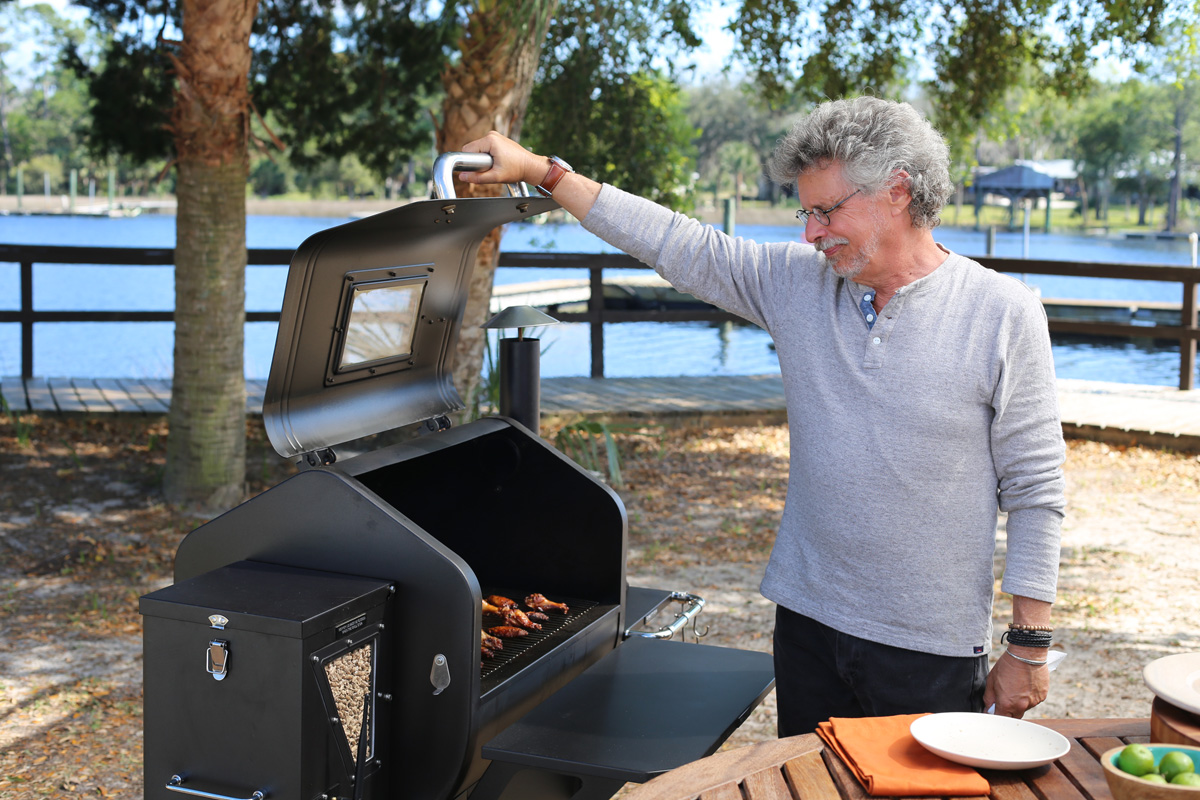 Steven RaichlenBarbecueBible.com
Raichlen acknowledges the real risk of wire bristles ending up in food but takes the middle path — use a well-built brush (his Ultimate design twists the bristles between two strands of stiff wire so they can't loosen out of a waterlogged block), brush the hot grate before and after cooking, then wipe with an oil-dipped folded paper towel to catch any stray bristle. The wipe-down is the non-negotiable step regardless of which brush you choose.
- 03
 Mad Scientist BBQYouTube
Jeremy Yoder walks through a full grate-and-cooker deep clean, showing why letting carbon and grease build up between cooks degrades flavor — useful context for why brushing between cooks matters at all, not just which brush to use.
- 04
 Chud's BBQYouTube
Bradley Robinson takes a Weber Kettle down to bare metal — grates, ash pan, lid interior — showing the tools and pace of a proper deep clean on a charcoal cooker, the kind brushing-between-cooks is meant to keep you from ever having to do.
Cook it. Save the record.
Every cook gets a permanent entry — cut, fuel, temp, time, photo, what worked. Next time you want to nail that exact crust, you'll have the receipt.