
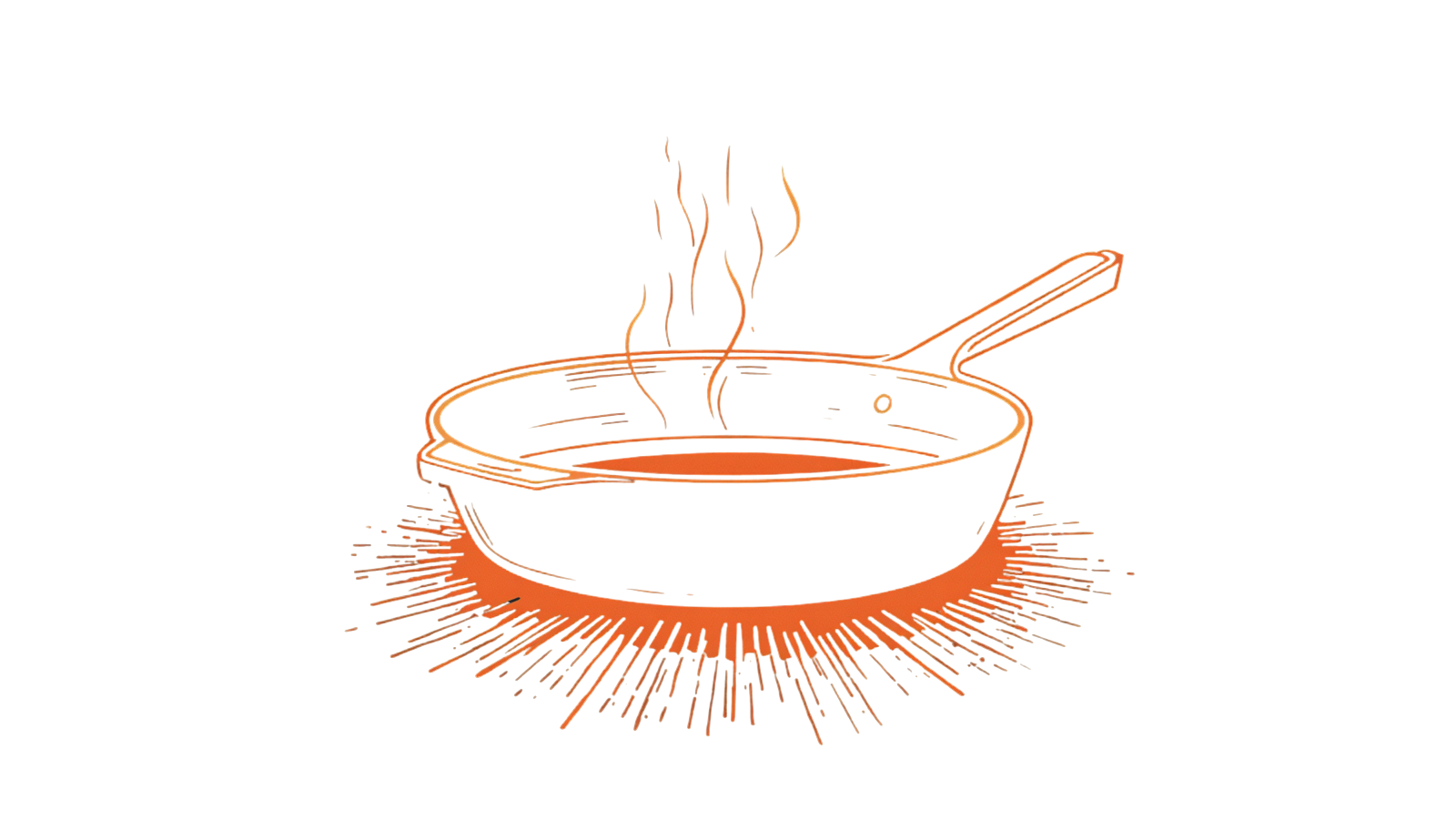
Cast Iron Skillet
A cast iron skillet on the grill is the backyard answer to a steakhouse infrared broiler. Heavy, dense iron preheated over a live fire holds enormous thermal mass, recovers fast when cold food drops onto it, and radiates heat both up from the surface and down onto the meat — so the crust forms top-down and bottom-up at once. It's the canonical hard-sear stage of a reverse sear: roast the steak indirect to pull temp, then drop it onto the ripping-hot skillet for 60–90 seconds a side to finish. Lodge is the cheap, indestructible default; modern makers (Field, Smithey, Stargazer, FINEX) machine their pans smoother for a slicker non-stick surface that performs like the vintage Griswold pans collectors hunt for. Either way the math is the same: thick iron, ripping heat, no flare-ups, even crust.
- Material
- Cast iron — sand-cast (Lodge) or machined-smooth (Field, Smithey, Stargazer, FINEX)
- Sizes
- 10″ (one steak), 12″ (the standard), 15″ (two steaks or a roast)
- Price
- ~$25 for a Lodge · $150–300 for a machined modern maker
- Best at
- Hard-sear stage of reverse sear; eggs, smashburgers, butter-baste finishes
- Care
- Hot water + brush, oil + heat to season; never soap-soak or dishwasher
- Brand-canonical
- Lodge (the default since 1896 — the one most cooks own)
What it is
A cast iron skillet is a heavy, single-piece iron pan with a long handle and shallow sloped sides — the indoor-kitchen workhorse that doubles as the most useful accessory on a grill grate. The iron is roughly an eighth of an inch thick (often more), giving the pan enormous thermal mass: it takes a while to heat, but once hot it holds and re-radiates that heat better than any pan material short of carbon steel.
Lodge is the category-defining American brand — founded in Tennessee in 1896, still pouring sand-cast pans by the millions, and the one most cooks already own. A 12-inch Lodge costs about $25, comes pre-seasoned, and will outlive you. The cooking surface has a faintly pebbled texture from the sand mold — functional, not pretty, but it works.
A wave of modern machined makers (Field Company, Smithey, Stargazer, FINEX) finish their pans smooth on a lathe after casting, giving them the glassy cooking surface of the vintage Griswold and Wagner pans collectors still hunt for at estate sales. They're lighter, slicker, and run $150–300 — a real upgrade in feel, not a must-have in function. Both kinds do the same job on a grill.
How it works
Cast iron's case is heat capacity. A thick iron pan soaks up energy from the coals or burners beneath it and stores it as thermal mass, so when a cold steak hits the surface the pan barely flinches — the searing temperature at the contact zone holds while a thinner skillet would crater 100°F and stew the meat in its own juices.
The other half is infrared radiation. Once the iron is screaming hot it doesn't just conduct heat into the bottom of the steak; the pan walls and surrounding metal radiate heat up and across, browning the sides and the top edge of the cut at the same time the bottom is searing. That bidirectional heat is why a cast-iron sear builds an even, dark crust everywhere the meat sees the pan — not just the contact face.
On a grill, the iron also shields the meat from live flame. Drippings hit the skillet, not the coals, so there are no flare-ups, no soot, no carbon kiss on the crust — just clean Maillard browning. The tradeoff is you give up direct grill-mark char in exchange for full-surface crust. Most cooks chasing a steakhouse sear take the trade.
Setting it up
The skillet wants two things: a hot grill and an honest preheat. Drop the pan onto the grate while you bring the cooker up to temperature, not after — cold iron over live coals takes longer to come up than you think. Eight to ten minutes on a kettle full of lit charcoal, or until a drop of water dances and vanishes instantly off the surface, is the cue.
Reverse-sear finish
The canonical use. Roast the steak indirect at 225–275°F until the interior pulls 15°F shy of target; rest the meat briefly while the skillet preheats over a screaming-hot bed of coals or full-blast burners; drop the steak on for 60–90 seconds a side. See reverse sear.
Smashburger station
A ripping-hot skillet on the grate is the backyard smashburger setup — ball of beef pressed thin against the iron, all-surface crust in about a minute, no flare-ups even at full burner heat. The skillet contains the grease the way a griddle does on a smaller scale.
Butter-baste finish
Once the crust is set, drop a knob of butter, a smashed garlic clove, and a sprig of thyme or rosemary into the pan and tilt it so the foaming butter pools at one edge. Spoon that infused butter over the top of the steak for the last 30–45 seconds. Steakhouse move, free at home.
A light film of high-smoke-point oil (avocado, grapeseed, refined peanut, ghee) in the pan just before the meat goes in. Olive oil and butter alone smoke and burn at sear temperatures — save butter for the last-minute baste, not the preheat.
Where it earns its keep
The skillet's case is crust. Anywhere a backyard cook needs hotter, more even, more controlled high heat than a bare grate can give them, cast iron earns its place on the grill:
Hard-sear stage of a reverse sear
The single most-cited use. A pre-heated skillet over a ripping-hot kettle or kamado finishes a thick steak with full-surface crust in 60–90 seconds a side — the payoff that makes the long indirect roast worth it.
Sear after sous vide
A sous-vide steak comes out of the bag interior-perfect but pale. The hot skillet is the universal finish — drier surface than the grate, faster crust, no time spent cooking past your target.
Smashburgers and seared scallops
Thin proteins that need all-surface contact and containment of fat or juice. The skillet acts as a small griddle on the grate, with the grill providing the heat.
Eggs, fish, and delicate cuts on a live fire
Anything that would fall through the grate or fall apart at a flare-up — eggs at a campsite, a whole trout, scallops — cooks cleanly in the skillet over the same fire the rest of the meal is on.
Where it falls short
The skillet's limits are mostly about weight, time, and the maintenance habits cast iron demands:
Weight and handle heat
A 12-inch Lodge weighs roughly eight pounds empty and the handle hits sear temperature alongside the cooking surface. Heat-proof gloves or a folded towel are not optional — bare-handed grabs end in ER visits.
Long preheat
Thermal mass cuts both ways. The same iron that holds searing heat once it's there takes 8–10 minutes to get there. Drop a steak on under-heated iron and you get a gray band of stewed meat instead of a crust.
No grill marks
A flat skillet surface gives you all-over crust, not the cross-hatched bars steakhouse photos run on. If the picture matters more than the crust, sear on the bare grate; if the crust matters more, the skillet wins.
Seasoning maintenance
Cast iron asks for a habit: hot water and a stiff brush after cooking, dry it over heat, wipe a thin film of neutral oil on while it's warm. Skip that for a few cooks and the surface dulls and starts to stick. A pellet grill or gas grate forgives neglect; cast iron remembers.
Smoke during the sear
A skillet at full sear heat puts out serious smoke — fine outdoors on the grill, the reason most cooks moved the cast-iron sear outside in the first place. On a covered patio or a windless evening, expect a lot of it.
What goes wrong.
Searing on a cold skillet
The single most common mistake. Cast iron only beats the bare grate when it's screaming hot — under-heated iron stews the steak in its own juices and gives you a gray band instead of a crust. Preheat for the full 8–10 minutes on a ripping-hot grill, and watch for a drop of water to vaporize on contact before the meat goes on.
Grabbing the handle bare-handed
The handle hits sear temperature within a minute of the pan being on the grate, and there's no insulating sleeve to warn you. Keep heat-proof gloves or a folded towel in the same hand the whole time the skillet is on the grill — bare-grab burns are the most common cast-iron ER trip.
Soap-soaking after the cook
Cast iron's non-stick surface IS its seasoning — a polymerized layer of cooked oil bonded to the iron. Modern dish soaps won't strip it the way the old lye-heavy soaps would, but a long soak in soapy water and a dishwasher cycle will. Hot water, a stiff brush, dry over heat, oil while warm.
Olive oil or butter in the preheat
Both smoke and burn well below the temperatures cast iron sears at, leaving a bitter taste on the crust. Use a high-smoke-point oil (avocado, grapeseed, refined peanut, ghee) for the sear and save the butter for the last-minute baste — the foam stays sweet at that quick contact.
Skipping the baste step on the finish
The last 30–45 seconds of a reverse sear is where the skillet pays for itself — spoon foaming butter, garlic, and herbs over the top of the steak and you've added a flavor layer no bare grate can deliver. Lift the pan off without the baste and you're leaving the steakhouse move on the table.
What each of them says.
3 of the people we trust have covered this. Read or watch each in their own words.
- 01
 Meathead GoldwynAmazingRibs.com
Meathead's case for cast iron on the grill: nothing else delivers a dark, even sear like cast iron because the material holds enormous heat, recovers fast when cold food hits it, and radiates infrared so the crust forms top-down as well as bottom-up. He pushes past Lodge to the machined modern makers (Field, Smithey, Stargazer, FINEX) that perform like vintage Griswold pans, but acknowledges Lodge as the cheap, indestructible default that still works.
- 02
 Mad Scientist BBQChannel / YouTube
Jeremy Yoder pits the cast iron skillet sear directly against bare grill grates over live fire, walking through where cast iron wins (even crust, no flare-ups, consistent contact) and where the grate has the edge. The clearest current side-by-side test of cast-iron-on-the-grill as a finishing tool.
- 03
 Malcom ReedHowToBBQRight / YouTube
Malcom runs a Big Green Egg up to 500F, drops a Lodge skillet on the grate, and demonstrates the canonical backyard workflow: oil to the smoke point, press the steak in for contact, three minutes a side, then butter-baste with garlic and thyme. The hands-on counterpart to Meathead's theory.
Cook it. Save the record.
Every cook gets a permanent entry — cut, fuel, temp, time, photo, what worked. Next time you want to nail that exact crust, you'll have the receipt.