
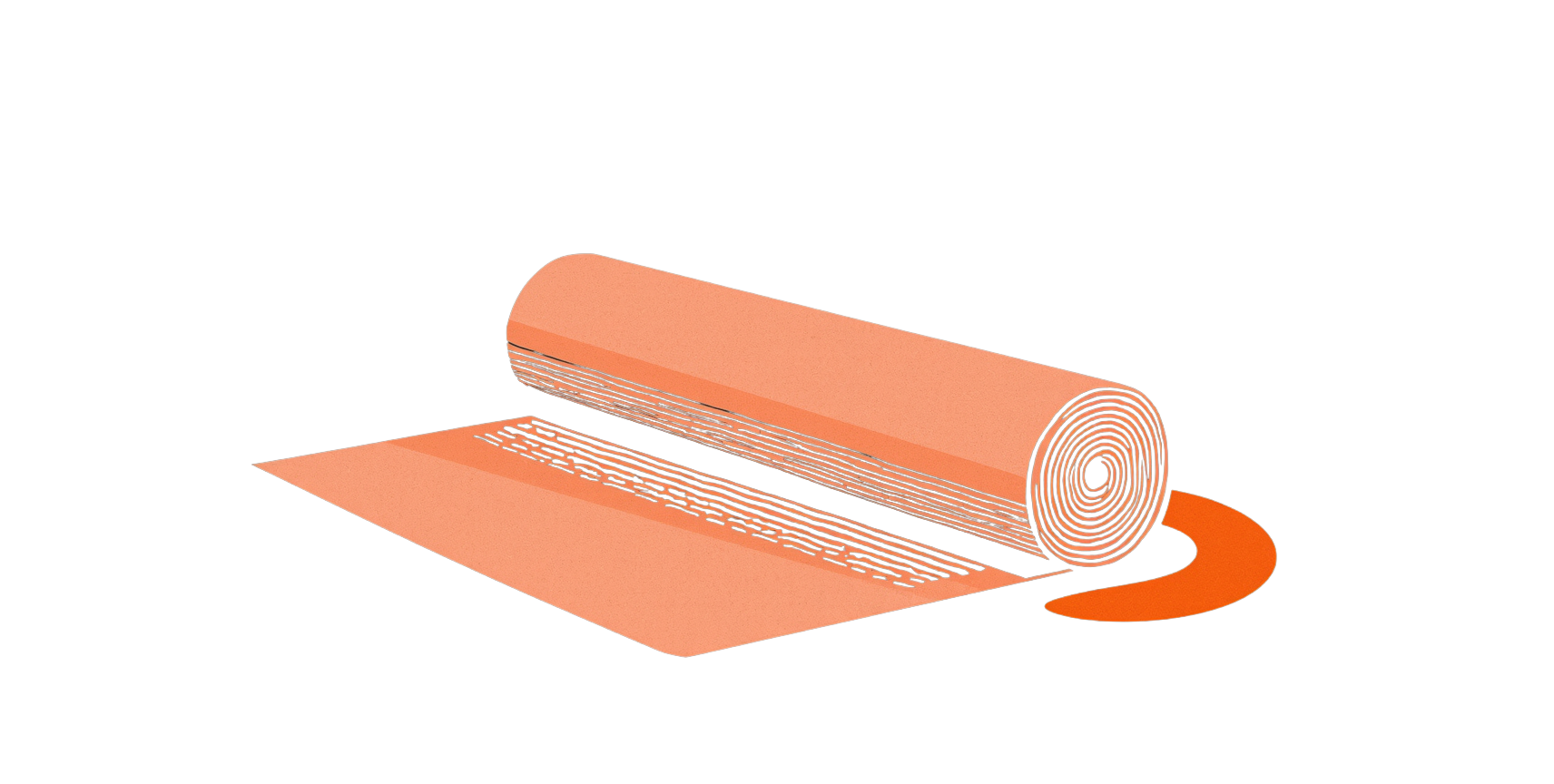
Butcher Paper
Butcher paper is the uncoated, food-grade kraft paper used to wrap a brisket or pork shoulder partway through a long smoke — the third option alongside foil and no wrap at all. The pink (“peach”) color isn't a brand — it's the natural shade of the unbleached pulp meat-counter paper has always come in. Wrapping in it cuts evaporative cooling enough to push through the stall, but unlike foil the paper breathes — fat and steam escape just enough to keep the bark intact instead of softening it into pot-roast. It's the wrap half of the Texas Crutch that Aaron Franklin made canonical for low-and-slow Central Texas brisket. The only rule that matters at the register: plain, uncoated, food-grade. Anything waxed, plastic-lined, or freezer-treated will melt or burn in the pit.
- Material
- Uncoated kraft pulp paper, food-grade — no wax, no plastic, no silicone
- Color
- Pink / "peach" — natural unbleached pulp, not a dye
- Sizes
- 18″, 24″, 30″ rolls — 24″ is the brisket standard
- Price
- ~$25–50 for a 150–175 ft roll (years of cooks)
- Best at
- Brisket wrap — pushes through the stall while preserving bark
- Brands
- Oren International, Carnivore Meat & Bone, Bryco, Sysco
What it is
Butcher paper is the same uncoated kraft paper meat counters have wrapped cuts in for a century — food- grade, FDA-approved, with nothing on it. The pink color isn't a brand, a treatment, or a dye; it's the natural shade of unbleached pulp, which is why you'll hear it called “peach paper” or “pink butcher paper” interchangeably. The roll you buy at a restaurant-supply store is the same roll behind the counter at a Texas BBQ joint.
It became BBQ canon almost by accident. Aaron Franklin started wrapping briskets in peach paper at his Austin pit because it was cheaper than foil — then kept doing it once he realized what it did to the bark. His PBS and MasterClass series made it visible to the rest of the country, and the backyard followed. Today the common brands — Oren International, Carnivore Meat & Bone, Bryco, Sysco — all sell the same basic product: 18″, 24″, or 30″ rolls of plain uncoated kraft. The 24-inch is the brisket-standard width; anything narrower won't wrap a packer in one piece.
How it works
Butcher paper sits between the two extremes of a brisket wrap. Foil is a vapor seal — steam can't escape, so the meat braises in its own juices, pushes through the stall fast, and finishes tender — but the bark you spent six hours building goes soft and a touch pot-roasty. No wrap at all gives you the deepest bark and the biggest smoke flavor, at the cost of the longest cook and the most moisture loss. Paper splits the difference.
The fibers absorb fat and rendered juice as the cook goes, which is why the bottom of a brisket-wrap saturates dark and translucent. That saturation traps enough moisture around the meat to cut evaporative cooling and bust the stall — but the paper is still porous, so steam continues to vent rather than pool. The bark holds its structure, the smoke ring keeps developing, and a little fresh smoke continues to land through the paper instead of stopping cold the way it does under foil. It's slightly slower than foil through the stall and a little faster than no wrap at all, with bark quality close to unwrapped.
Setting it up
The wrap itself is straightforward, but the timing and the technique matter more than the product. Three patterns cover most of what backyard cooks do with a roll:
The brisket wrap
The canonical use. Tear off two arm-spans of 24-inch paper, lay it flat, set the brisket fat-side down near one short end, and roll it tight — fold the sides in like a burrito as you go so the package closes on itself. No tape, no foil over the top. Wrap when the brisket hits 165–175°F internal and the bark is set firm to the touch — not before. See Texas Crutch for the full timing discussion.
Ribs & pork shoulder
Same technique, smaller package. A rack of spare ribs wraps in a half-sheet of 18″; a pork shoulder wants a full sheet of 24″. Paper works on anything where you'd otherwise reach for foil but want to keep the bark from going soft — shoulders, beef ribs, full racks.
The rest & hold
Pull the brisket in its paper, leave it wrapped, and rest it in a dry cooler for an hour or more. The paper goes from cooking vessel to holding vessel without a rewrap — one of the quiet reasons pit joints use it. The bark stays firm through the hold; foil at the same step turns it back into a wet wrapper.
Look for “food-grade, uncoated” or “FDA approved” on the roll. Oren International and Carnivore Meat & Bone are the most-named brands in BBQ circles; Bryco and Sysco rolls from a restaurant- supply store are the same product at lower per-foot cost. A 24″ × 150′ roll runs $25–50 and lasts a backyard cook years.
Where it earns its keep
The case for paper is bark preservation on a long cook. A well-built brisket bark is hours of work — salt and pepper rub, slow render, hardwood smoke laying down a dark crust — and the moment you seal it in foil, that crust starts steaming back into the meat. Paper protects the bark you just built. The brisket finishes probe-tender with a crust that still cracks under the knife instead of flaking off wet.
It also earns its keep at the end of the cook. The wrapped package goes straight from the pit into a dry cooler for an hour or more of rest, and the same paper that cooked the brisket carries it through the hold without softening the bark or trapping condensation. Pit joints serving hundreds of pounds a day run on this efficiency; backyard cooks running a single brisket for a Saturday lunch get the same benefit.
Where it falls short
Paper isn't a fix-everything, and a few failure modes come up enough to flag:
Slower than foil through the stall
Paper breathes, which is the whole point — but breathing means a bit more evaporative cooling, and a paper-wrapped brisket runs ~30–60 minutes longer than a foil-wrapped one through the stall. If you're racing the clock to a dinner, foil pushes faster.
Soft, mushy bark
Wrapping a wet bark, or wrapping too early (before 165°F), traps moisture inside the paper and gives you the foil failure mode anyway. Let the bark set firm and dry first; wrapping a bark that's still tacky steams it.
Won't fix a high-temp pit
A 325°F+ pit will char the outside of a paper-wrapped brisket. The paper isn't insulation; it's a porous moisture buffer. If the pit is running hot, bring it down before you wrap.
Not the same as freezer or waxed paper
Freezer paper has a plastic coating on one side; waxed paper has wax. Both will melt, burn, or contaminate the meat in a pit. The only paper that belongs in the smoker is plain, uncoated, food-grade kraft — the pink stuff.
What goes wrong.
Using waxed or freezer paper
The single most dangerous butcher-paper mistake. Freezer paper has a plastic/polyethylene coating on one side; waxed paper has a paraffin coat. Both will melt, smolder, and either ignite or contaminate the meat at smoker temperatures. Only plain, uncoated, food-grade kraft paper — the pink stuff — goes in a pit. If you can't verify the roll is FDA-approved and uncoated, leave it on the shelf.
Wrapping too early
Paper isn't magic — it only preserves bark that's already set. Wrap a brisket at 145°F while the rub is still tacky and you steam it into mush inside the paper, no different from foil. Wait until the internal hits roughly 165–175°F and the bark is firm and dark to the touch. See Texas Crutch for the full timing call.
A loose, open wrap
Sloppy folds leave gaps where steam escapes faster than it should and the brisket loses moisture through the rest of the cook. Roll it tight like a burrito — sides folded in first, then the ends rolled under — so the package closes on itself. No tape, no foil overwrap, just a snug paper bundle.
Buying the wrong width
An 18-inch roll won't fully wrap a packer brisket — the paper has to come from both sides and meet in the middle. The brisket-standard width is 24 inches; 30 inches gives you more margin on a large packer. Save the 18" roll for ribs and pork shoulders.
Skipping the rest in the paper
Unwrapping straight off the pit dumps all the carryover heat and rendered fat onto the cutting board. Leave the brisket sealed in its paper and rest it in a dry cooler for at least 45–60 minutes — the paper carries it through the hold without softening the bark, which is half the reason pit joints use paper in the first place.
What each of them says.
4 of the people we trust have covered this. Read or watch each in their own words.
- 01
 Aaron FranklinMasterClass
Franklin started wrapping in uncoated pink butcher paper because it was cheaper than foil — but kept it because foil makes brisket "a little pot-roasty" and the paper breathes. It protects the meat through the stall while letting just enough moisture escape to keep the bark intact, which is the whole reason peach paper exists in modern Texas BBQ.
- 02
 Meathead GoldwynAmazingRibs.com
Meathead's take: butcher paper saturates with fat and water on the bottom and cooks a bit slower than foil, but functions similarly — capturing moisture and stopping evaporative cooling. His one non-negotiable: use plain, food-grade paper, never anything treated with wax or silicone.
- 03
 Daniel VaughnTexas Monthly
Texas Monthly's BBQ Editor frames the cultural shift: Franklin's brisket-wrapping videos have probably sold more butcher paper than actual butchers have. Peach paper went from a Central Texas restaurant tool to a backyard standard once Franklin made it visible.
- 04
 Malcom ReedHowToBBQRight / YouTube
Malcom's case for butcher paper over foil — bark stays firm instead of going mushy under steam. Applies to brisket the same way: paper protects the crust you just spent hours building.
Cook it. Save the record.
Every cook gets a permanent entry — cut, fuel, temp, time, photo, what worked. Next time you want to nail that exact crust, you'll have the receipt.