
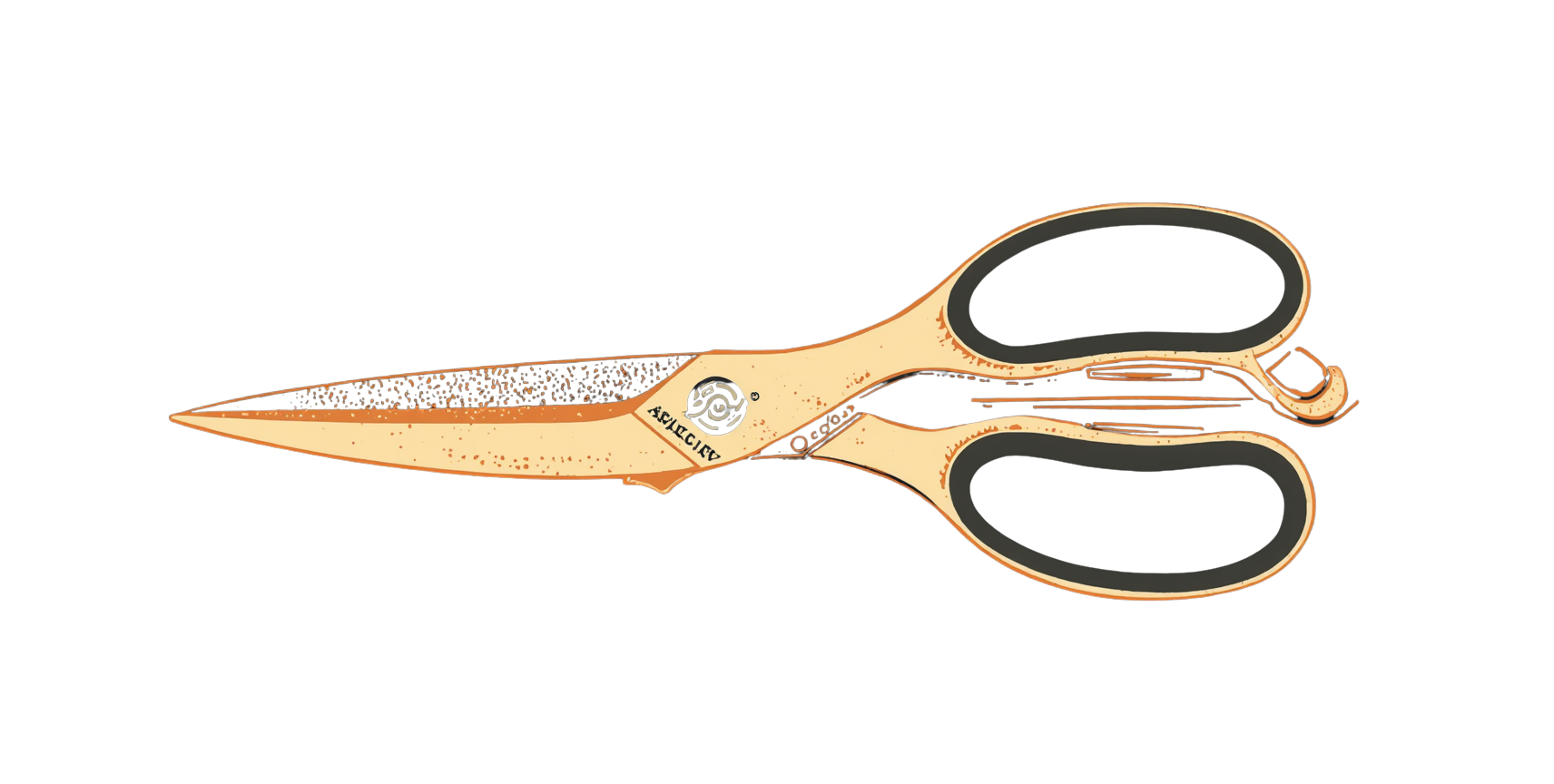
BBQ Shears
BBQ shears are the heavy-duty scissor that lives in the backyard kit alongside the tongs and the instant-read thermometer. The job is brute-force kitchen surgery: cutting a rack of ribs into individual bones at the table, snipping each side of a chicken backbone to spatchcock before it goes on the grate, trussing a whole bird, breaking down a turkey post-cook, sizing a sheet of butcher paper for the wrap. The spec that separates a real pair from a drawer kitchen scissor: full-tang one-piece stainless construction strong enough to cut through chicken ribs, micro-serrated blades that grip slippery skin and bone, comfortable grip for sustained pressure, and a hinge that comes apart so the whole tool goes through the dishwasher clean. Meathead Goldwyn called sturdy kitchen shears “one of those kitchen tools I simply cannot live without” and gave the OXO Good Grips Professional Poultry Shears a Gold-Medal review; Joyce Chen and Wusthof sit alongside as the other names that show up on every shortlist.
- Material
- Full-tang stainless steel blades · molded grip handles
- Construction
- One-piece forged construction; hinge that pulls apart for the dishwasher
- Blade
- Micro-serrated edge for grip on slippery skin and bone
- Price
- $15–25 (OXO Good Grips, Joyce Chen) · $40–80 (Wusthof and other forged-Euro pairs)
- Best at
- Separating cooked ribs, spatchcocking poultry, sizing butcher paper, trussing chicken
- Care
- Pull the hinge apart, dishwasher safe; dry the joint before reassembling
What it is
BBQ shears are an oversized, heavy-duty kitchen scissor built for the jobs a regular drawer pair won’t survive — cutting through chicken ribs, sectioning cooked spare ribs at the table, snipping the backbone out of a whole bird, breaking down a turkey carcass, trussing string, and sizing a roll of butcher paper into wrap-sized sheets. The blades are full-tang stainless, the handles are molded plastic or rubber for sustained grip, and the whole tool is sized to be squeezed shut with a closed fist rather than a finger- and-thumb pinch.
The defining spec is one-piece construction. A drawer kitchen scissor is two stamped halves riveted at the pivot; a real pair of poultry shears is forged or cast as continuous blade-and-handle pieces with a spring at the joint and a pull-apart hinge that separates the two halves entirely. That pull-apart hinge is the dishwasher feature — raw chicken, sticky rib juice, and pork fat work into the pivot of a riveted scissor and never come out; a pair that comes apart can be run through a normal wash cycle and reassembled clean.
The canonical picks land in two tiers. OXO Good Grips Professional Poultry Shears (~$20, Meathead’s Gold-Medal pick) and Joyce Chen Original Unlimited Scissors (~$15) are the home-cook defaults — cheap, dishwasher-safe, and good enough to last years. Wusthof and the other German forged-handle pairs (~$40–80) buy heavier construction and finer blade geometry but don’t materially change what the tool can do.
How it works
A shear is a lever pair: two pivoted blades that turn hand pressure at the grip end into concentrated cutting force at the tip. The closer to the pivot the food sits, the more leverage the cut has — which is why every chicken-rib cut starts with the work tucked deep into the throat of the shears, never at the tip. The whole tool is engineered around the loads that break a normal kitchen scissor: heavier-gauge steel, wider blades, a stiffer spring, and a positive lock that holds the pair shut for storage.
The micro-serrated blade edge is the spec that earns its keep on slippery food. Smooth blades skate off wet chicken skin and roll off a curved rib bone; a fine row of serrations bites in on contact and holds the cut line where you started it. The trade-off is that serrated edges are harder to sharpen at home, but on a $20 pair that’s a trade most home cooks accept — replace, don’t resharpen.
The hinge geometry is where the BBQ pair earns its category. Pull the blades fully open past their normal travel and the two halves separate. Run them through the dishwasher, dry the joint, and snap them back together — same tool, clean down to the pivot. That single feature is what Meathead points to when he flags “cleanliness” as the difference between a usable poultry shear and a drawer scissor you regret using on raw chicken.
Setting it up
Three jobs cover most of what BBQ shears do in a backyard; the technique is the same across all of them: deep into the throat, single firm squeeze, let the leverage do the work.
Spatchcocking a whole chicken
Set the bird breast-down on the cutting board. Cut along one side of the backbone from tail to neck, then the other side, lifting the spine free. Flip breast-up and press flat. The cut runs through the ribs — soft enough on a raw chicken that a good pair of shears goes through in two clean snips per side. The flattened bird cooks 30–40% faster and crisps the skin uniformly. Malcom Reed’s HowToBBQRight walkthrough is the canonical home-cook demo of the move.
Separating cooked ribs at the table
A rack of 3-2-1 ribs comes off the smoker as one slab; the move at the table is to flip it bone-side up and snip between each bone. Shears cut where a chef’s knife has to find the gap — faster, cleaner, and one-handed while the other hand holds the rack steady. Same move on baby backs, St. Louis cut, or a beef plate rack.
Sizing butcher paper and trussing
The wrap step on a brisket needs two sheets of butcher paper cut to size; the trussing step on a whole chicken or roast needs cotton kitchen twine sliced cleanly. Shears do both jobs in seconds without dragging a knife out of the block. Keep them tableside on cook day.
Cross-contamination is the quiet risk with shears. Raw chicken on the spatchcock pass and cooked rib meat at the table is the same pair of blades unless you separate the workflows. Two options: dedicate one pair to raw poultry prep and a second pair to tableside cooked work, or pull the hinge apart and run them through the dishwasher between the two stages. The pull-apart hinge exists for exactly this reason — the move only works if you actually use it.
Where it earns its keep
Shears pay off on the moves a knife handles badly — cuts where the tip has to track a curve, where bone is in the way, or where one hand needs to be free.
The spatchcock cut
Two snips per side of the backbone, bird flat in under a minute. The same cut with a chef’s knife is awkward, slower, and harder to keep clean. Raichlen specifically frames shears as the right tool for halving or spatchcocking chicken and game birds — the moments where a knife just won’t cut it.
Tableside rib portioning
A rack of ribs portioned one bone at a time, by feel, at the serving table. Faster than a knife, no carving board required, and the cooked meat doesn’t tear off the bone the way it does when a blade pushes through.
Breaking down a whole bird
Whole-chicken to leg-thigh-breast-wing portions for serving or storage. Shears cut through the cartilage at the joints with leverage a knife has to muscle through. Holiday turkey breakdown is the same job at scale.
Paper, twine, packaging
Cutting butcher paper to wrap-size, slicing twine for trussing, opening vacuum-sealed cryovac on a brisket. The everyday small cuts that don’t warrant pulling a chef’s knife out of the block.
Where it falls short
The honest limits of a pair of shears:
Slicing brisket or pork shoulder
Long, even slices across the grain of a finished brisket flat or a pork-shoulder steak are knife work, not shear work. Shears tear the slice line and pull the bark off the surface. Keep a long slicing knife in the kit for the carving step; shears handle the prep and the portioning, not the slicing.
Heavy beef bone
Poultry shears go through chicken and pork ribs; they don’t go through beef shank or a brisket bone. Anything thicker than a finger is cleaver territory or a butcher’s saw, not a spring-loaded scissor. Forcing the cut bends the blade and wrecks the alignment.
Drawer-grade scissors fail fast
The $5 kitchen scissor from the supermarket rivet-set isn’t a poultry shear. Bones bend the blade, juice rusts the pivot, and the rivet loosens within a season. The under-$25 OXO and Joyce Chen pairs are the price floor for a tool that’ll do the work.
Rust at the hinge if you leave it wet
Even pull-apart stainless pairs corrode at the pivot if the joint goes back together wet. The dishwasher feature only pays off if you pull the blades apart, dry both halves, and snap them back together dry. A wet pair sitting in the drawer pits the hinge inside a month.
What goes wrong.
Cutting at the tip instead of the throat
The tip of the blade has the least leverage and the most flex — pushing a chicken rib through the last inch of a shear bends the blade and wears the pivot. Tuck the cut as deep into the throat of the shears as the food allows, then squeeze. Single firm cut, let the lever do the work.
Buying a drawer scissor and calling it good
A $5 stamped-and-riveted kitchen scissor isn't a poultry shear. It can't cut a chicken rib without bending, the rivet loosens, and the closed pair never comes apart for the dishwasher — so raw-chicken juice lives in the pivot for the life of the tool. The under-$25 OXO Good Grips Professional or Joyce Chen Originals are the floor for a real pair.
Skipping the pull-apart cleaning step
The whole point of a BBQ pair over a drawer scissor is the hinge that comes apart for the dishwasher. Using them on raw chicken and then closing them up without separating the halves trains a film of bacteria into the pivot. Pull the blades apart every wash, run them through the dishwasher, dry the joint, snap them back — that’s the workflow Meathead specifically calls out.
Putting them through brisket bone or beef shank
Poultry shears handle chicken ribs and pork ribs; they don't handle heavy beef bone. Forcing the cut springs the blade out of alignment and the pair never closes the same way again. If the cut needs a hammer, it needs a cleaver — not a shear.
Reassembling the hinge wet
Stainless rusts at a wet seam. The dishwasher comes out hot and steaming; if the two halves snap back together before the pivot is bone-dry, the joint pits inside a few cycles and the pair starts to bind. Air-dry both halves before reassembly — five extra minutes that doubles the lifetime of the tool.
What each of them says.
3 of the people we trust have covered this. Read or watch each in their own words.
- 01
 Meathead GoldwynAmazingRibs.com
Meathead calls sturdy kitchen shears "one of those kitchen tools I simply cannot live without" and gave the OXO Good Grips Professional Poultry Shears a 4-star Gold Medal. He says to look for stainless blades strong enough to cut through chicken ribs and a hinge that comes apart for the dishwasher so you can get them really clean.
- 02
 Steven RaichlenBarbecue Bible
Raichlen's pick is sturdy drop-forged stainless meat shears with riveted handles and a locking mechanism for storage. He frames them as the right tool for halving or spatchcocking chicken and game birds for the grill, the moments where a knife just won't cut it.
- 03
 Malcom ReedHowToBBQRight / YouTube
Malcom demos the canonical backyard use for shears: cutting down each side of the backbone to spatchcock a whole chicken before it hits the grill. Clean, two-snip technique with kitchen shears, no knife needed.
Cook it. Save the record.
Every cook gets a permanent entry — cut, fuel, temp, time, photo, what worked. Next time you want to nail that exact crust, you'll have the receipt.