
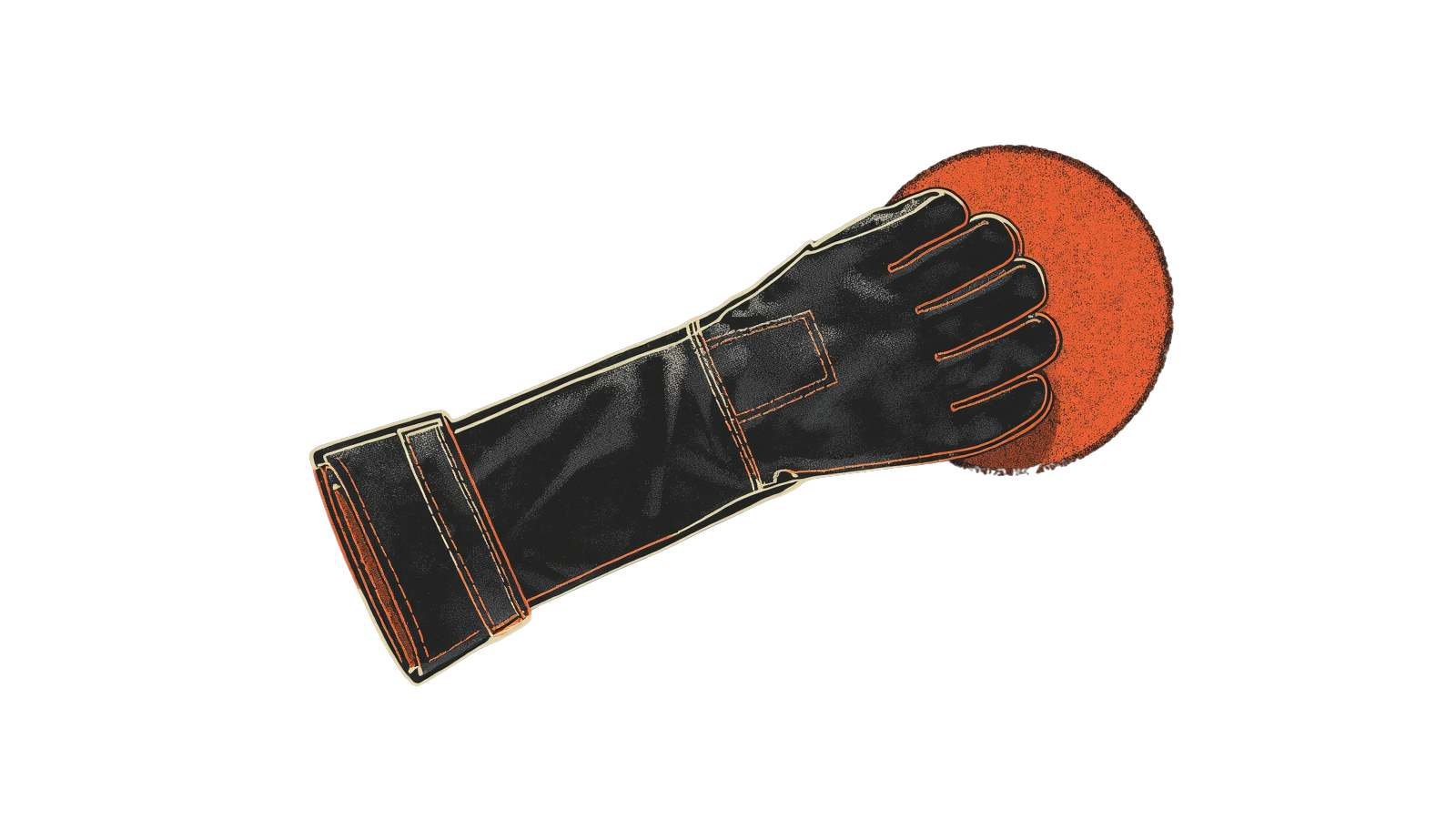
BBQ Gloves
BBQ gloves aren’t one thing. There are three working categories, each tuned to a different task. Long leather or suede gauntlets handle live fire — moving logs, dumping a chimney of charcoal, grabbing a hot grate. Silicone or neoprene synthetics handle hot food and pots, food-safe and washable. Cotton-lined fabric gloves — or the cotton-liner-under-nitrile rig pitmasters favor — handle pulled pork and brisket slicing at the end of a low-and-slow cook. Reaching for the wrong glove is the actual mistake: a food-safe silicone won’t protect you from a chimney starter, and a leather gauntlet has no business touching the meat. Match the material to the heat source.
- Materials
- Leather/suede (fire) · Silicone or neoprene (food) · Cotton-lined fabric or aramid (general)
- Variants
- Short cuff (~10″) for grill work · Mid-length (~14″) general · Elbow-length (~18″) for chimney + open fire
- Price
- $15-25 fabric · $25-50 silicone · $30-80 quality leather
- Best at
- Handling heat the bare hand can’t — for ~30 seconds, not indefinitely
- Care
- Silicone and aramid wash like dishes · Leather wipes only (water ruins it) · Replace when liner singes through
What it is
“BBQ gloves” is a category that covers three very different tools sold under one name. Each is built for a different surface and a different job, and swapping one for another is how cooks burn through gloves — and sometimes hands.
Leather and suede gauntlets are the fire-handling glove. Thick split cowhide, usually with a cotton or wool liner, in cuffs from short welder length to elbow-length 18-inch versions. They shrug off direct contact with hot grates, lit logs, and the steel handle of a chimney starter. They’re not food-safe and water destroys them, so they live near the fire, not on the meat.
Silicone and neoprene gloves are the food and pot glove. Solid synthetic shells, often with a textured grip, food-safe and dishwasher- washable. They handle hot cast iron, drip pans, and food going on or off the grate. They have less dexterity than fabric and they melt if you forget and grab a glowing grate.
Cotton-lined fabric gloves — aramid (Kevlar, Nomex) shells over a cotton liner, often with silicone grip pads — sit between the other two. Flexible, machine-washable, decent feel. The pitmaster rig is even simpler: a thin white cotton liner worn under a disposable nitrile glove. The cotton blocks heat off a 200°F pulled pork or sliced brisket; the nitrile keeps the meat clean and the cook’s hand dry.
How it works
A glove buys you time, not immunity. Heat moves into your hand by two paths: conduction (direct contact with a hot object) and radiation (infrared from a fire or hot grate nearby). Material choice is about which path you’re blocking and for how long.
Leather works because the dense fiber matrix is a poor heat conductor; the cotton or wool liner inside adds a second insulating layer of trapped air. Together they slow conduction long enough for short, hard contact with hot metal and direct flame. Run out of time and the leather scorches; that’s the warning to let go.
Silicone works by being a poor conductor and being thick enough that the inside stays cool while the outside touches a hot pan. It also seals out steam and grease, which is why it’s the food and pot glove. Push it past its rating and it gets soft and tacky, then melts.
Fabric stacks (aramid + cotton, or cotton liner + nitrile) work by layering insulation: the outer shell takes the heat hit, the inner liner traps air, and your hand stays at skin temperature for the 20-30 seconds it takes to pull a butt or slice a brisket. Meathead Goldwyn tests heat resistance the practical way: a probe under a 500°F cast-iron pan, timed against NASA’s 113°F skin-pain threshold. Most gloves clear ~15-20 seconds. Plan accordingly — let go before you have to.
Setting it up
Match the glove to the surface, not the cook. Three setups cover almost every backyard job:
Fire-handling rig
One pair of leather or suede gauntlets, cuff 14-18 inches for forearm coverage. Lives next to the grill. Used for dumping a lit chimney, moving logs or grates, opening a hot firebox door, banking coals. Never touches food.
Food-handling rig
Silicone or neoprene gloves for moving hot cast iron, drip pans, and food on and off the grate. Food-safe, washable, no leather residue. Used for reverse-sear handoffs and any time the meat is going from the cooker into a pan or onto a board.
Pulled-pork rig (cotton + nitrile)
A thin white cotton liner glove worn under a box of disposable nitrile gloves. The cotton blocks the heat off a 200°F pork butt or sliced brisket; the nitrile keeps the meat sanitary and your hand clean. Cheapest, most-used rig in serious BBQ kitchens. Swap the nitrile between proteins; the cotton liner washes.
A glove that doesn’t fit doesn’t work. Too loose and you can’t feel the grate or grip a handle; too tight and the insulating air layer collapses. Cuff length matters as much as size: an 18-inch gauntlet keeps your forearm out of the flames when you reach across a hot grate.
Where it earns its keep
The right glove makes routine fire-and-meat handoffs casual:
Dumping a hot chimney starter
A full chimney of ashed-over coals is the most routine high-stakes move on a charcoal cook. Long leather gauntlets cover the forearm against the rising heat as you pour.
Setting up a two-zone fire or snake
Banking lit coals, rearranging the bed mid-cook, pulling a hot grate to add a wood chunk — leather lets you reach into the bowl and move things without dropping the lid for ten minutes.
Pulling and slicing
Cotton-and-nitrile rigs let you shred a 200°F pork shoulder by hand and hold a hot brisket steady while you slice — with feel intact and the meat sanitary.
Moving cast iron and pans
Silicone gloves grip a screaming-hot cast-iron skillet better than a folded towel does, with no risk of a steam burn through a wet cloth.
Where it falls short
No glove gives you indefinite heat immunity, and the wrong glove is worse than none:
Time, not temperature
Glove ratings advertise a peak temperature, but the real spec is how long you can hold contact at that temperature. Most heat-resistant gloves clear 15-30 seconds at 500°F before your hand starts to feel it. Treat them as a brief grace window, not a force field.
Water and steam
A wet glove conducts heat straight to your skin. Cotton liners pulled from a sink, leather caught in a rainstorm, fabric gloves used on a spritzed brisket — all become hazards. Dry the glove before reaching back into the fire.
Cross-contamination
Leather absorbs juice, smoke, and grease and can’t be washed clean. A glove that touched raw meat or a sooty grate has no business on finished food. Keep the fire glove and the food glove physically separate.
Dexterity ceiling
Even the best gloves cost you feel. Fine work — tying twine, threading a probe, picking up small thermometer clips — is easier bare-handed, off the heat. Take the glove off for the cold-prep work; put it back on for the fire.
What goes wrong.
Using leather gloves on food
Leather absorbs grease, smoke, and juice and can’t be washed out; the gauntlets that just dumped a chimney have no business pulling a pork butt. Use silicone or a cotton-and-nitrile rig for anything that touches finished meat.
Reaching for silicone at the firebox
Silicone is rated for hot food and pots, not direct contact with lit coals or a glowing grate. Push it past spec and it goes tacky, then melts onto the surface. Keep a leather pair for the fire work.
Wet glove, hot grate
Water flips an insulator into a conductor. A glove damp from rinsing, spritzing, or rain transfers heat almost instantly to your skin — this is how cooks get scalded reaching for a grate they’ve handled dozens of times. Dry the glove fully, or switch to a spare, before going back to the fire.
Holding too long
Heat-resistant gloves buy you 15-30 seconds at 500°F, not a minute. Plan the move before you reach — know where the grate is going, set down a landing spot, then go. If the glove starts to feel warm, you’re already past the limit.
Buying one pair to do everything
No single glove is great at fire and food and dexterity. The cooks who never burn themselves keep two or three pairs — leather for the fire, silicone for the food, cotton for the pulling — and use each only where it earns its keep.
What each of them says.
3 of the people we trust have covered this. Read or watch each in their own words.
- 01
 Meathead GoldwynAmazingRibs.com
Meathead breaks gloves down by material against task. Silicone or neoprene synthetics handle hot food and pots best and wash like your hands. Leather and suede are the move for moving logs, lighting chimneys, and grabbing hot grates. Kevlar or Nomex fabric with silicone pads sit in the middle: flexible, machine-washable, moderate dexterity. He tests heat resistance with a probe under a 500°F cast iron pan timed to NASA’s 113°F skin-pain threshold.
- 02
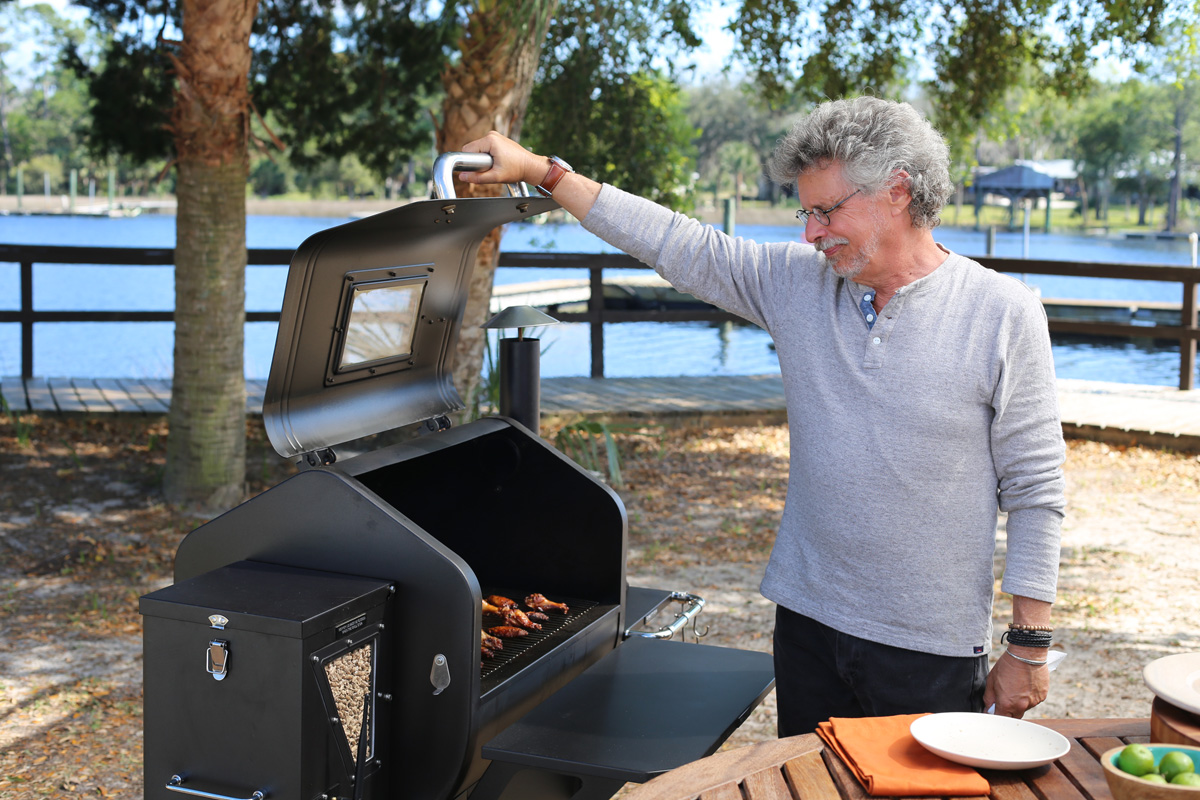 Steven RaichlenBarbecuebible.com
Raichlen’s pick is extra-long suede, elbow-length. The 18-inch cuff is the point: forearm protection when you reach over a hot grate or dump a chimney of coals. He notes suede stays pliant enough for dexterity even at that length, so you’re not trading feel for coverage.
- 03
 Malcom ReedHowToBBQRight / YouTube
Malcom’s go-to for handling hot meat is the cheapest, most sanitary rig he’s found: a white cotton liner under a disposable nitrile glove. Cotton blocks the heat, nitrile keeps it food-safe and clean, and you still get enough feel to pull pork.
Cook it. Save the record.
Every cook gets a permanent entry — cut, fuel, temp, time, photo, what worked. Next time you want to nail that exact crust, you'll have the receipt.