
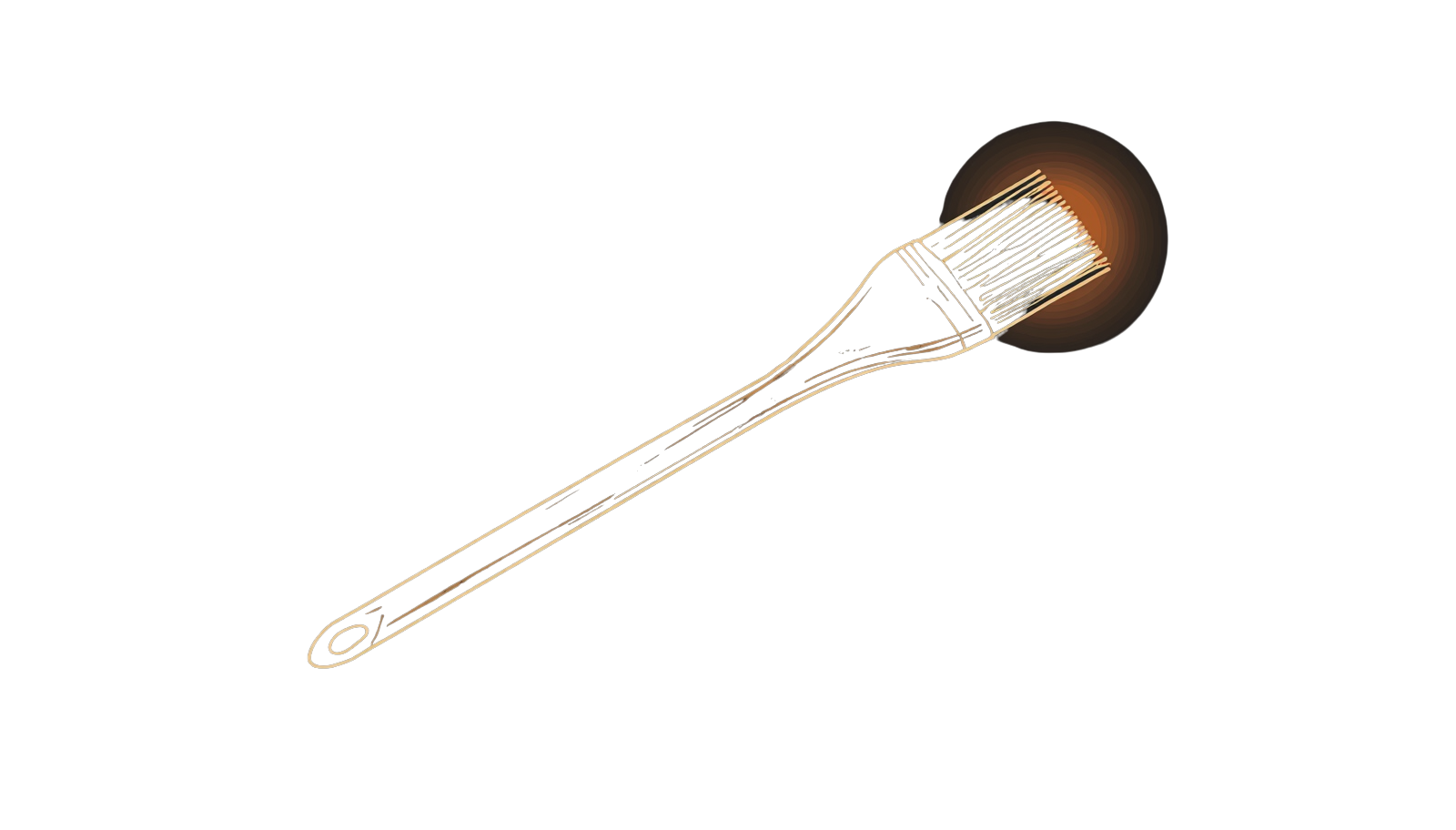
Basting Brush
A basting brush is the hand tool used to apply sauce, butter, glaze, or thin mop liquid to meat during a cook — the between-the-cracks utensil that turns a plain rub into a glistening rib, lays down a Carolina vinegar mop, or paints on the final coat of barbecue sauce in the last few minutes over the fire. Three designs dominate: heat-safe silicone heads (Meathead Goldwyn's pick — loads up evenly, washes clean, won't shed), natural boar-bristle brushes that grip thicker liquids a little better, and the Carolina-style cotton sauce mop — a sock-style head on a long wooden handle that Steven Raichlen built his Signature Series around. It is the close cousin of, but a different tool from, the grill brush (which cleans grates) and the spray bottle used for spritzing (which mists rather than paints). Reach for it on glazed ribs, mopped shoulders, and anything where the last 30 minutes calls for a sticky coat the spray bottle can't lay down.
- Variants
- Silicone · Natural boar-bristle · Cotton sauce mop
- Material
- Food-grade silicone, natural boar hair, or cotton on a wooden handle
- Sizes
- 1.5–2″ brush heads · 6–8″ mop heads on 14–18″ handles
- Price
- $5–15 silicone · $10–20 boar-bristle · $20–35 Carolina cotton mop
- Best at
- Painting on sauce, butter, glaze, or thin mop liquid during the cook
- Care
- Silicone dishwasher-safe; replace mop heads when stained; never reuse on raw and cooked
What it is
A basting brush is a hand tool with a head of bristles, silicone fingers, or cotton strands fixed to a handle, used to apply liquid — sauce, butter, glaze, mop, or marinade — to meat during a cook. Different animal entirely from the grill brush, which scrapes carbonized fat off hot grates and never touches food. The basting brush goes on the meat; the grill brush goes on the bars. Confusingly similar names, opposite jobs.
The category splits three ways. Silicone brushes — food-grade rubber fingers on a steel or plastic handle — are the modern default. They hold a surprising amount of liquid in the cup at the base of the fingers, release it evenly when dragged across meat, and wash clean in seconds. Natural boar-bristle brushes are the older design and still a favorite for thicker liquids: the porous bristles wick up sticky barbecue sauce or melted butter and lay it down in a slightly richer coat than silicone manages. Cotton sauce mops are a different beast altogether — a sock-style cotton head on a long wooden handle, sized to dunk into a pot of thin Carolina vinegar mop and lay liquid down fast across a whole pork shoulder or a rack of ribs. Steven Raichlen built his Signature Series around the cotton mop with a replaceable head; it is the canonical tool for serious mopping.
How it works
The job is simple and unglamorous: pick up liquid from a bowl or pot, carry it to the meat without dripping everywhere, and lay it down in a thin, even coat. What changes between the designs is how each one carries the liquid.
Silicone fingers hold liquid in the gaps between the fingers and at the cup at their base. Dragging the head across meat releases that liquid as the fingers flex against the surface — even distribution, no streaking, no shedding. Silicone is also heat-safe up to roughly 600°F, so the brush head survives a stray touch on a hot grate that would scorch natural bristles black.
Boar bristles wick liquid by capillary action — the same way a paintbrush does — into the hollow shafts of the hairs. That porosity is the upside (they grip thicker sauces better than silicone) and the downside (they absorb flavor, stain, and harbor bacteria if not washed fast). Natural bristles also shed and char near heat, so they live further from the grate.
The cotton sauce mop works by volume, not coat quality. The thick cotton head dunks into a pot of thin mop liquid (vinegar, broth, beer, spice), soaks up far more than any brush can carry, and slaps a wet pass across a long cook in seconds. The pace is part of the design: a mop sauce is meant to be applied fast and often during the cook (every 30–60 minutes on a long pork shoulder), not built up slowly bite by bite the way a glaze is.
Setting it up
Pick the head that matches the liquid and the meat, keep it dedicated, and stage the brush near the cook so the lid is open for seconds, not minutes:
Silicone brush
The do-everything pick. Food-grade silicone fingers on a heat-safe handle, dishwasher-clean, won't shed into the food, and holds a surprising volume of sauce in the cup at the base of the fingers. Meathead Goldwyn's standing recommendation — he calls silicone the best thing to happen to BBQ since the charcoal briquet, and prefers angled-head models for painting thicker sauces onto ribs. The right first brush to buy.
Natural boar-bristle brush
The traditional design. Porous boar bristles wick thicker liquids — sticky barbecue sauces, melted compound butters — a touch better than silicone, laying down a slightly richer coat. The trade is care: hand-wash immediately, dry fully, store hanging or head-up so the bristles don't rot. Keep them away from the grate — natural bristles char and shed.
Carolina cotton sauce mop
The volume tool. A 6–8″ cotton head on a long wooden handle, designed to dunk into a pot of thin vinegar mop and lay liquid down fast across a whole shoulder, a rack of ribs, or a full hog. The cotton holds far more than any brush head can — pace and coverage are the point, not finesse. Raichlen's Signature Series mop with a replaceable head is the canonical version; cheaper ones from any BBQ supply work fine if you wash the head and let it dry between cooks.
Sugar-heavy barbecue sauce burns black at high heat — brush sticky sauces on only in the last 15 –30 minutes of the cook, when the meat is close to pull temp and the fire is low enough to caramelize rather than carbonize. Thin mop liquids (vinegar, broth, spice) carry no sugar load and can be applied every 30–60 minutes through the whole cook — the rhythm you see Malcom Reed work in his Memphis-style rib videos. Glaze late, mop throughout.
Where it earns its keep
The basting brush earns its place on cooks where the last layer is the whole point — glazed ribs, sauced chicken, mopped pork shoulder, anything that needs a wet finish a dry rub alone won't deliver. On a rack of 3-2-1 ribs, the silicone brush paints on the final coat of barbecue sauce during the last unwrapped 30 minutes, building a tacky, shellac-thin layer that crisps without burning. On a Carolina pork shoulder, the cotton mop swabs a thin vinegar-pepper liquid across the bark every 45 minutes, feeding the surface with moisture and acidity the whole way through.
It also earns its keep on the smaller moves — melted compound butter on a steak coming off the sear, oil-and- herb wash on grilled vegetables, egg wash on a brioche bun before the grill marks the top. Anywhere a liquid needs to land evenly on hot food without dripping or streaking, the brush is the right hand. It is the difference between a finished cook and a finished-looking cook.
Where it falls short
The honest limits of the tool:
Not a substitute for spritzing
A brush lays down a coat. A spray bottle lays down a fine mist. On a long low-and-slow cook where the goal is to keep the bark damp without smearing what's already formed, spritzing is the right tool; a brush drags developing bark around. Brush late and heavy; spritz early and light.
Natural bristles shed and absorb
Boar-bristle brushes char near hot grates, shed individual hairs into the sauce pot, and absorb garlic, marinade, and last cook's flavors deep into the bristle shaft. They are the brush most likely to end up in the trash after a season. If you keep one, hand-wash immediately, hang to dry, and retire at the first loose bristle.
Cotton mop heads need replacing
A cotton sauce mop stains, holds smoke residue, and picks up rancid notes from old fat if it sits damp in a drawer between cooks. The Raichlen design swaps replaceable heads for a reason — the head is a consumable. Wash hot, dry fully, and swap out at the first sour smell.
Cross-contamination from raw marinade
A brush dunked into a marinade that touched raw chicken and then dragged across cooked meat at serving time is a salmonella delivery system. Either keep two brushes (one for raw, one for finishing) or pour the marinade into a clean bowl before any cooked surface gets brushed.
What goes wrong.
Brushing sugary sauce on too early
Barbecue sauce is sugar-heavy, and sugar carbonizes black well below the temps a hot grill runs. Paint sauce on in the last 15–30 minutes of the cook, when the meat is close to pull temp and the fire is low — earlier than that and the sauce burns before the meat finishes.
Confusing the basting brush with the grill brush
They sound similar and they aren't close. A grill brush scrapes carbon off hot grates and never touches food. A basting brush goes on the meat. Mix them up and you'll either drag rancid grate residue into your sauce or shred silicone fingers on a 500°F bar.
Reusing the raw-marinade brush on cooked meat
A brush dunked in raw-chicken marinade and dragged across the finished bird at serving time spreads salmonella. Either keep two dedicated brushes (one for raw, one for finishing) or transfer fresh marinade to a clean bowl before any cooked surface gets touched.
Brushing instead of spritzing on a long bark cook
On a long low-and-slow cook where the bark is still forming, a brush drags the developing crust around and undoes hours of work. Spritz in the bark-building phase; brush only once the bark is set or when you're laying on the final glaze.
Letting a natural-bristle or cotton mop head sit damp
Boar bristles and cotton mop heads rot if they go back into the drawer wet. Wash in hot soapy water immediately after the cook, hang or rack to dry fully, and replace at the first sour smell or loose bristle. Silicone heads forgive sloppiness; natural materials don't.
What each of them says.
4 of the people we trust have covered this. Read or watch each in their own words.
- 01
 Meathead GoldwynAmazingRibs.com
Meathead recommends silicone for basting brushes: they load up with lots of sauce, deliver it evenly, and are easy to clean and decontaminate. He has long since relegated his natural and nylon bristle brushes to cleaning computer keyboards — calling silicone the best thing to happen to barbecue since the charcoal briquet. He prefers angled-head models for painting on thicker BBQ sauces.
- 02
 Steven RaichlenBarbecue Bible
Raichlen built his Signature Series around a cotton sauce mop with a wood handle and replaceable head — his pick for applying basting mixtures, flavored butters, glazes, and thin BBQ sauces. Mop sauces differ from finishing sauces: they're thinner and more potent, meant to be applied during the cook, not at the table. The Carolina cotton mop holds more liquid than a brush and lets you lay it down fast in light passes.
- 03
 Malcom ReedHowToBBQRight / YouTube
Malcom demos his go-to rib mop in action — thin liquid laid down with a basting brush every 45 minutes through the cook to add flavor and keep the bark from drying out. Practical backyard pacing, not a Carolina-vinegar dunk.
- 04
 Chud's BBQChuds BBQ / YouTube
Bradley Robinson's full brisket cookalong — useful here for seeing where mopping/basting actually fits into a long cook rhythm vs. spritzing, and how he handles the brush around bark formation.
Cook it. Save the record.
Every cook gets a permanent entry — cut, fuel, temp, time, photo, what worked. Next time you want to nail that exact crust, you'll have the receipt.