
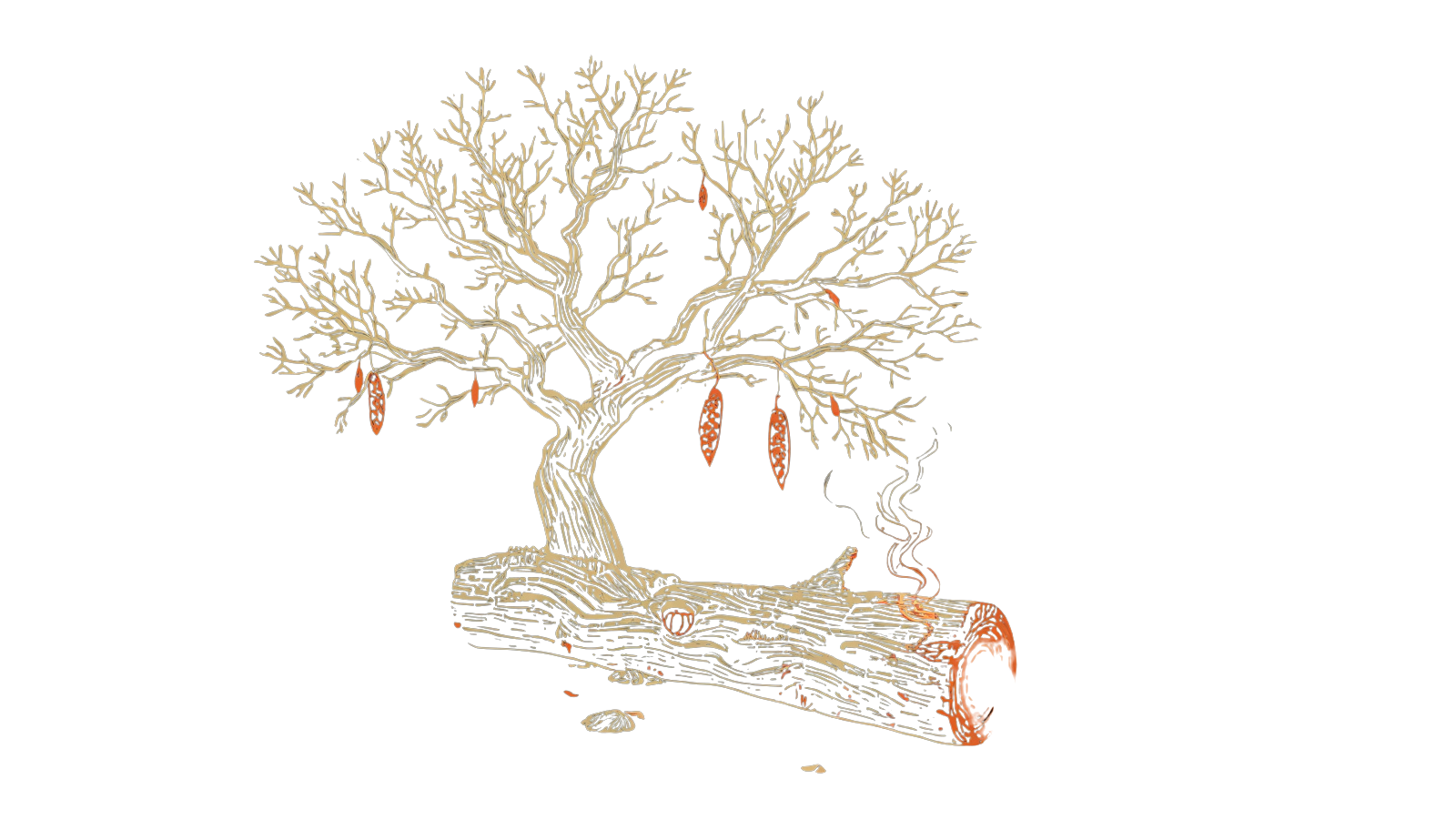
Mesquite
Mesquite (Prosopis glandulosa) is the dominant wood of South and West Texas and Northern Mexico — sharp, peppery, and the most intense of the common smoking woods. Where post oak underwrites Hill Country brisket and hickory underwrites Mid-South pork, mesquite underwrites Tex-Mex BBQ and the short-cook grilling traditions of the brush country — the signature behind fajitas, skirt steak, and hot-and-fast cooking. Among the five mainstream fuel types, wood is its own category — and among wood species, mesquite is the loudest voice in the room: thrilling on a 20-minute grill, treacherous on a 12-hour smoke unless you burn it down to clean coals first.
- Genus
- Prosopis glandulosa (honey mesquite)
- Origin
- US Southwest, South Texas, Northern Mexico
- Smoke intensity
- Strong / sharp — the most intense common BBQ wood
- Flavor notes
- Peppery, earthy, slightly sweet, Tex-Mex signature
- Pairs with
- Fajitas, skirt steak, beef short ribs, lamb
- Burn rate
- Fast, hot, high energy output; coals quickly
What it is
Mesquite is a scrubby, thorny hardwood from the legume family (Prosopis glandulosa, honey mesquite — the species that dominates Texas use; Prosopis velutina and a few other relatives fill in across the Southwest and Mexico). It grows in the brush country of South and West Texas, across Northern Mexico, and into Arizona and New Mexico — semi-arid land where most hardwoods won’t survive. The trees stay relatively small and gnarled, with feathery compound leaves and long bean-like seed pods that ranchers historically fed to livestock.
That geography is the whole story. In much of South and West Texas, mesquite is the only hardwood available locally. Daniel Vaughn at Texas Monthly draws the line geographically: south of San Antonio and west of San Angelo, mesquite isn’t a stylistic choice — it’s what’s on the ground. That’s why the wood became the signature fuel for Tex-Mex BBQ, border-region grilling, and the short-cook traditions that define the brush country.
Iconic uses: mesquite-grilled fajitas (the dish was popularized in South Texas, cooked over mesquite from day one), Tex-Mex skirt steak, the cabrito tradition in Northern Mexico, and a small but devoted strain of Texas BBQ joints — Valentina’s in Austin most notably — that have built a craft around long-cook mesquite brisket.
Flavor profile
Mesquite’s signature is intensity. It produces a sharp, peppery, earthy smoke with a slight underlying sweetness — the most powerful flavor profile of any common BBQ wood. Meathead Goldwyn classifies it as the strongest of the mainstream smoking woods on both energy output and ember quality. A little mesquite goes a long way; a lot of mesquite goes over the cliff.
The defining failure mode: mesquite turns harsh on long cooks. The same compounds that make a 20-minute fajita electric will accumulate into bitter, acrid bark across a 12-hour brisket if the fire isn’t managed correctly. This is why most Central Texas joints — the ones famous for long-cook brisket — avoid mesquite and default to post oak instead. The mesquite reputation problem is real.
The technique that softens it: burn the mesquite down past flame into clean coals before the meat goes on. As Vaughn documents, the pitmasters who run long mesquite cooks well — Valentina’s in Austin, several South Texas operations — don’t cook over flaming mesquite. They burn splits down in a separate burn barrel, shovel clean coals into the cook chamber, and let radiant heat from glowing wood (not active flame) do the work. Done that way, mesquite’s harsh reputation softens considerably.
Pairing
Mesquite shines on short, high-heat cooks and on cuts with enough fat to balance the intensity. It’s wrong for most long smokes and obliterates delicate proteins.
| Meat | Fit | Why |
|---|---|---|
| Skirt steak / fajitas | Canonical | The defining pair. Short cook, high heat, peppery smoke — Tex-Mex signature. |
| Cabrito / lamb | Canonical | Northern Mexico tradition. Mesquite stands up to gamey, fatty meat. |
| Beef short ribs | Strong fit | Fat carries mesquite. 4-6 hour window; coal-burning technique recommended. |
| Beef brisket | Expert only | Possible but rewards burn-to-coals technique; post oak forgives more. |
| Pork shoulder / ribs | Caution | Can dominate pork; many pitmasters prefer hickory or fruit wood. |
| Chicken / turkey | Mismatch | Overpowers poultry; use a fruit wood or blend mesquite very sparingly. |
| Salmon / white fish | Mismatch | Obliterates fish entirely. Use alder or apple. |
How to use
Mesquite shows up in four formats. Quantity discipline matters more with mesquite than with any other common wood — the intensity rises faster than any other species, and overuse is the dominant failure mode.
Splits (burned to coals)
The pitmaster technique for long mesquite cooks. Burn splits down in a separate burn barrel until the flame is gone and the wood is glowing coals, then shovel the coals into the offset smoker. Radiant heat from glowing wood — not active flame — is what gives Valentina’s mesquite brisket its clean character. This is the only way to run mesquite on a 10+ hour cook without bitterness.
Splits (direct burn)
For short, high-heat grilling — fajitas, skirt steak, the cabrito tradition. A small mesquite fire burned hot for 20-40 minutes is the textbook Tex-Mex setup. The cook is over before harsh compounds can accumulate, so the intensity reads as electric, not acrid.
Chunks
For charcoal cookers. One — maybe two — fist-sized chunks per cook. This is half what you’d use with hickory or post oak. 3+ mesquite chunks almost always tips the cook into over-smoked territory. If you want more smoke, switch to splits in an offset; don’t pile chunks on charcoal.
Pellets
100% mesquite pellets exist (Lumber Jack, Pit Boss, Bear Mountain) but are aggressive. Most pellet pitmasters use mesquite as a blend component (mesquite + oak, mesquite + fruit) at 20-30% rather than running it straight.
The single most important mesquite technique. Active flame on mesquite throws the acrid phenols that ruin bark; clean glowing coals throw the peppery, earthy character that makes the wood iconic. The pitmasters who’ve made mesquite work for long cooks — the Valentina’s tradition Vaughn documents — all burn the wood down before it touches meat. Without a burn barrel and the patience to run one, default to short cooks or another species.
Compared to other species
Mesquite sits at the loud end of the wood-intensity spectrum. The cross-species framing matters here because the wrong default has actively damaged mesquite’s reputation:
| vs Species | How it compares |
|---|---|
| Post oak | The Central Texas counterpart. Slow, clean, forgiving — the brisket wood. Mesquite is faster, louder, riskier across long cooks. Most Texas Monthly Top 50 joints burn post oak specifically because mesquite doesn’t forgive mismanagement the way oak does. |
| Hickory | Steadier, more universally applicable. Hickory is a strong wood that works across the full smoking range; mesquite peaks at short high-heat and drops off fast. Mid-South pork is hickory’s claim; South Texas fajitas are mesquite’s. |
| Pecan | Both are Southwest-adjacent woods, but pecan is far gentler — closer to a mild hickory than to mesquite. Pecan works where you want some regional character without the intensity tax. |
| Fruit woods (apple, cherry) | Opposite end of the spectrum. Sweet, mild, forgiving. A common pellet-blend pattern: 20-30% mesquite with 70-80% fruit wood — gets the Tex-Mex peppery edge without the full intensity. |
Where it falls short
Mesquite’s intensity is the source of both its identity and most of its failures. Specific cases:
Long cooks with active flame
The single biggest mesquite failure. Active mesquite flame across 8-14 hours accumulates harsh phenols into bitter, acrid bark. Burn splits down to coals first, or switch to post oak. There’s no shortcut.
Poultry and fish
Chicken, turkey, salmon, white fish — mesquite obliterates them. The peppery intensity buries delicate proteins. Use alder, apple, or cherry for fish; apple or pecan for poultry.
Overstacking chunks on charcoal
Mesquite’s rule is roughly half what you’d use with another wood. One chunk on a charcoal cooker is plenty; three chunks is too many. If you want more smoke character, burn splits in an offset rather than piling chunks on a kettle.
Green or wet mesquite
Worse than green oak or hickory. Under-seasoned mesquite throws white, acrid smoke that ruins bark fast. Mesquite needs 6-12 months seasoning to drop below 20% moisture, or kiln-drying. The species doesn’t matter if the wood is wet.
What goes wrong.
Using mesquite for long brisket cooks straight off the splits
The reputation-killer. Active mesquite flame across a 12-14 hour brisket drifts bitter and acrid no matter how careful the airflow. Either burn splits down to clean coals in a separate barrel first (the Valentina’s technique Daniel Vaughn documents), or default to post oak for the cook.
Smoking salmon or white fish with mesquite
Mesquite obliterates delicate fish entirely — the peppery intensity buries every other flavor on the plate. Switch to alder (Pacific Northwest standard) or a fruit wood for any fish work.
Treating mesquite chunks like hickory chunks
Mesquite is roughly twice the intensity of hickory or post oak chunk-for-chunk. The 2-3 chunks that work cleanly with hickory will over-smoke with mesquite. Cut the quantity in half: one chunk is the floor, two is the ceiling for most charcoal cooks.
Using mesquite straight on whole chicken or turkey
Poultry doesn’t have the fat or mass to balance mesquite’s peppery edge. The bird finishes before the smoke flavor integrates, leaving harshness on top. Default to apple or cherry; blend mesquite very sparingly (a single chunk among fruit-wood chunks) if you want a touch of the Tex-Mex character.
Pairing mesquite with delicate vegetables
Asparagus, summer squash, eggplant — mesquite buries them the same way it buries fish. The species pairs cleanly with sturdier vegetables (mushrooms, peppers, onions) and for a short window, but light veg needs a milder wood or none at all.
What each of them says.
3 of the people we trust have covered this. Read or watch each in their own words.
- 01
 Daniel VaughnTexas Monthly
Vaughn places mesquite as the dominant wood south of San Antonio and west of San Angelo — the only local hardwood in much of South and West Texas — and notes that even mesquite's harshest reputation softens once pitmasters let it burn down past flame into clean coals. He documents that most famous Central Texas joints avoid mesquite, while Tex-Mex BBQ houses like Valentina's in Austin have built a craft around it.
- 02
 Meathead GoldwynAmazingRibs
Meathead classifies mesquite as the strongest of the common smoking woods on both energy output and ember quality, then breaks with Texas convention: "I avoid mesquite although it is very popular in Texas. I find it to be a bit strong." The science-side counterpoint to mesquite's regional dominance.
- 03
 Mad Scientist BBQJeremy Yoder / YouTube
Jeremy Yoder partners with Bradley Robinson of Chud's BBQ to run a controlled brisket cook on pure mesquite — directly testing the conventional wisdom that mesquite turns harsh over long cooks. The experiment grounds the burn-to-coals technique Vaughn describes in a head-to-head taste test.
Cook it. Save the record.
Every cook gets a permanent entry — cut, fuel, temp, time, photo, what worked. Next time you want to nail that exact crust, you'll have the receipt.